The Dramatic Naval Battle at Narvik
A Decisive WW2 Naval Battle in April 1940

I nearly didn’t get to the wreck. The rusting hulk of the bow, emerging from the inky depths of the Rombaksfjord, lies awkwardly inverted, wedged against the rocks on the shore some few hundred yards from the closest path. My daughter and I looked at what we’d have to clamber across to reach it, realized that to do so wouldn’t be very sensible, but then set off anyway, picking our way over rocks, across icy bare slabs of granite, through patches of snow, and grabbing onto baby firs and spruce. We both made it one piece, though, without slipping into the water below, and then there it was, isolated, alone, abandoned: the wreck of the KM Georg Thiele, one of ten German destroyers - and fifty percent of thier total destroyer fleet at the time - that were lost back in April 1940. It’s a lasting symbol of what was both a disastrous naval battle for the Germans and one that had far-reaching consequences in the war.
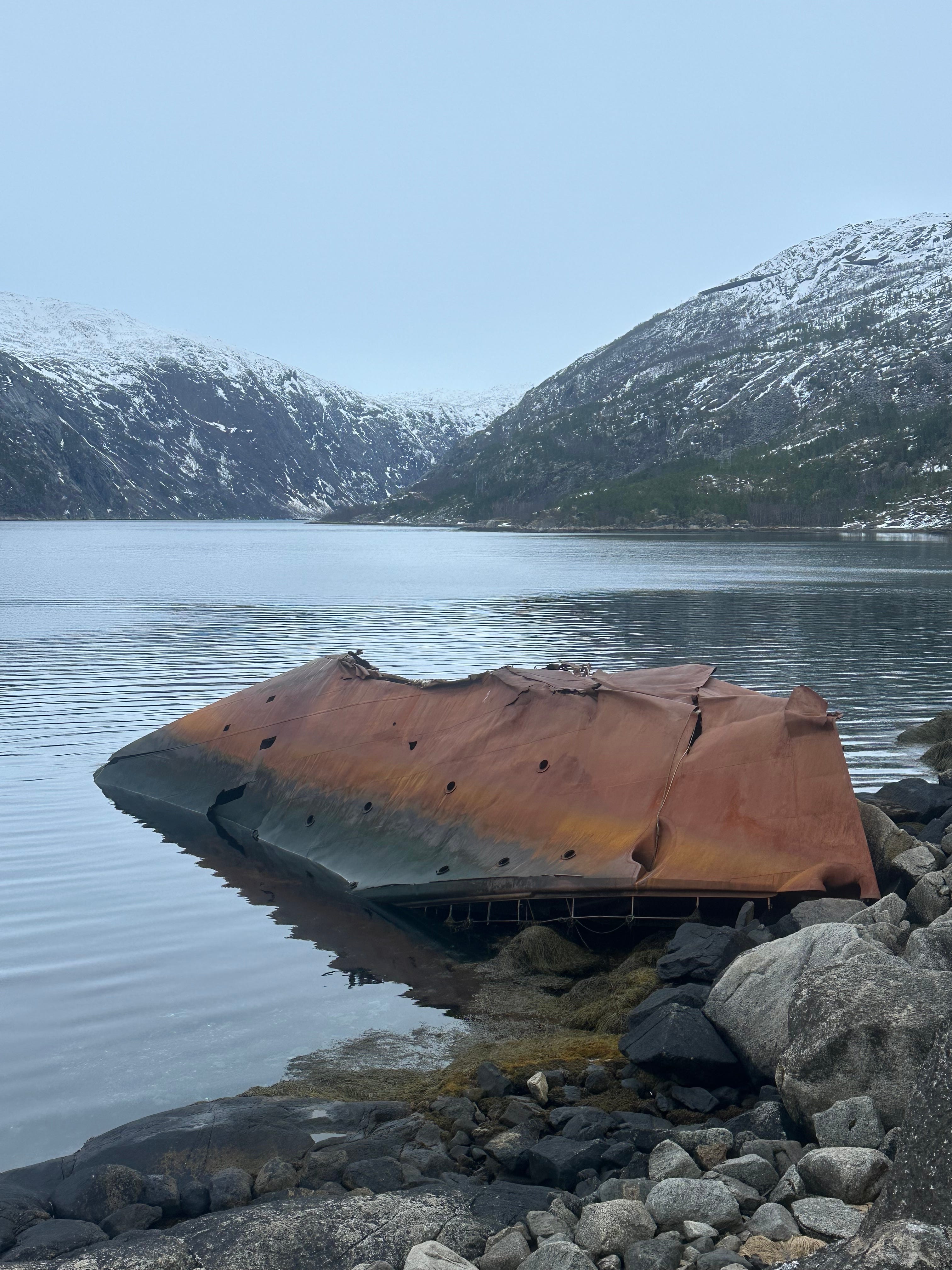
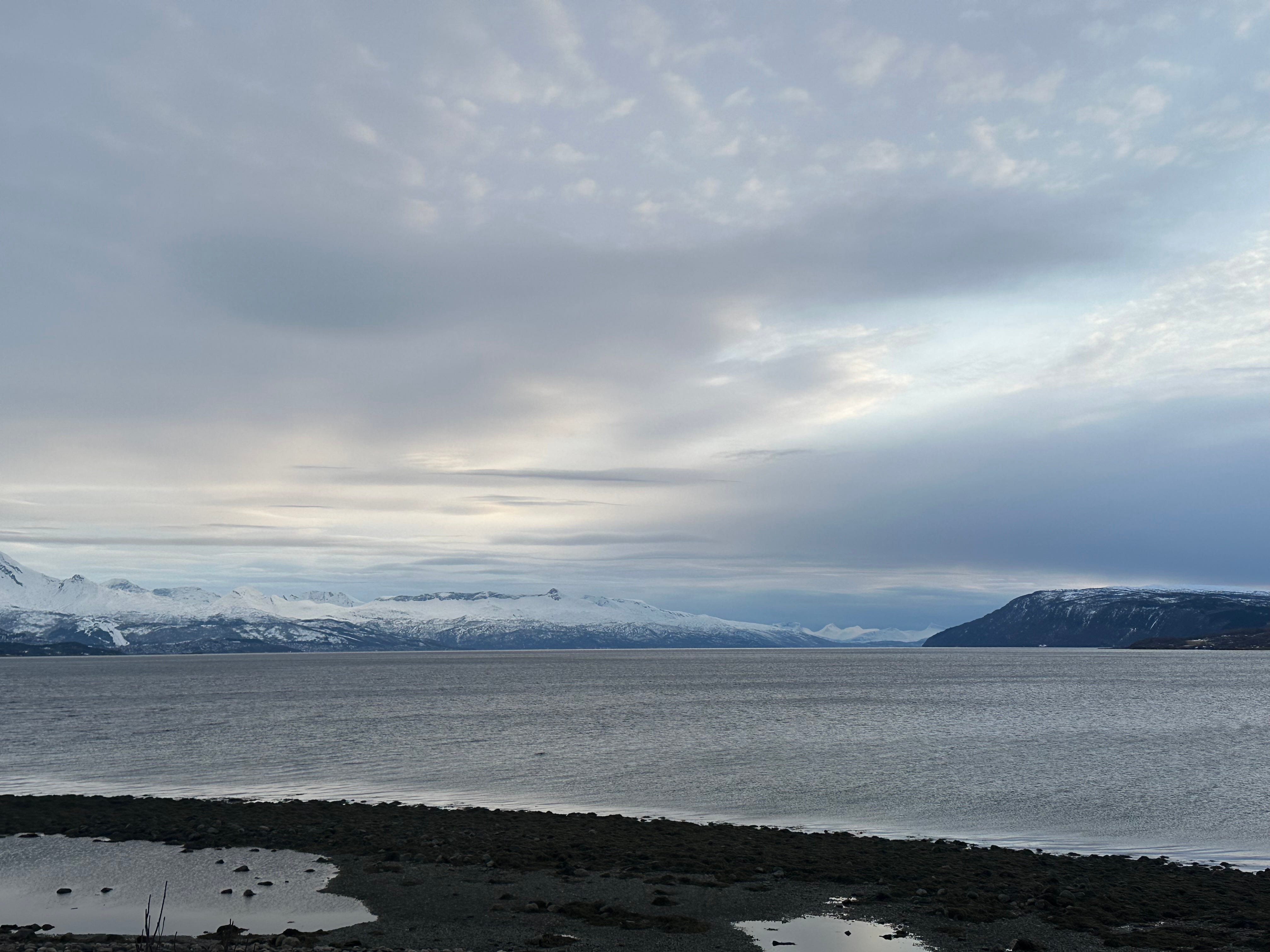
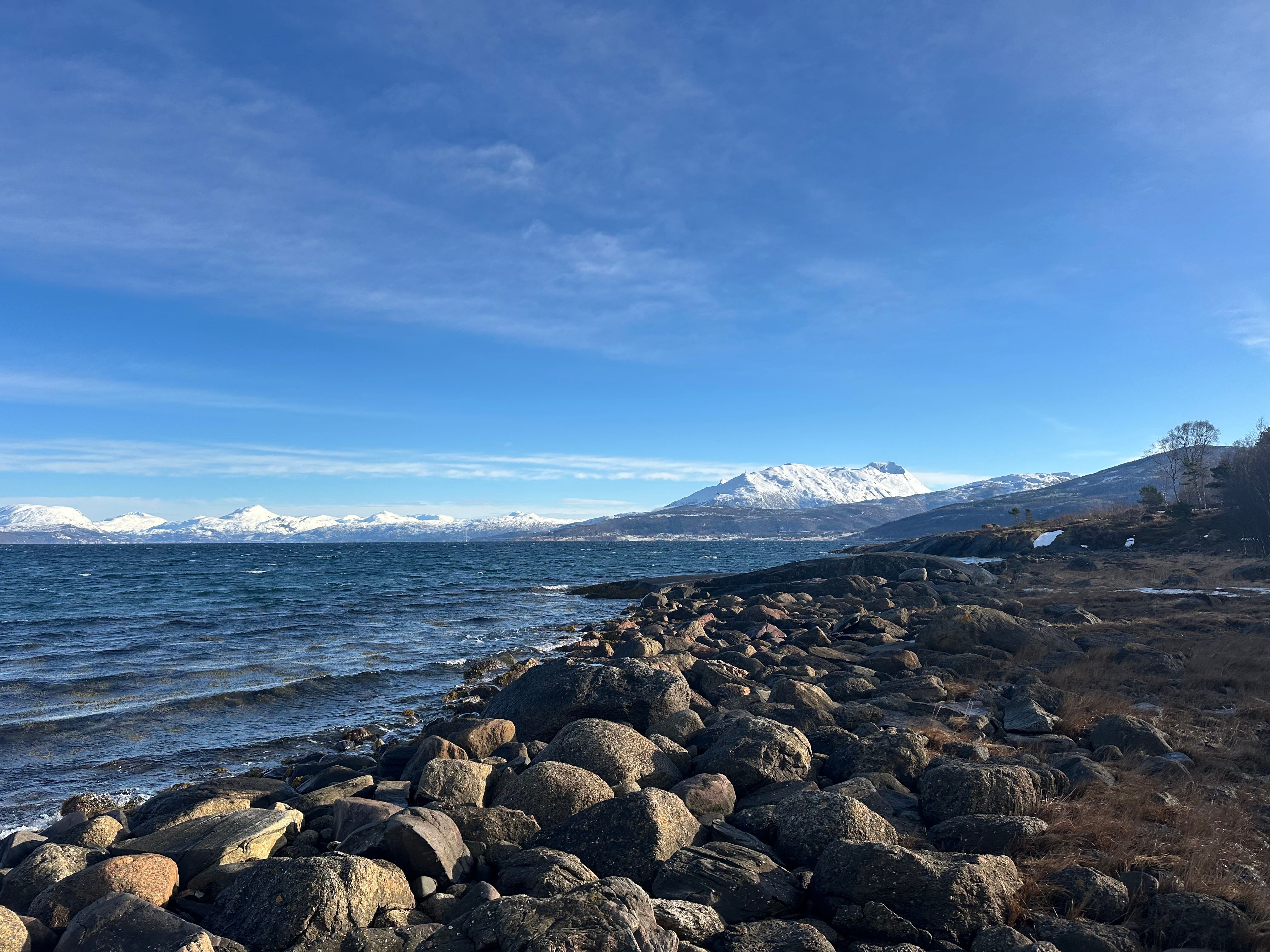
And because of its significance, I had been anxious for some time to come have a look at the area and see it for myself. It’s been fascinating. The area has not dramatically changed since 1940 and visiting as we did in mid-March, we were met with much the same kind of weather, light and levels of snow, wind, and rain as greeted those fighting here eighty-six years ago. This part of Norway offers a dramatic landscape of towering, snow-topped mountains, of plunging dark, formidable slopes down to the water’s edge, of magnificent fjords, forests, isolated wooden houses, farmsteads and huts. Thor and Odin seem to be lurking somewhere up in the tempestuous clouds above. It’s a beautiful landscape but a menacing, unforgiving one too. The wind bites and whips up the water, then suddenly the clouds clear and the immediate scene is bathed in vivid light, while further up the fjord, a rainstorm looms over the mountains and sea. When the guns were booming, as they were on the morning of 10 April 1940 and again four days later, the sound must have echoed around the mountains, trapped as the water here is trapped in their imposing and looming clutches. What a place to be fighting a war.
The Rombaksfjord lies just to the north-east of Narvik, itself at the head of the Ofotfjord, some distance to the north of Norway and within the Arctic Circle. On the face of it, this was a somewhat unlikely and remote corner of Europe for the Second Wolrd War to reach, but actually was a place of considerable strategic importance and one that had been in British minds even earlier than that of the German Führer, Adolf Hitler. As with so much of the Second World War, Narvik was on the map because of the vital importance of resources. Only twenty miles or so as the crow flies from this still small Arctic port, lies Sweden, and, just beyond the border, are the iron ore fields of Gällivare. These mines, however, were in a very remote part of the world and while extracting the iron ore was hard enough, sending it anywhere meaningful was also extremely challenging. During summer months, it could be shipped down the Gulf of Bothnia between Sweden and Finland, but not during the winter when the sea in the gulf froze over. As demand increased, a solution was needed and this came in the form of an ambitious engineering project: a railway line that traversed the mountains from the iron ore quarries and dropped back down to Narvik. From there, it could be it onto a ship and sailed down the Norwegian coast. For Nazi Germany, this year-round supply of iron ore was essential to any success in sustained rearmament and also once the war began. It was this Swedish iron ore that was vital, above all, for the production of ordnance, artillery, tanks, and so on.
Narvik grew rapidly as a port purely because of this rail link. Even today, the railway still runs down from the mountains to the quaysides and iron is still shoveled straight onto waiting ships. There’s now a tourist train that takes the route up over the pass and back down again and to gaze out of the window as it climbs up over fjords and high into the mountains is to wonder at how those engineers in the late nineteenth century ever achieved such a feat. It’s a truly spectacular and jaw-dropping ride. So grateful are the good folk of Narvik they even hold a week-long festival every March to commemorate the opening of the rail route back in 1902. Rail line and town are inextricably linked.
It was the idea of Winston Churchill, following his return to the cabinet in September 1939 as First Lord of the Admiralty - political head of the navy - who suggesting mining the Leads, as the narrows that fed into the Ofotfjord were known, and through which all the German iron ore from Narvik had to pass. Norway was neutral at the time and neither the rest of the British government nor their French allies felt easy about such an act of aggression against their traditionally friendly neighbour. Debate about mining the Leads continued but no final decision was made until early April 1940.
In the meantime, Gross-Admiral Erich Raeder, the commander-in-chief of the Kriegsmarine, the German navy, had been lobbying Hitler to invade Norway. The entire German naval strategy was based, first and foremost, on creating a surface fleet that could then break into the Atlantic and maraud Allied convoys crossing the ocean to and from Britain. This would then sever Britain’s supply lines; whether shipping was coming from North or South America or from India and even Australia and New Zealand, it still had to pass through the Atlantic. The problem with this mad-cap strategy was that the Kriegsmarine was still small in 1939 and Britain had the largest navy in the world, hard though that might be to believe today, with no less than 181 destroyers, 15 battleships, 15 heavy cruisers, 41 light cruisers and 7 aircraft carriers. By April 1940, the Kriegsmarine didn’t have a single battleship or aircraft carrier, only two heavy cruisers and just 20 destroyers. Its strategy for defeating Britain’s sea lanes was delusional to put it mildly. Nor did Germany have any overseas possessions and certainly not in the Atlantic; and without bases, maintaining this small surface fleet would be extremely difficult even if it did manage to break out into the ocean. Furthermore, the moment the war began, the Royal Navy began a naval blockade against Germany, which was pretty effective. Raeder believed that having ports in Norway would make it easier to evade this blockade but would also provide bases for his still under-strength and small-in-number U-boat arm. Holding Norway would also, perhaps most importantly, make it easier for Germany to protect its own sea lanes transporting iron ore from Narvik to the Baltic. In other words, there was one valid reason for invading Norway and two more questionable ones. On the negative balance sheet, any successful invasion would then have to be maintained and would require a huge commitment of troops and resources across the geographically large and remote part of Scandinavia. What’s more, invading Norway would provoke a naval battle against the Royal Navy, which, realistically, the Kriegsmarine would be unlikely to win. Furthermore, the Royal Navy could afford to absorb considerably more losses than the German navy.
This realisation prompted Raeder to somewhat lose heart about an attack on Norway, but it was too late. Hitler’s mind was set and with intelligence that the Allies were finally going to mine the Leads after long months of prevaricating over the decision, Operation WESERÜBUNG was launched in the early hours of 9 April 1940, just as the Royal Navy was heading to the Leads to begin their planned mining operation. Denmark was invaded and occupied at the same time as troops steamed up the Oslofjord towards the capital and as Fallschirmjäger - paratroopers - were dropped to capture key airfields. Meanwhile, another invasion force was sent to the North Sea port of Trondheim, while 2,000 Gerbirgsjäger, specially trained mountain troops, were landed at Narvik, deep in the Ofotfjord, with the help of ten German destroyers and a handful of supply ships.
At the same time, the British 2nd Destroyer Flotilla was near the Leads as part of the mining operation and to support Admiral William Whitworth’s large battle-cruisers, Renown and Repulse, and the destroyers of the 20th Destroyer Flotilla. Intelligence reached the Admiralty on the afternoon of 9th April that a single German warship had entered the Ofotfjord and so Captain Bernard Warburton-Lee, commander of the 2nd Flotilla, was ordered to head to Narvik and ensure no German troops landed there.
Not only had the intelligence badly under-estimated the German strength, it was already too late. Kommodore Freidrich Bonte’s ten-ship destroyer force had already entered the Ofotfjord on the afternoon of 9th October, torpedoed the Norwegian coastal defence ships, Eidsvold and then the Norge. In Narvik itself, the Norwegian army commander quickly surrendered the town and the German troops hastily disembarked. By this time, Bonte’s destroyers urgently needed to refuel, but there were not enough supply ships accompanying them and only two of his warships could be refuelled at one time and this took 6-8 hours. While half the force remained in the narrow confines of Narvik harbour, the rest were sent off to the Herjangsfjord that ran off the main Ofotfjord, and to the inlet at Ballangen. Bonte knew several u-boats were patrolling the mouth of the Ofotfjord and he also sent one destroyer in shifts to also keep guard.
Despite this, Captain Warburton-Lee’s force of four destroyers was not spotted as they swept into the fjord under the cover of darkness and dense snow flurries in the early hours of 10th October. Warburton-Lee had not believed the one German ship piece of intelligence for a moment and suspected there would already be a much larger force; this was confirmed when he sent some of his men ashore to talk to the Norwegians at the pilot station at Tanoy, guarding the mouth of the Ofotfjord. They confirmed they’d seen at least six German destroyers and a u-boat pass earlier. A career naval officer, hugely experienced, and imbued with the Nelsonian aggressiveness that was hard-wired into many such officers at the time, Warburton-Lee decided to trust to surprise and initiative and deal any German force already at Narvik a mortal blow. Having signalled this new information to the Admiralty, he added, ‘Intend attacking at dawn, high water.’ A reply reached him at 9pm. ‘Attack at dawn: all good luck.’ By then, a fifth destroyer, HMS Hostile, had also joined him.
Out at sea, Admiral Whitworth had been following this exchange and pondering whether to send in one of his cruisers. By doing so, however, he would have delayed the operation; what’s more, a cruiser, much larger than a destroyer, would be high risk in the narrow confines of a fjord with u-boats lurking. He decided to let Warburton-Lee attack alone with his five destroyers - despite being warships that were smaller and less heavily gunned than those of the Kriegsmarine.
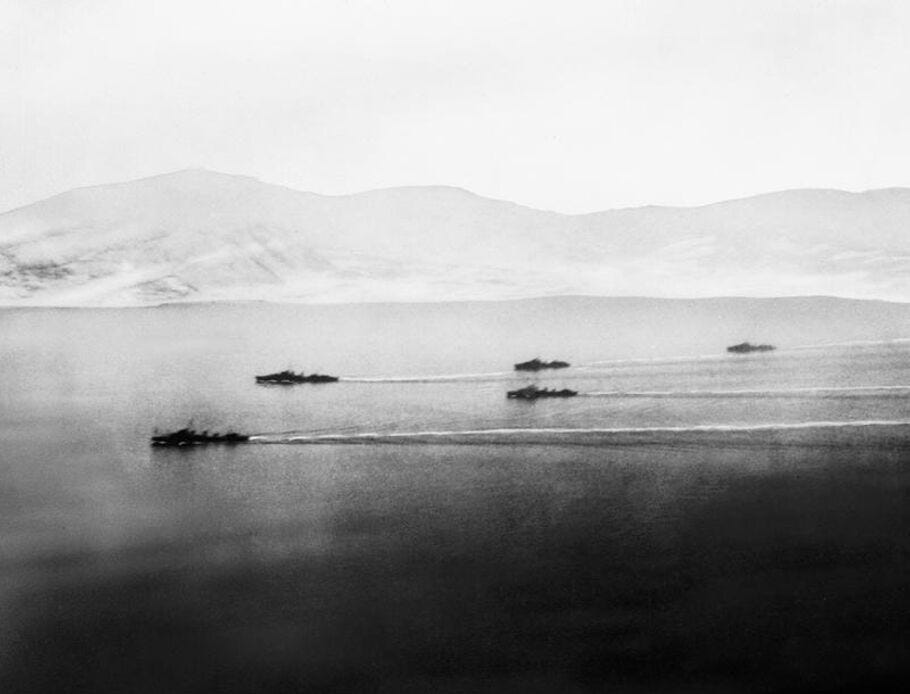
Warburton-Lee on HMS Hardy led the way, followeby Hunter and then Hotspur. They were nearly hit by a fully lit-up passenger steamer that passed by in the early morning, but by the first streaks of dawn were fifteen miles from Narvik and deep into the Ofotfjord. Fortunately, the German destroyer on watch never spotted them; rather than waiting to be relieved, the Roeder turned back towards Narvik at 4am, before the Lüdemann, its replacement, had been sent to take over. Incredibly, the British flotilla were less than a mile behind the Roeder as it sailed back towards Narvik, hidden by snow and mist. Roeder had still not heard or seen a thing when at 4.30am the early morning light was ripped apart by the sudden sound of shattering explosions. The first ship to feel the full weight of the British fire was Bonte’s flagship, the Heidkamp, which was struck by a torpedo fired by Hardy and exploded, killing most on board including the Kommodore himself. The Schmitt was next, also sinking rapidly from a torpedo strike. They had been sitting ducks in the tight confines of the harbour, as were several merchant vessels moored there. The Roeder, only just anchored, was now straddled by shells and then repeatedly struck, with fires soon breaking out. Narvik harbour was, in a matter of just a few minutes, a scene of thick smoke, fire, rapidly sinking vessels and mounting carnage. Surprise had been complete.
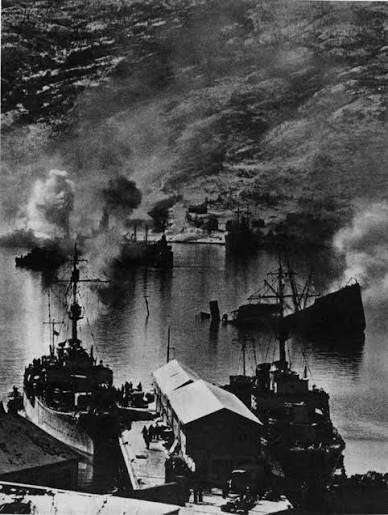
The three leading British destroyers remained in and around Narvik for the best part of an hour. Mist and low cloud continued to shroud the fjord and the surrounding mountains, hiding the inlets and smaller fjords leading from Ofotfjord, but Warburton-Lee had been expecting to encounter six enemy warships and by his reckoning they’d account for five. Two had been sunk, the Roeder was being hammered and on fire, while the Künne had had her engines put out of action from the concussion of exploding torpedoes and the Lüdemann had had a gun turret destroyed and was struggling to contain fires. At around 5.30am, Warburton-Lee ordered his leading three ships to pull out of Narvik and steam back down the fjord at a leisurely 15 knots, roughly half their maximum speed.
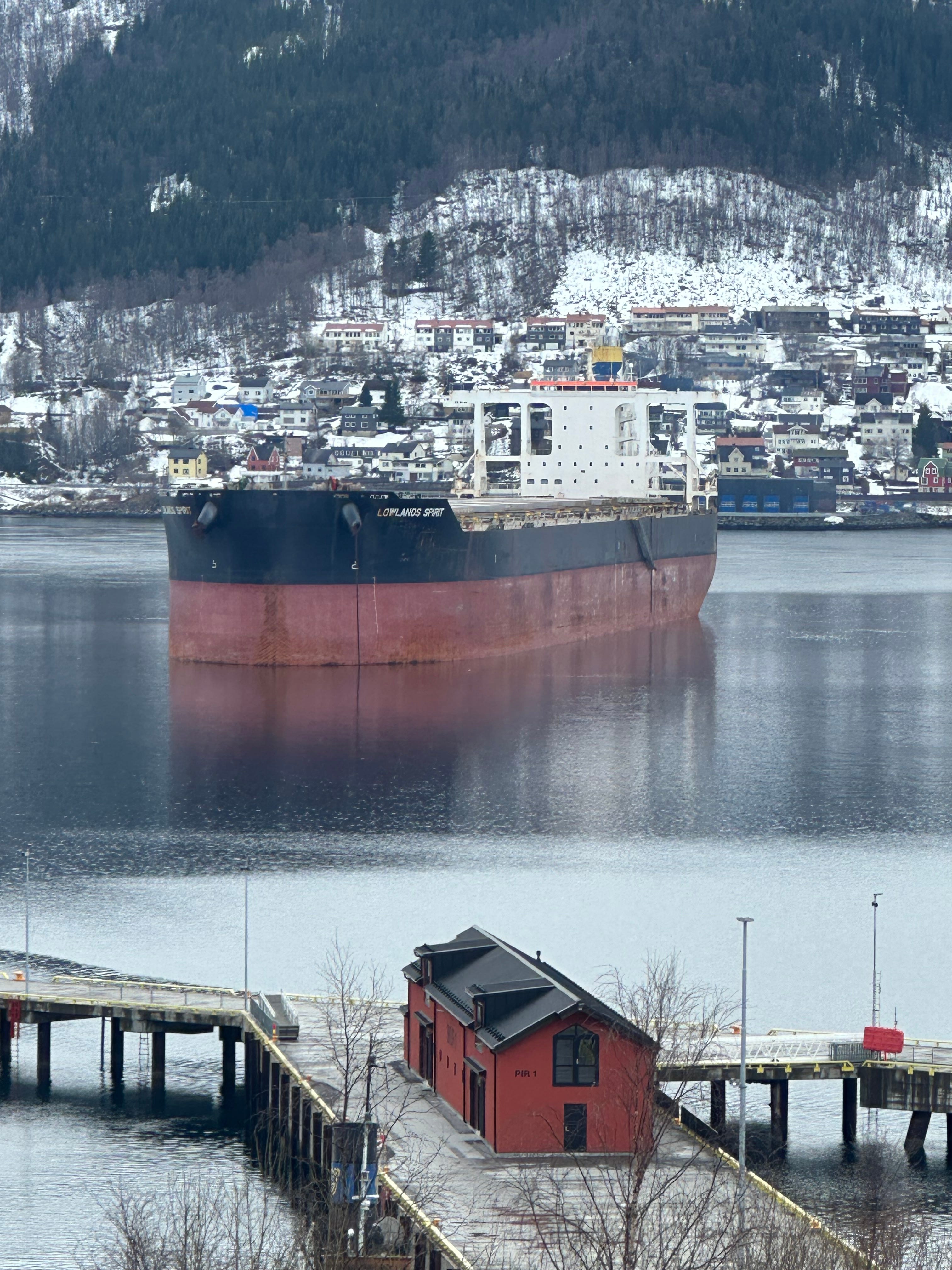
There had, however, been ten German destroyers and not six, and three had been lying up in the Herjangsfjord to the north of Narvik. Not until 5.15am had they been alerted to the attack and then immediately weighed anchor and set of in pursuit, which meant they were soon enough able to catch up as the British withdrew. As soon as they were spotted, Warburton-Lee ordered them to increase speed to 30 knots. The chase was now on.
The three German ships, the Köllner, Giese and Zenke, had yet to refuel and had almost empty tanks, so they would not be able sail far. A running battle was now underway, a race as to whether the British could slip away before the Germans could score some fatal hits. And they would have done too, had it not been for the last two ships, the Georg Thiele and Von Arnim, lurking off Ballangen, an inlet to the south of the Ofotfjord and where they were ideally placed to strike the British destroyers as they steamed past. Because of the earlier snow storms and mists, they had remained unseen by Warburton-Lee and his flotilla. And now the German 5-inch guns accurately straddled the Hardy, Hunter and Hotspur then began to strike home. ‘Keep engaging the enemy!’ Warburton-Lee signalled then moments later a shell hit Hardy’s bridge, killing most there and badly wounding the rest, including the captain. The paymaster, Lieutenant George Stanning, had one foot badly mangled and shrapnel up his leg but still managed to drag himself from the bridge to the wheelhouse and take command, despite no practical experience in the role. The ship’s engines were seizing and it was clear to him, that with the captain, navigator and coxswain all dead or badly wounded, the only course was to ram the shore and try and save as many of the crew as possible. None the less, Hardy kept firing, repeatedly hitting the Georg Thiele and Von Arnim and the ships in pursuit, even as she ruptured her keel on the shore. The Hunter and Hotspur were severely hit too but also continued to fire back. The latter had her steering damaged and was unable to avoid colliding with Hunter; the two began spinning helplessly in the ford, attracting ever-more fire. On the Hunter, the bridge was also struck, killing all there and was clearly doomed. Hotspur had fared better, managed to unentwine from Hunter and then zig-zag clear. She escaped, soon out of range of the fire from the enemy ships at Ballangen, while those in pursuit from the Herjangsfjord now turned back for lack of fuel. It meant three of the five could make good their escape. It was, however, too late for Hunter, which sank off the headland off Ballangen. A number of the crew were picked up by the German ships, although ten died soon after; the dark waters were freezing cold and hypothermia had quickly set in.
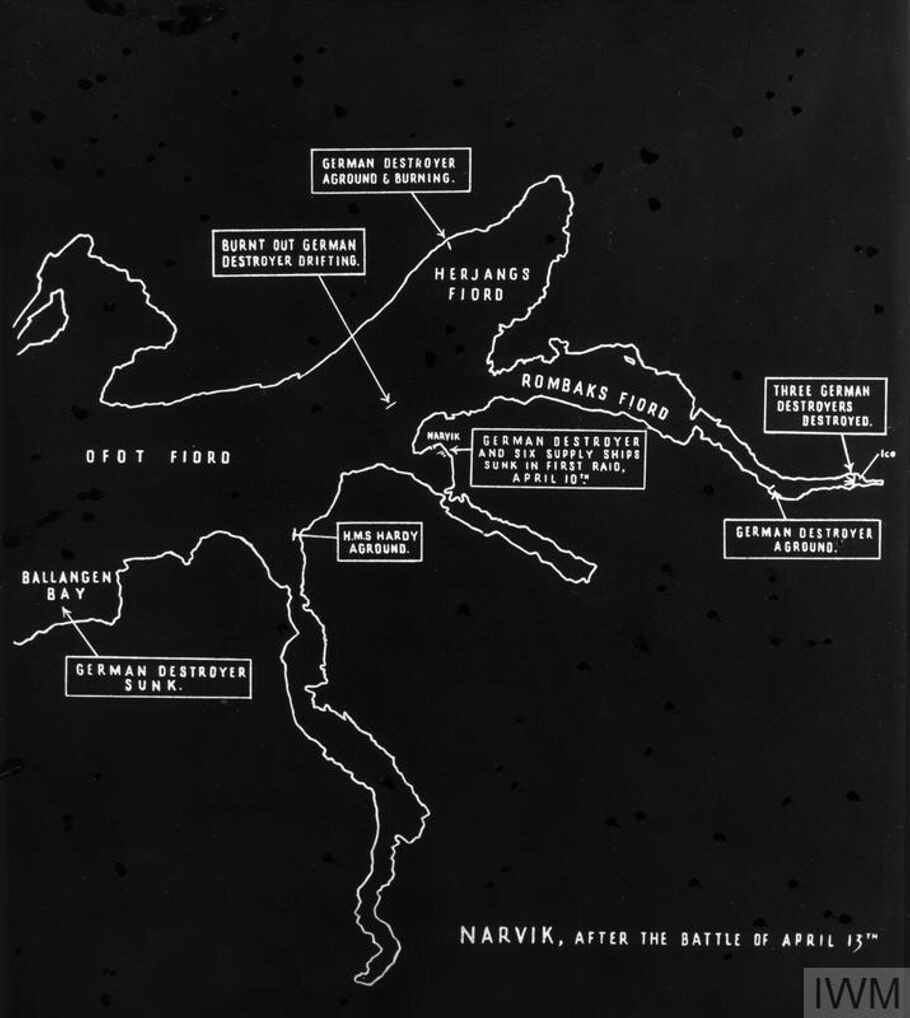
Meanwhile, most of the surviving crew from Hardy managed to get ashore, although Warburton-Lee, despite being brought off the ship, died soon after of his wounds. The rest managed to walk some 15 miles to Ballangen, where there were no German troops but a small cottage hospital. Here, the Norwegians courageously tended the wounded and fed and dried the able survivors. The loss of Hardy and Hunter had been a blow for the British but the damage to the German force was catastrophic. Two destroyers had been sunk, while the Arnim, Thiele and Roeder were severely damaged and no longer seaworthy, albeit still afloat. The Künne had suffered repeated hits and had a flooded magazine, while the engines of the Lüdemann were kaput. Only three of the ten remained unscathed, while a further disaster befell the Germans as the all-important supply ship, the Rauenfels, was met by the three retreating British destroyers and swiftly sent to the bottom having blown up in a shattering explosion that sent debris as high as 3,000 feet into the sky.
The next few days were marked by caution and ponderousness by both sides. Now commanding the German flotilla was Kapitän Erich Bey. His remaining ships were trapped unless he moved them swiftly. This meant refuelling as soon as possible from the surviving oiler, making the damaged ships seaworthy, then using bad weather, darkness and supporting u-boats to sneak out past the British in the Vestfjord beyond the Ofotfjord. Although the ships were all refuelled and engines repaired, he then suffered a further calamity when the Zenke damaged her propellers manouevring around the wrecks in Narvik harbour, and the Köllner also caused debilitating damage while refuelling and made herself unseaworthy. Difficult though it was to manoeuvre in the narrow confines of Narvik, these were entirely avoidable and self-inflicted own goals. The British, meanwhile, reeling from the rapid German advances through southern Norway and uncertain what plan to now pursue, dithered from a lack of clear, unified and determined decision-making, so that it was not until the morning of 13th April that they returned, this time with four larger tribal-class destroyers, five further destroyers and the mighty battleship, HMS Warspite, all under the command of Admiral Whitworth.
Kapitän Bey had known the Royal Navy were coming, partly because German cryptanalysts had deciphered British naval codes, but also because it was blindingly obvious they would do. He tried to deploy his ships as well as he might but knew in his heart the situation was hopeless. The crippled Köllner was towed to Taarstadt, an inlet beyond Ballangen, where it was to lie in wait, unseen, for the arrival of the British then fire her torpedoes and guns and hope for the best. She had only reached the inlet at Djupvik, some 20 miles west from Narvik, when she was spotted by the Warspite’s Swordfish floatplane late in the morning of 13th April. As the leading British ships, Bedouin and Eskimo, turned the headland, their guns and torpedoes were trained and ready. Köllner’s bow was ripped off by the first torpedo and the rest of her sunk soon after. That was three of the ten now at the bottom of the fjord. The remaining seven had barely begun moving before the rest of the British force were bearing down upon them through the mist, frost and snow. First, though, ten Swordfish, flown from the aircraft carrier, HMS Furious, swooped down. Their orders were to dive-bomb the German ships, a role for which they were not suited; Swordfish, slow, ungainly biplanes, were designed to fly in low and drop torpedoes, a role to which they were, in fact, very well suited. As dive-bombers, however, they hit nothing but lost two of their own in an entirely fruitless attack.
It was also completely unnecessary as Whitworth’s force had the matter firmly in hand. The German destroyers, still nursing the damage of four days earlier, swiftly fired all their remaining ammunition and were now effectively sitting ducks. Bey ordered them into the narrow Rombaksfjord, east and to the north of Narvik, where they were hotly pursued by Eskimo, Bedouin and even Warspite. Here the fjord narrowed to a few hundred yards before widening to half a mile but with the high mountain sides looming over this gloomily dark and slender channel, there was nowhere for the surviving German destroyers to go. The Künne was dispatched by Bedouin, and although the Georg Thiele fired one last torpedo that blew off the bow of Eskimo, her captain then ran her aground like the Hardy, while the surviving three, the Zenke, Von Armin and Lüdemann, steamed to the head of the fjord where they, too, deliberately ran themselves aground. The crews all then made good their escape into the mountains to join the Gebirgsjäger that had disembarked five days earlier and who were still holding a shallow bridgehead around Narvik.
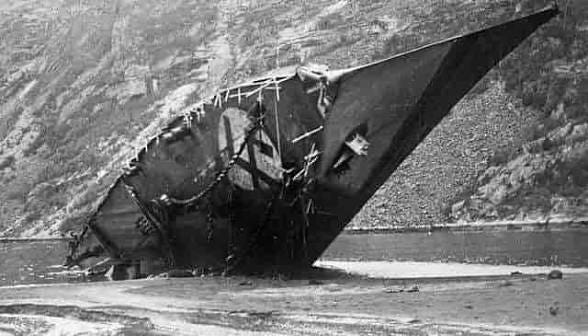
Amazingly, Eskimo remained afloat, sailing stern first back out of the fjord and to safety. She was repaired and would fight again, not least against the Bismarck battleship in May 1941. But here in the waters around Narvik, the naval battle was now over, with half the Kriegsmarine’s destroyer fleet sunk and lost - a disaster from which it could not hope to recover. A golden oppportunity to send in decisive numbers of Allied troops to fight and defeat the beleaguered German troops in Narvik was now laid out on a plate. Southern Norway might have already been lost but the north - and, crucially, the iron-ore railway line and port - lay there for the taking - on paper, at any rate. British, French and Polish troops were eventually landed but this was not a part of the world where landing and maintaining supplies was at all straightforward. Britain had only a few basic landing craft at this early stage of the war, there were few beaches and its geographical remoteness and weather made a difficult task even harder. As it happened, by early June, the Allies did have victory there within their grasp, but by then, France was being overrun and facing defeat and the Allies decided the better part of valour was to pull out while they had the chance and consolidate in Britain instead. The Allied expedition to Norway was over.
The ramifications of the naval battle were significant, however. The Kriegsmarine not only lost half their destroyer fleet, but also one of two heavy cruisers, two of six light cruisers and six u-boats, leaving their navy woefully depleted. It also meant their plans for a successful surface fleet maurauding in the Atlantic had been left in tatters. The u-boats, withdrawn from the Atlantic for the campaign, hit not a single vessel, largely due to problems with the magnetic ignition pistols on their torpedoes. For the three months they were tied up in the waters around Norway, they were not in the Atlantic, giving Britain and vital free pass as convoys sailed unimpeded. During the critical summer months of 1940, this was to prove a hugely important lifeline. Norway had been clinically subdued by Germany but it would cost Hitler more than half a million troops, all told, as well the costly construction of the Atlantic wall in the years to come - a series of bunkers, coastal gun batteries and barracks in some of the remotest outposts of Europe and at an untold cost in men, resources and money. Norway would become an albatross around Nazi Germany’s neck, while its value to the Kriegsmarine was negligible.
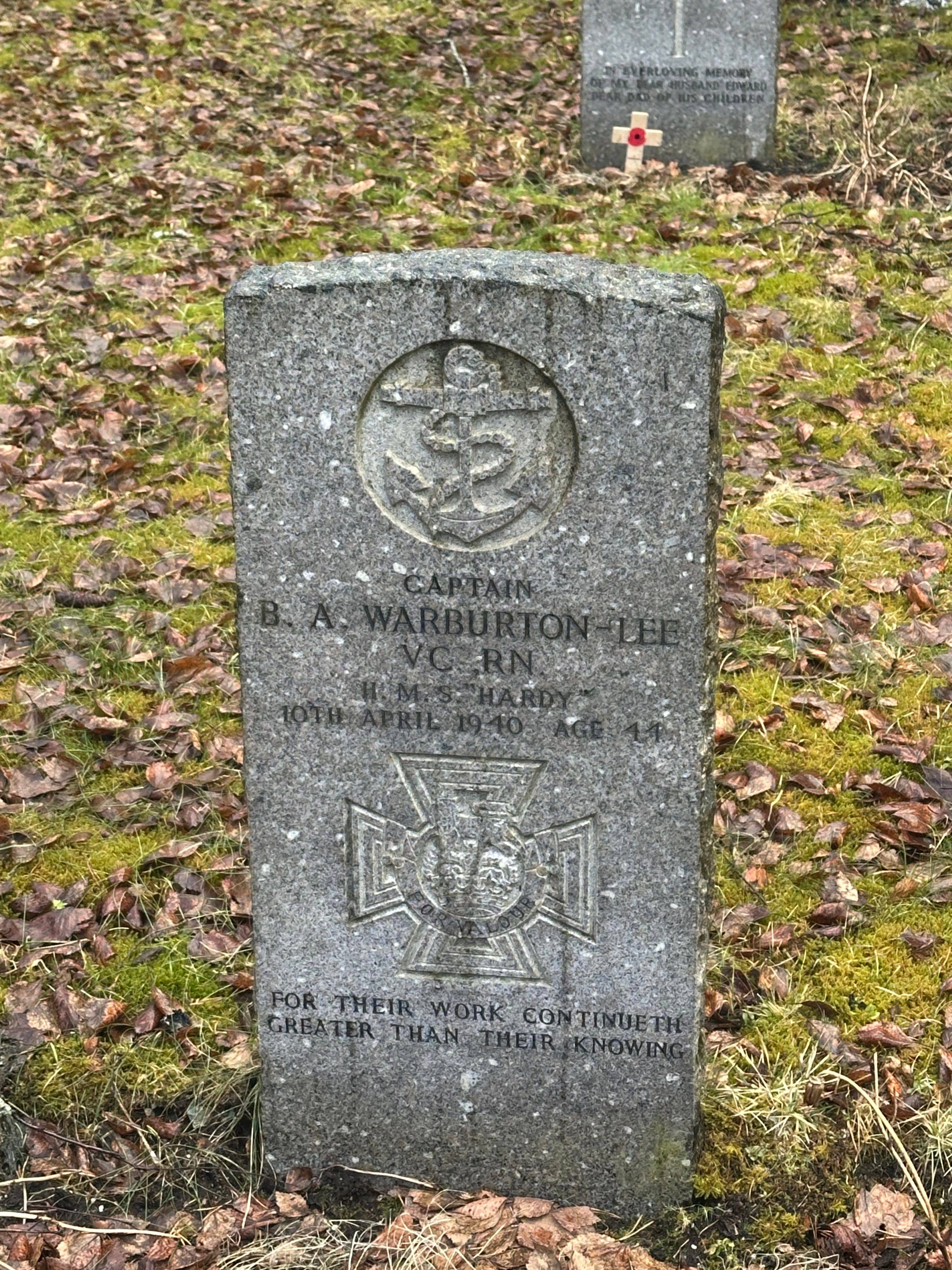
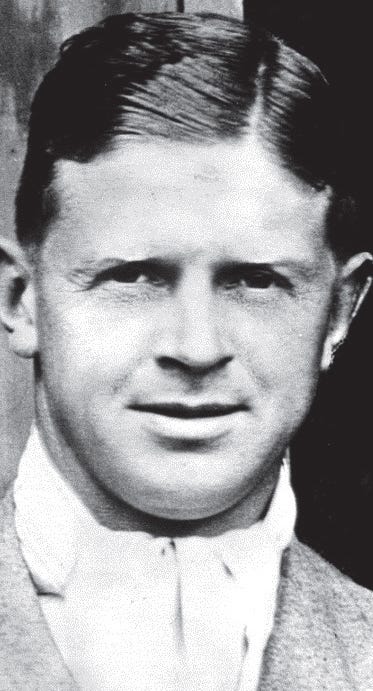
I’ve always been in a big believer in the importance of walking the ground and visiting the places where key events took place. How this extraordinary naval battle unfolded became so much clearer having toured this beautiful and imposing corner of Norway. We found the rocky beach where Hardy came to end, and looked out at the spots where Hunter and Köllner were sunk. We gazed at the rusted hulk of the Georg Thiele. We also visited the grave of Captain Bernard Warburton-Lee, who lies in a corner of the cemetery at Ballangen, and whose bravery and commitment brought the Royal Navy such a far-reaching and important victory. Warburton-Lee was posthumously awarded the Victoria Cross - the very first of the Second World War. As my daughter and I stood there, the trees above dripping in the morning rain, I paused and thought about what a lonely spot it was and what sacrifices were made in that war for freedom and the peace that followed - one that suddenly seems so fragile once again.
Another great piece, James. As a busy mum short of reading time, I really appreciate these concise posts. They’re perfect alongside the We Have Ways podcast for learning more about WW2.
Very interesting, thank you. Our very ordinary senior secondary ( grammar school equivalent) had four ‘ houses’ for sport etc in the 50s and 60s- Matapan ( yellow) Atlantic ( red) Taranto ( blue) and I was in Natvik ( green.) No one ever bothered to explain that these had been WW2 naval battles or tell us anything about them, so this was very enlightening. My own father was in the Merchant Navy during the war - but never spoke about it.