SLEEPWALKERS
Churchill Was Right in 1938

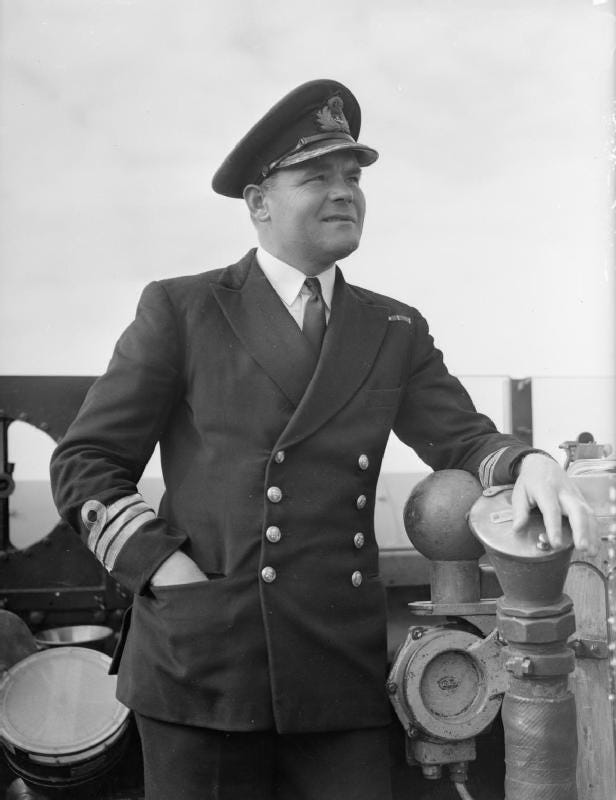
Not long after the end of the Second World, Donald Macintyre, a tough and immensely successful Royal Navy officer who had fought through the long, bitter war in the Atlantic, wrote a book about the naval battle for Narvik in Norway, which had been fought back in April 1940. The Norwegian campaign was a disaster for the British and French on the ground - and for the Norwegians, whose country was overrun by the Germans - but was more successful at sea. The Kriegsmarine, the German navy, could not hope to compete with the Royal Navy, and nor did they. For three months, their surface ships were, for the most part, hammered, the losses felt far more keenly in the small force than any British losses, which because of the Royal Navy’s size could be more easily absorbed. At Narvik, the Kriegsmarine was emphatically trounced. At the same time, U-boats were directed away from attacking largely unprotected Allied convoys crossing the Atlantic and directed to Norway instead, where they sank not a single Allied warship. Even so, Macintyre was stingingly critical of the entire British operation in Norway, despite the successes at sea, and frankly, justifiably so. The Army was underprepared, lacked essential equipment, air power was also understrength and not enough thought had been put into harnessing naval and air power together, even though by this stage, Britain had more aircraft carriers than any other nation. ‘Perhaps the most lasting lesson, however,’ noted Macintyre, ‘though alas one which democracies seem incapable of absorbing, is the futility of allowing their armed forces to dwindle and wither in time of peace and then throwing them, inadequate in numbers and equipment, into tasks far beyond their capabilities.’ The anger he felt, writing after the conclusion of the most devastating global conflict in the history of the world, leapt off the page. ‘Most of these shortcomings,’ he added, ‘can be placed at the door of democracy’s unwillingness to pay in peacetime for the sinews of war.’
It wasn’t just Britain that was culpable of this peacetime reduction in the armed forces. The United States, following the First World War, not only massively demobilised but also went to great efforts to reduce armaments production and make it incredibly difficult to start up again with a series of disincentivising laws passed under the Vinson-Trammell Act of 1934. By September 1939, there was barely a company in all of America producing explosives, for example, while the US Army languished as the nineteenth largest in the world sandwiched between Portugal and Uruguay. On 1 September 1939, the US Army Air Corps - it wasn’t even an air force then - had just 74 fighter planes in its arsenal.
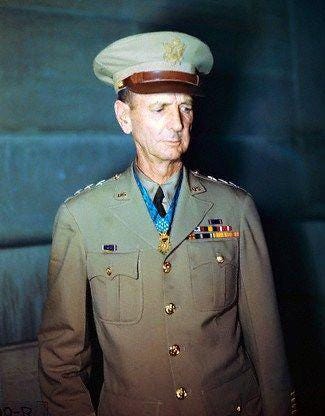
Lieutenant-General Jonathan Wainwright also reflected on this lack of preparedness in his post-war memoir. After General Douglas MacArthur had been pulled off the Philippines in March 1942 on the specific orders of the President, Waintwright had been left in charge, a poisoned chalice if ever there was one. The reason MacArthur had been whisked away to Australia was because it was obvious by 9 March that the Philippines would fall to the Japanese. Wainwright did as well as could have been expected but on 6 May, succombed to the inevitable. He was the only American general of the war to have to formally surrender his forces to the enemy and spent the next three and a bit years as a prisoner of war. Throughout, he kept a diary on scraps of paper, which became the basis of his memoir once the war was over and he was liberated. ‘The expense of making ourselves big enough and tough enough to have prevented that war would have been but a brief fraction of its eventual cost,’ he wrote. ‘Such preparedness would be a microscopically briefer fraction of the cost of a World War III.’
Both these warriors, who had witnessed the terrible cost and privations of war first-hand, knew what they were talking about but their words are worryingly prescient today in our ruptured world. Since 1945, however, the US has maintained the best-funded, most sophisticated armed forces in the world, with comfortably the largest navy and air forces, a superiority it achieved half-way through the the Second World War and which it has not relinquished since. The US Air Force, for example, has more than 13,000 aircraft; number two on the list is Russia with 4,000. The RAF, by contrast, has just over 600 of all types and doesn’t even make the top ten.
Last week, I spent two weeks filming at Chartwell, Winston Churchill’s stunning house overlooking the Weald countryside in Kent. Churchill was hopeless with money, spent more than he ever had and not least on Chartwell, which proved a money pit. In 1946, a number of well-meaning and wealthy friends clubbed together to purchase Chartwell for the National Trust, on the understanding that the Churchills could continue living there for as long as they liked and that only later should it be opened to the general public. After Churchill’s death in January 1965, his wife, Clementine, decided the time had come to leave - she didn’t want to live there without Winston - but was instrumental in preparing for its transfer to the National Trust and to that end restored the house to how it had been in the 1930s, Churchill’s ‘wilderness years’ out of government and the decade when he was the leading voice demanding that Britain should dramatically rearm to counter the threat of rising Fascism, Nazism and authoritarianism.

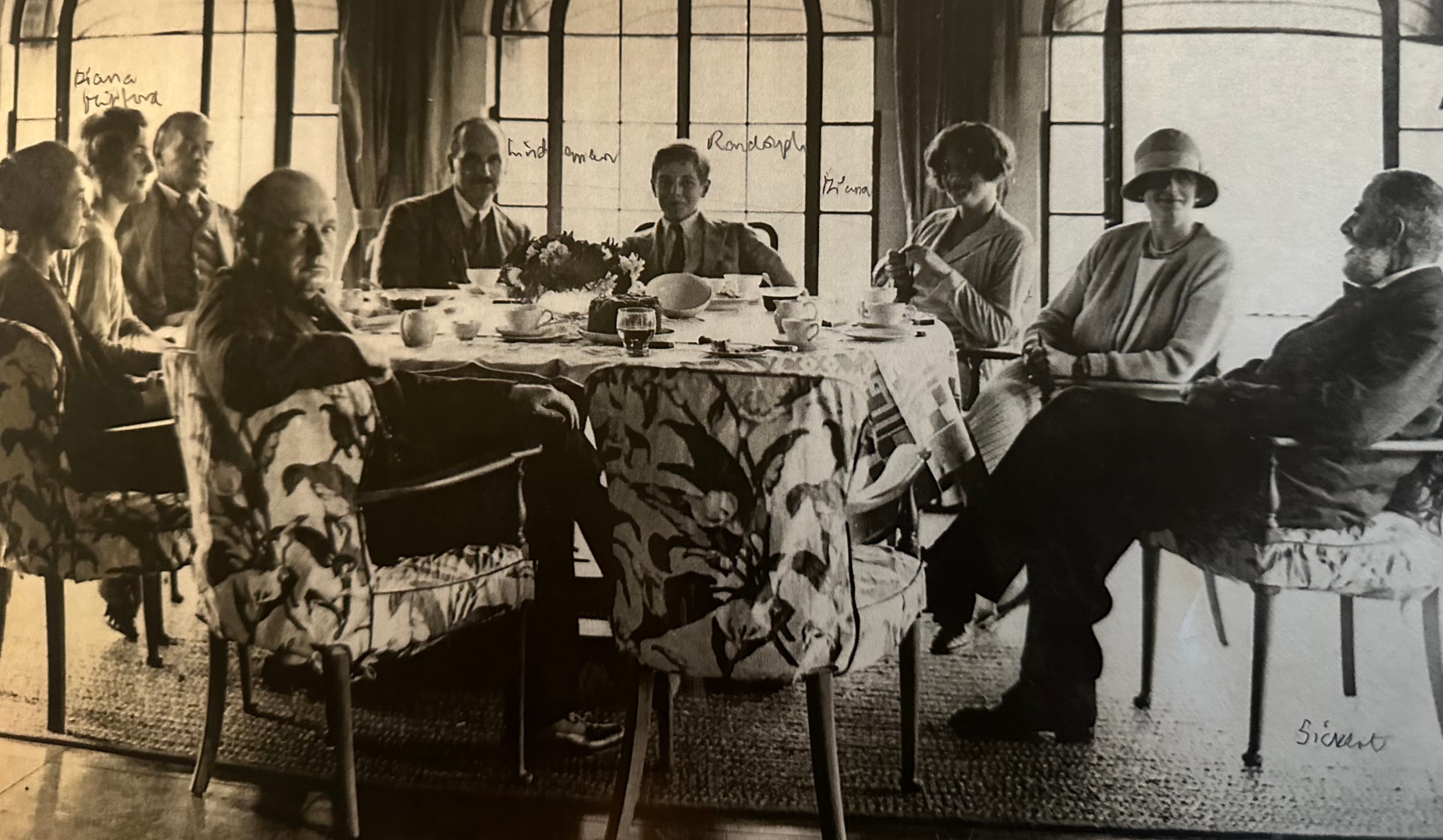
The dining room is as it was back then - an remarkably modern too - and it was easy to imagine Churchill sat around the round table with its vibrant chairs from Heals, coversing, plotting and planning with his circle of like-minded men: the scientist Frederick Lindemann, who would go on to play such a key role in the war; Robert Vansittart, the Permanent Under Secretary at the Foreign Office, and who had witnessed the rise of Nazi militarism first-hand in Germany; Ralph Wigram, his deputy; Major Desmond Morton, a neighbour and former member of Field Marshal Haig’s staff in the last war; and Major Ronald Cartland, brother of the novelist, Barbara, and who would be killed at Dunkirk in 1940. These and others were part of the ‘Chartwell set’ - a circle of twenty or so determined to do all they could to pressurise the government to further re-arm more urgently and dramatically than was being carried out at the time. Needless to say, Churchill and his circle thought acquiescing to Hitler at Munich in the autumn of 1938, and giving him carte blanche to sweep into the Sudetenland of Czechoslovakia, was a catastrophe. As he pointed out, giving in to bullies like Hitler would only encourage him to take more. Give him an inch, and he would take a mile, and so it proved. ‘The maintenance of peace,’ noted Churchill, ‘depends upon the accumulation of deterrents against the aggressor.’
This was absolutely the nub of the matter and what Britain and the rest of Western Europe should heed right now. It’s probably already too late, but Britain, France and Germany, especially, should fire up the furnaces, invest in the labs, technology centres, shipyards and factories and start a major rearmament drive. The armed forces needs to increase its paltry wages, offer a mass of incentives - free further education after a period of service for example, in the manner of the 1944 GI Bill in the United States - and get recruiting. Britain might even consider a system like Total Defence Duty, which was introduced in Sweden only back in 2015. This makes every Swedish citizen aged between 16 and 70 eligible for stint of public service - in the military, or in the health service and other public works. The teenagers and young of Sweden were outraged at the time but it is now more popular and widely accepted. The government has discovered the young are now far more engaged in current affairs and that Total Defence Duty has helped bring about national unity and a sense of urgency. Their freedoms are better understood and appreciated. Complacency has been kicked into the long grass.
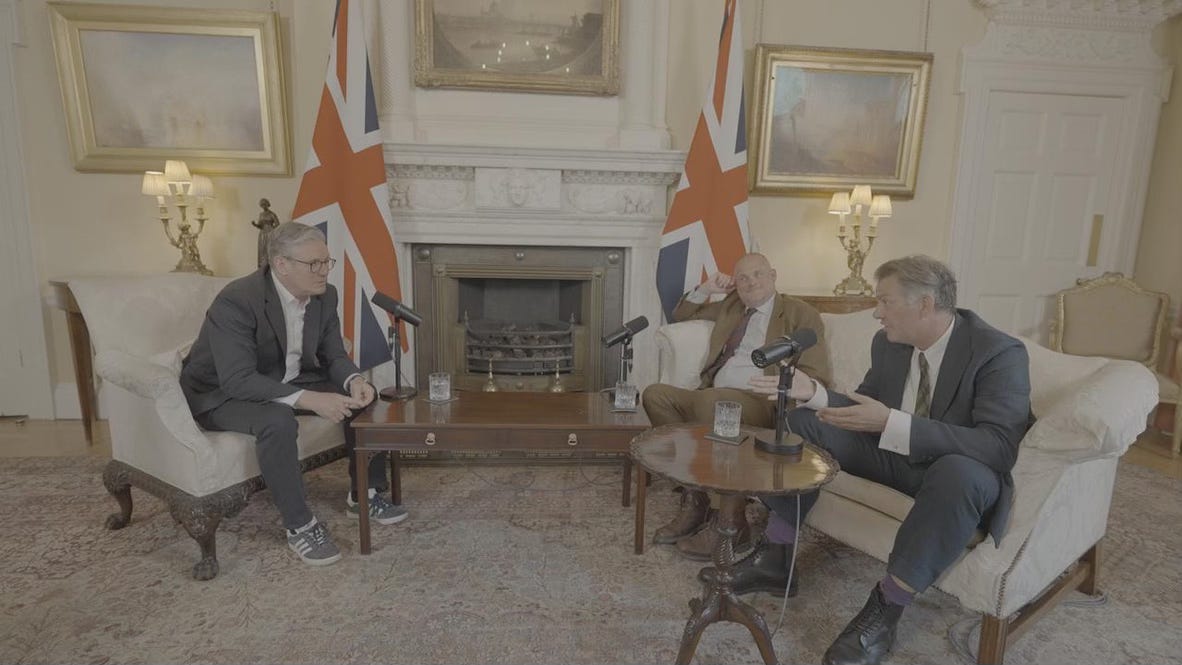
In Britain, Sir Keir Starmer knows Britain needs to rearm and urgently so. My podcasting partner, Al Murray, and I, interviewed the Prime Minister last year and the very first thing he said was to point out that his first duty was to defend the country. Quite right. John Healey, the Defence Secretary, knows this too. Large numbers of Labour MPs disagree, however, and view such talk as hawkish and war-mongering. It’s terrific, for example, that Ed Milliband has agreed a £22 billion Berwick Bank wind farm off the east coast of the Scottish Borders but there are easier, cheaper and more efficient ways of urgently producing the energy at home that we so need - and which won’t destroy migrating puffins and Arctic terns either. Keir Starmer’s problems, however, are all too obvious: Labour is not a unified party but a loose and often fractious coalition of left-wing tribes. Despite his whopping majority, his control is fragile, his position now weakened, and his party are currently urging a further lurch to the left that wants greater welfare spending rather than rearmament.
Others I speak to, including weary-faced generals and senior officers in the army, gloomily point out that there’s no money. The country is broke and with huge debt, caused by the double hit of the 2008 financial crisis and then the pandemic. But we were broke before the pandemic - we’d had those long years of austerity measures - and still managed to set up new emergency Nightingale hospitals, buy vast amounts of equipment, and bail out workers and businesses suddenly stuck at home. When the crisis hits, the money can be found. These measures, though, could be implemented swiftly. Warships and fast jets, on the other hand, can’t be magicked out of thin air. Developing sopshitcated fleets and equipment to prevent the Russians from cutting underwater cables take time.Then there are the servicemen and -women to man these fleets and specialist equipment. Recruitment and training doesn’t happen overnight. And while it’s good that we have factories now rolling out large numbers of military drones, what happens when the inevitable drone counter-measures become more effective? Drone warfare is but just another leap forward in military technology for which a counter-measure will be found. In fact, it is already starting to be developed and most likely will soon negate the dominance of these unmanned aircraft and vehicles on today’s battlefield of Ukraine. Think of the current front line in Ukraine as being like the Western Front for much of the First World War. A leap forward in technology had ensured the destructive power of artillery and machine-guns had kept both sides pinned down in 600 miles of trenches. The same is true of Ukraine - trenches there stretch a similar distance and both sides are equally rooted with the front lines moving barely an inch. What ensured warfare became mobile again in 1918 was the advent of armoured vehicles - tanks - improved air power, and better communications, which meant breakthroughs could be better exploited. The trend continued into the Second World War. Inevitably, the drone deadlock now keeping Russians and Ukrainians below ground will be unpicked. Leaps in weapons technology have been a feature of warfare ever since clubs were replaced by flint spears.
Back in 1938, there was no mandate for Prime Minister Neville Chamberlain to go to war - more than 90% of the democratic population were against it and there was widespread relief when he returned from Munich announcing peace in their time. No-one much cared about the Czechs - or rather, they felt sorry for them but there was a nimbyish attitude to what was going to these people still considered a long way away and about which most knew very little. We’ve got behind Ukraine but it’s not in the papers or on the news much these days, and it has done nothing much to increase public concern over our woefully depleted armed forces. Phone-in shows are full of earnest people wondering why we can’t all simply live in peace, or more concerned about the overflowing corridors of thier local NHS hospital and the cost of housing.
This is all very understandable but doesn’t solve the crisis we’re now facing. In the early 1930s, Britain was the largest arms exporter in the world, and by 1939 had comfortably the world’s largest navy, merchant navy and the world’s only fully co-ordinated air defence system. There were hundreds of factories churning out arms and more on their way. There was also an extremely healthy network of shipyards all around the coast from Scotland to Devon to Northern Ireland and increasingly large aircraft production plants. In other words, no matter how far behind Germany we were, we still had a huge armed forces and the infrastructure with which to rapidly increase output the moment the go button was pressed. There were even shadow factories being built ahead of the outbreak of war in September 1939 - new plants designed to spread the load so that if one was destroyed by enemy bombers, others could continue to flourish. Conscription was introduced in March of 1939. Through the 1930s, ever more warships were being built while older battleships and cruisers were given overhauls to update them with the latest weaponry and technology.
Today, by contrast, the British armed forces have been stripped bare. The regular army is just over 70,000 strong. This means that we could not even send a single division - about 15,000 men - to war. We can barely deploy a brigade of half that size. Perfectly adequate Type 45 Royal Navy destroyers have been mothballed because there not enough people to man them. Equally adequate jet aircraft have similarly been put out to grass even though they could still have a role in today’s battlespace. There is an ongoing backlog for training pilots - although this now improving. Officers and NCOs are no longer allowed to take their troops on a run if the temperature is above 22 degrees Celsius - they would need a qualified instructor. Military bases have been sold off to property developers and for car auctions, and recruitment has been put into the hands of the private sector who are clearly doing a spectacularly bad job. Recruits want to see a burly chested sergeant-major wearing his medals not computer-says-no desk wallahs. There is still no replacement medium helicopter for the Merlin even though four years ago Leonardo - based in the West Country - had an oven-ready model. At the last minute, the MOD, in its wisdom, decided there needed to be some competition so at the moment when then deal was about to be done, put the contract out to tender instead. Why? Why is comeptition needed? Just make a decision and get on with it! The net result of this idiocy is that Leonardo have laid off a number of workers, the competitors pulled out at the last minute, and we still don’t have a medium helicopter. And by the way, had that original Leonardo order gone through, there would have inevitably been further orders from elsewhere, meaning more work, more jobs and a boost to the UK economy.
So, the situation is pretty dire. Most people in the UK simply don’t care, though. The threat is not perceived to be real enough and is trumped by those other, more immediate and pressing concerns. We’ve also become a blame and claim society constipated by litigation and red tape. The civil service is large but it was big in the 1930s and forties and its size isn’t an issue per se. Rather, it’s widespread risk aversion and an unwillingness to make decisions in case something goes wrong and someone gets sued, combined with unnecessary red tape that is the problem. There was no Health & Safety Executive in the 1930s, no human resources departments and very little chance of individuals being sued in the work place. These are good developments so long as they do not stifle the decision-making process or hinder rapid progress. Max Beaverbrook, the press baron and first Minister for Aircraft Production in 1940, had signs in his office saying ‘Committees Take the Punch Out of War,’ and ‘Organization is the Enemy of Improvisation.’ Brexit promised to reduce red tape and paperwork but quite the opposite has been the case.
Then there is the messaging. John Healey is doing his best, Keir Starmer is saying all the right things, and there are plenty of commentary pieces in the papers and on Substack urging rearmament. The loudest voices, however, come from those within the military or who have recently retired from top posts and so can speak their minds. Paradoxically, however, their views don’t seem to carry much weight. There is an implication that they would say this. After all, they’re military men and of course they think the armed forces should be stronger.
Interestingly, in February 1939, it was the publication of a novel, What Happened to the Corbetts, by Neville Shute, which did much to change public opinion. In his fictional scenario, Southampton is devastated by enemy bombers and in the ensuing carnage and wreckage of the city the survivors are struck down by disease as teh water system breaks down. The Corbett family have to escape, which they eventually do by yacht. It was a huge success and seemed to many a harbinger of what might lie around the corner. Perhaps today, a group of writers, artists and performers are needed to help underline the importance of rearming now, right away, before it is too late.

Then there is the state of our finances. We’re broke. There’s nothing in the coffers. There’s simply no cash. I’ve heard it over and over. There are, though, solutions, should we wish to take them. I’ve written before about the Defence, Security and Resilience Bank currently being set up for NATO countries and being championed by none other than the Canadian Prime Minister, Mark Carney, who lest we forget, was formerly the Governor of the Bank of England. The DSR Bank is raising a huge pot of wealth via the selling of government bonds at triple A insurance and with low interest. This strikes me as a very good idea and the more countries that sign up to it, the more effective it will be. A handful of civil servants in the Treasury and MOD are apparently putting the kibosh on Britain joining - why? - so the opportunity to host this exciting new bank in London has passed. Some dozen countries have signed up to it, though, and it looks like Canada and Luxembourg will now the beneficiaries of playing host.
And we’ve already got a big mountain of debt say those who want to build expensive high speed railway lines and immense wind farms. Well, there are two points to be made on this. First, Canada and Britain have similar levels of debt - Britain’s is £1.5 trillion, Canada’s nearly £1 trillion. Britain is 17th in the debt league, Canada 21st, but with a higher level of household debt than the Brits. Second, we also had enormous debt in the 1930s as we still recovered from the First World War and the Great Depression, economic catastrophes far worse than 2008 or the pandemic. In fact, as a percentage of GDP, Britain’s debt in the 1930s was around 135% and post-war at a whopping 270% at peak; right now, it’s around 100%. Yet the enormous post-war debt was cleared by increased economic growth and Britain emerged with a growing and prosperous economy once more. What’s more, as the eminent economist, John Maynard Keynes, pointed out, in times of economic hardship, counter-cyclical policies - spending more - can provide a vital boost to the economy. Investing heavily in our defence industry could provide a much-need boost to the UK economy and actually help turned around our current stagnation rather than cripple us further.
It’s about choice. There are those who suggest Russia poses no realistic threat, and that we simply don’t need a strong armed forces any more. That’s as maybe but why risk it? What would happen if some of those underwater cables get cut? The cloud is not really the cloud, but information travelling along those very cables. Imagine the cost if our banking systems go down. And imagine what would happen if the Baltic States are invaded by Putin, triggering Article 5 of NATO, which compels us to support our allies. As Churchill pointed out, a strong armed forces offers a deterrent, and with it, the biggest chance of lasting peace.
We can do something about this dire situation. What is needed is will, vision, dynamism, and determination. We need to explain to the public the urgency and seriousness of this rapidly changing world we find ourselves in, but also the economic benefits of dramatically rearming. After all, it worked for the United States in the 1940s and it’s working for Poland, for example, right now. Are any of our current crop of politicians capable of this? Possibly not, but the current Prime Minister could perhaps use this crisis to turn around his own fortunes and that of the government.
I know Labour is the party in power, but let’s not forget that historically, it’s the Tories who have overseen the degradation of our armed forces, not to increase welfare spending, but to enable tax cuts. The 1981 defence white paper that slashed the surface fleet and arguably led to the Falklands War, The 1990 Options for Change restructuring that saw a 20% reduction in army manpower and a 22% reduction in military spending between 2010 and 2016. Neither party has a monopoly on short sighted defence policy.
Brilliant piece. Macintyre and Wainwright were absolutely right. The cost of effective deterrence is nothing compared to the cost (both human and financial) of destruction if that deterrence fails. And as you say spending on defence can be a means of major regeneration.