Ordinary Men

‘The day has been immensely lazy and rather monotonous,’ wrote Captain John Strick from his hospital bed at the 103rd General Hospital near Naples, in Italy, on 22 January 1944, ‘indeed, a sort of monotony hangs over everything.’ Only two people in his ward were really ill, he noted: a Norwegian sea captain wounded during the Luftwaffe’s unexpected raid on Bari the previous month, and an injured Commando. The rest were convalescents. ‘Apart from myself,’ Strick noted, ‘who feels listless and sick in mind.’ Flashbacks kept entering his mind: of the rushing Garigliano and of the sight of Sergeant Budd being swept away on a night patrol ten days earlier, never to be seen again. And of Sergeant Murphy, who’d gone missing in Castelforte just a few nights earlier. He was deeply distressed by the thought that he and the others had been unable to reach him and that his friend had died, alone, from loss of blood. ‘I live through the hideous scenes outside Castelforte again,’ Strick wrote, ‘and marvel that I could have acted with so little wisdom. At first I was inclined to discount the ‘bomb-happy’ explanation myself but in view of my four breakdowns I begin to wonder and must try and see a psychologist.’
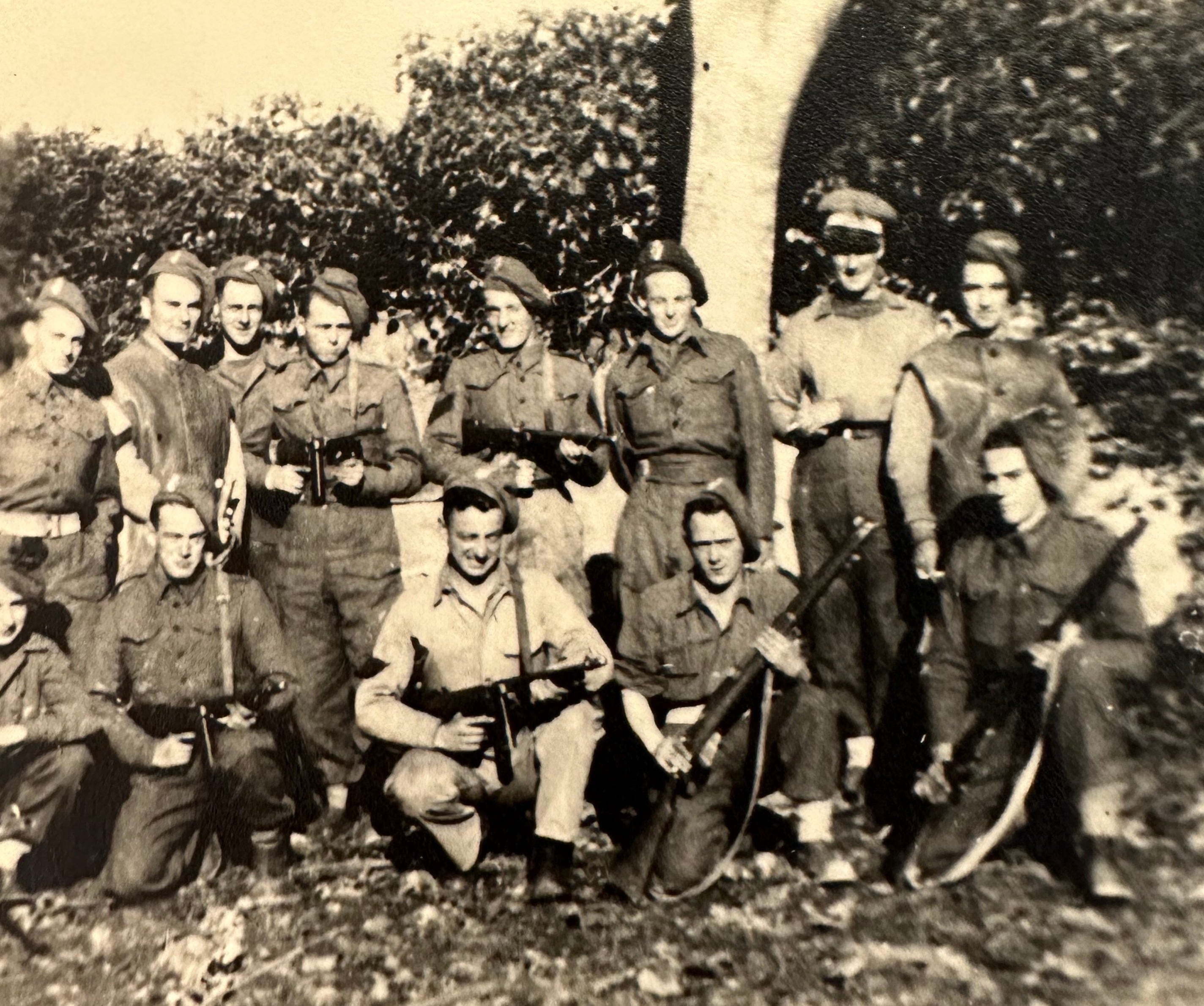
Strick was twenty-five, lean-faced, fair-haired and looked younger. The son of a First World War general, he had been brought up in Devon then packed off to Wellington College, an English boarding school where he had proved too slight, small and lacking in co-ordination to do well at sport, although he had done rather better academically – so much so that he’d won a place at the London School of Economics and then to King’s College, Cambridge, to read history. He was also an aspiring poet and had been corresponding with the MP and writer, Harold Nicolson, who had been most encouraging. There was little about Strick that marked him out as a natural soldier, and despite his military background there was no doubt he’d have ever worn a uniform had it not been for the war. None the less, he had joined up out of conviction, had been posted to the 1st Battalion, London Irish Rifles, and had discovered, rather to his surprise, that he was a natural leader but also someone prepared to go further than most. What’s more, he’d gained both confidence and growing self-assurance as a result. Perhaps it had been a slight chip on his shoulder left over from school, but his apparent fearlessness – first properly demonstrated during an assault on a German position during the battle for Sicily back in July 1943 – had shown him that what he lacked in sporting prowess he made up for as an infantry officer. It had both terrified and exhilarated him, and led him to create, with the battalion commander’s blessing, ‘X’ Platoon, or ‘Battle Patrol’ – an entirely irregular sixteen-man patrol, always the same men, which he would lead on night patrols and recces, often behind enemy lines. It had significantly enhanced his reputation within the battalion, a standing he had greatly enjoyed.
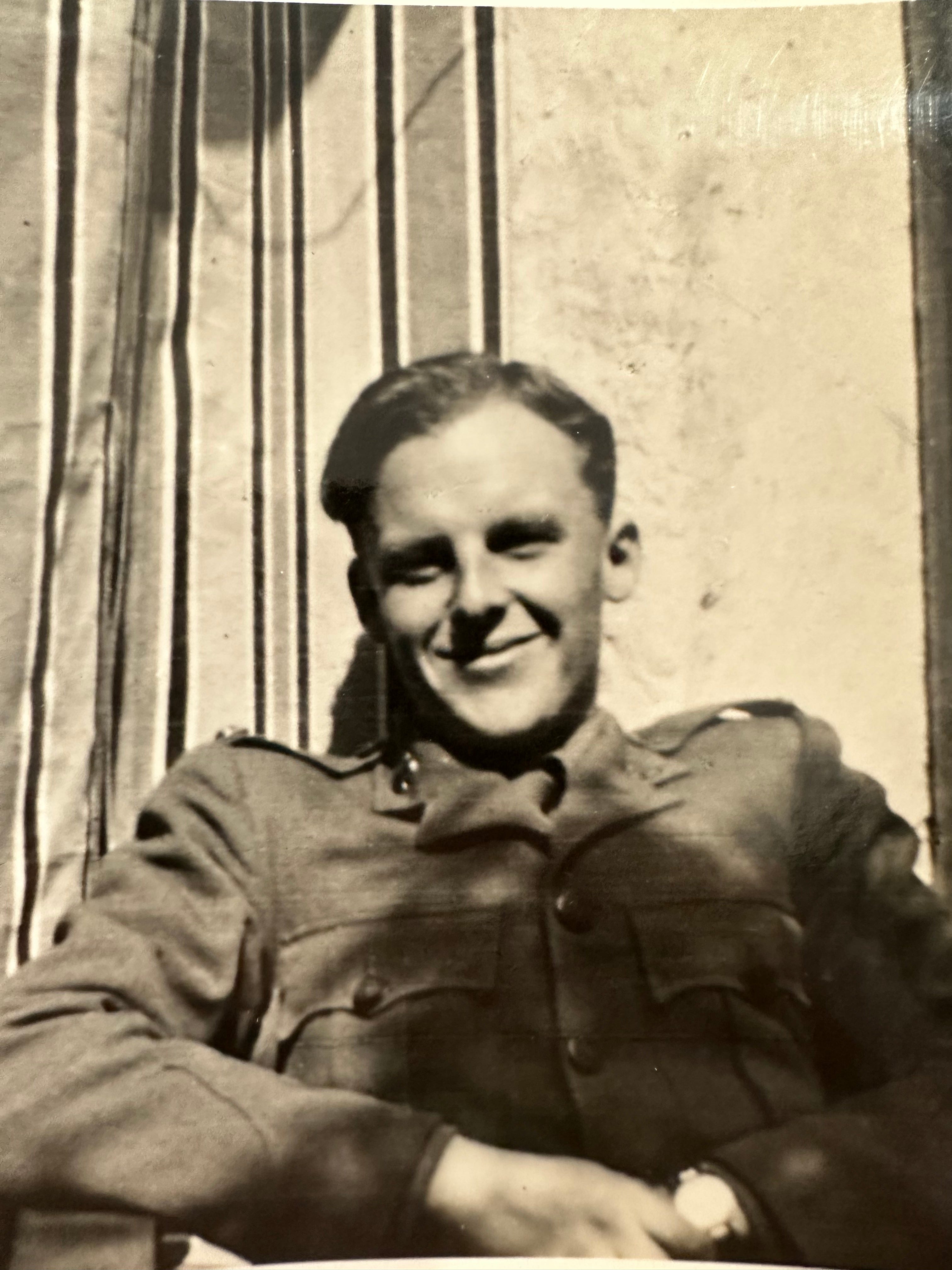
Yet, it had also started to take its toll. The loss of Sergeant Budd in the dark current of the Garigliano had shocked him deeply but then had come the night patrol into Castelforte on the night of 18/19 January. The British had crossed the fast-flowing and wide River Garigliano the previous night bringing more troops over into a narrow bridgehead the following evening, including the 1st London Irish Rifles. It was cold, damp, and miserable, the ground underfoot muddy and wet and the situation uncertain and precarious. Strick, with his X Platoon, was ordered to push into the village of Castelforte, perched on a low saddle below the more towering Monte Damiano, and to found out whether the place was still occupied by the Germans. Exhausted, struggling with a head cold and with his nerves already starting to fray, Strick found this tip-toeing advance into the village nerve-jangling to say the least. At one point they heard boots marching a short way off and assumed they must be Germans. Suddenly, Strick distinctly heard a single click and ordered all his men to halt. Then silence. He left Sergeant Murphy with four men and a Bren light machine-gun to guard a crossroads, while he took the rest forward. At one house they discovered a number of Italians cowering in house; they told him the Germans had left but had sown large numbers of mines. Rejoining Murphy, they then together inched their way forward, a few steps at a time, then a pause to listen. All seemed eerily quiet. The main part of the village was still up ahead when they reached an olive grove running away from the left-hand side of the road. Strick now divided the patrol in two, leading half himself into the olive grove in attempt to work around the back of the growing number of buildings and sending Murphy off on up the road.
He led the way with Private Pile, second in line, behind him and they’d gone a short way when there was a sudden explosion behind him. ‘I shot about eight foot through the air,’ wrote Strick, ‘thinking, as I went, I suppose this is a mine.’ Landing heavily, he lay on his back for a moment, then managed to get to his feet and staggered back to see what had happened. Apart from a few cuts and bruises, he seemed to be all right, but Pile was moaning on the ground, with one of his feet blown off and two broken legs.
While the others attended to Pile, Strick hurried to recall Murphy’s half of the platoon but it was only once they were all back that they realized the sergeant wasn’t among them. A corporal volunteered to go and look for him but returned without him. Soon after that, as Pile was being laid onto an old ladder they had found as a makeshift stretcher, they had a burst of sub-machine-gun fire – and from a German, not British weapon. Clearly, Castelforte was still occupied, there was no sign of Murphy and they had a man with a foot blown off. With indecision gnawing at him, Strick eventually decided to leave Murphy and for them all to head back as quickly as possible. He hated abandoning his sergeant, but what else was he supposed to do?
Once back at C Company’s command post, Strick suddenly broke down in tears. He recovered only to break down again in front the battalion commander. At this point, the medical officer packed him off to the rear and from there he was sent to the 103rd Hospital in Nocera, near Naples. ‘Have no news of the Sgt,’ he wrote in a remarkably frank letter to his mother from his hospital bed on 22 January. ‘He was a personal friend and I do not think after this I can face that sort of job again. It is terrible what blast can do to one.’
Last week I was back in Castelforte, a village that has grown into a town since the war, but which, at its heart, remains a series of narrow, winding roads and tightly packed buildings perched on a low hill. Away to the left was the looming mass of Damiano, but as we moved steadily up the winding hill, I found the spot where Strick had left the road; olive groves tend to be one feature that change little over the years and the gnarled trees were clearly more than eighty years old. There are a couple of accounts of that patrol and putting them all together it was possible to work out where this awful night for Strick and his men must have taken place: the bend in the road; the site of the olive grove; a hairpin bend was also mentioned and which is still part of the town’s layout. It’s an unremarkable spot, but Castelforte still bears the scars of the war – the village was hammered and much of it destroyed, as were many others in this region. After all, this was the stretch of southern Italy through which ran the German Gustav Line, a defensive position that held up the Allied advance for more than five months. Cassino, fifteen miles away, was 100% destroyed back then. Most of the surrounding villages were too, and then hastily rebuilt in the decades that followed. While the surrounding countryside is stunning, seventy years of wild, economical and modern architecture are a reminder that regeneration here has been achieved with none of the charm of earlier generations.
From Castelforte, we climbed up onto Monte Damiano and following a track, walked around the mountain’s southern side and looked out over the flood plain of the Garigliano and out to the Tyrrhenian Sea beyond. It was over this area that the British 5th Division crossed the river on the night of 17/18 January 1944. One of those was Captain David Cole, commanding the Signals Platoon in the 2nd Inniskillings. Just twenty-three, he, like Strick, had also been studying history at Cambridge when he decided he should do his bit and so volunteered for the army. Bookish, with spectacles and a kind, gentle disposition, he was yet another who would have never put on a uniform had it not been for the war. Cole’s experiences that night were horrific. A shell that crashed nearby while he was waiting to cross the river, killed his radio operator. He and a fellow had to prise it from the dead man’s shoulders. When he did eventually get across – after half of A Company had been lost in the attempt - he and his men and the rest of Battalion Headquarters then had to cross 800 yards of minefields to the foot of the Minturno Ridge, a low, triangular-shaped mass. This I could easily make out from Monte Damiano, as I could the flood plain before and over which Cole and his fellows had had to advance. Just as the attacking companies were assaulting the ridge, another shell whammed in, sending Cole hurtling into the sky. When he came too, he was covered in blood and gore. It was nighttime and the only light was the flickering kind from explosions and star shells but as he groped around he spotted a single boot with a leg still protruding. Then beside him he saw Jim Bradley, the adjutant to whom he’d been speaking moments before, in pieces. And close by half a second body, intestines slick and oozing, just feet away. It was this man’s blood that covered Cole.
He knew he had to get up and find his men, and particularly the command radio. Clambering to his feet, he stumbled about then spotted the replacement radio operator’s body on the ground, the wireless still strapped to his back. Bending over, Cole saw the man no longer had a face. The entire front of his head had been sliced off, blood gulping thickly from the mess. Together with another of his men, they slipped the radio off the dead man’s shoulders. Numbly, Cole put the blood-smeared headphones on his head, made some adjustments to the set, and tried to make contact with C Company.
It was a gloriously sunny day as I looked down on this now peaceful corner of Italy. The sea twinkled enticingly, while the reflection of the sun glinted on the roofs and windows of houses and villas now dotted across the Minturno Ridge. It seemed fantastical that such terrible events had taken place here, in Europe, just a pinprick in time ago, or that such decent, kindly young men had had to experience such horrors. Italy in January 1944 was struck by relentless rain, snow, and freezing temperatures. It was one thing for me to be ambling across flood plains listening to nightingales in the early summer sun of 2025 or strolling along gentle mountain tracks; and it was quite another to be fighting across and up this terrain in the middle of a terrible winter with dug-in enemy troops trying to eviscerate the British attackers, most of whom were civilians and only soldiers for the duration of the war. So much was expected of these young men. Way too much. And then a friend handed a piece of rusty colour shrapnel, a fragment of a shell that had exploded in violence near the very spot we were standing just over eighty years earlier.
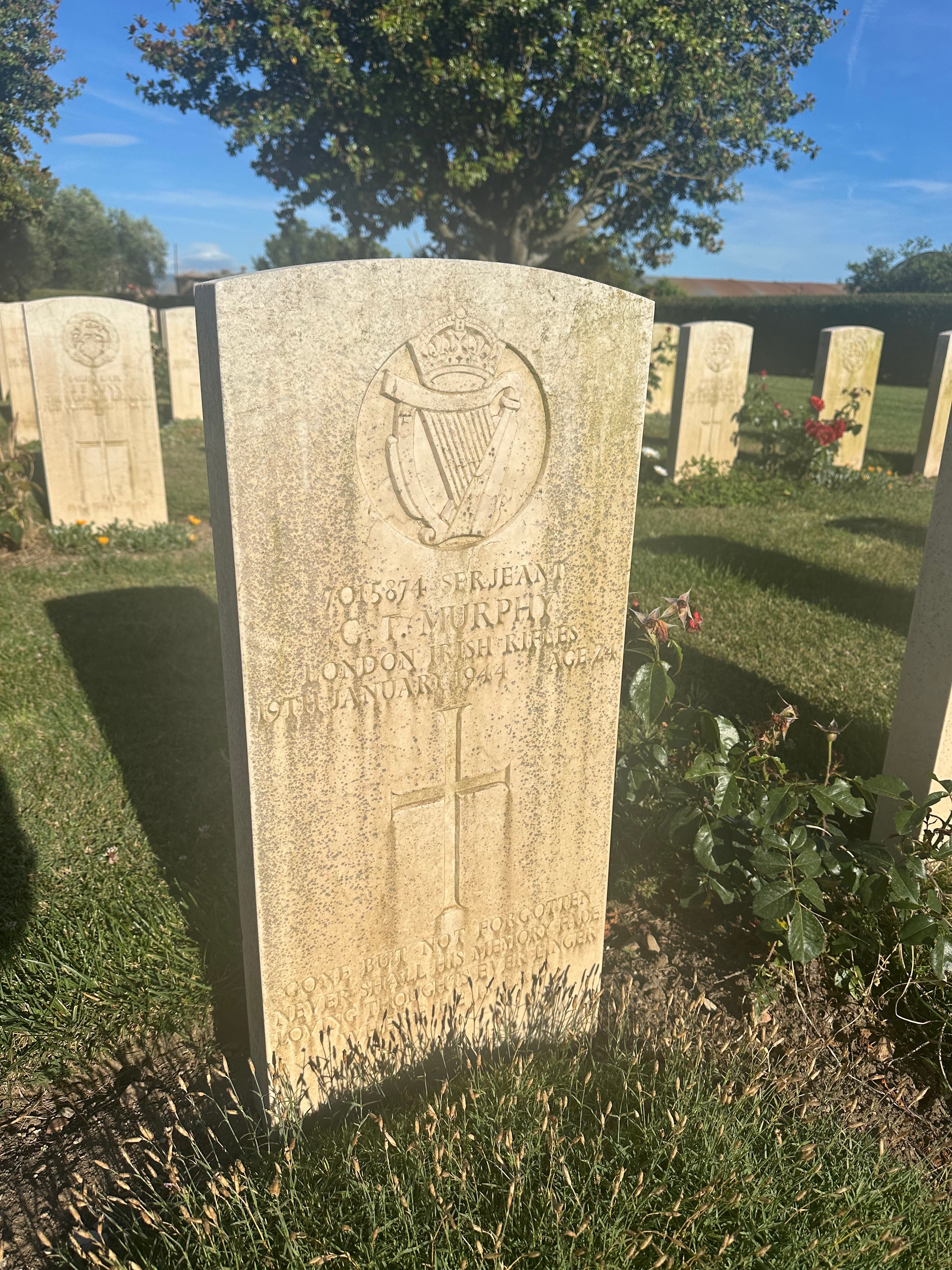
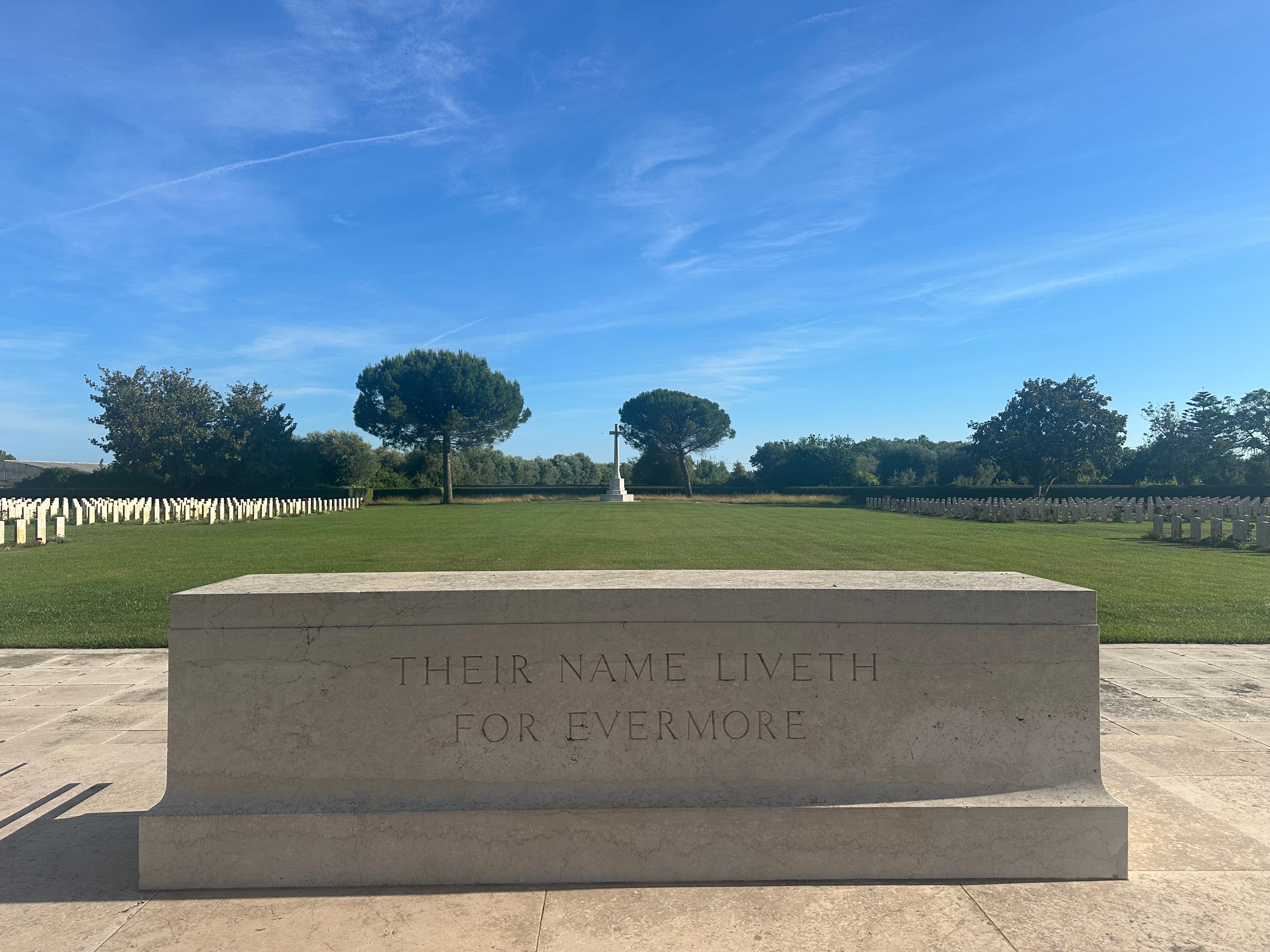
Later, we called into the Commonwealth War Graves Cemetery at Minturno. Like all these solemn resting places, it was immaculately maintained even if the gravestones themselves were looking a little tired and weather-beaten. I wandered through the sea of graves, mostly young and very young men. Among those lying there was Sergeant Murphy; his body had been found, riddled with bullets, lying in a pool of blood. There were also rows of Inniskillings, including Cole’s great friend, Harry Christie, who had been killed in his trench by splinters when a shell hit a nearby tree. Men are being killed in trenches in Ukraine as I write this. The British Army is spending much of its time at present practicing digging trenches and preparing for what trench warfare might be like.
Most of the men lying in their graves in Minturno were ordinary men doing their bit, answering the call, their everyday lives turned upside down, just as David Cole’s and John Strick’s had been, for this extraordinary and cataclysmic event that had crept up on the world in the 1930s and then suddenly erupted. Economic disaster, the political upheaval that had followed, the upending of the global order: these were the catalysts.
Had Cole and Strick seen war coming? Not initially. Rather, they’d continued with their lives, heading off to university until it became clear they, too, would have to do the extra-ordinary. As I wandered among the graves I felt a sense of heavy sadness, and hoped there would not be some similar cemetery in Estonia or Latvia a few years down the line. Most of us in the West lead such prosperous lives, enriched by the toys of modernity. As we flick through Instagram, or a raft of streaming channels, or head to the pub, or watch or play sport, or get into our cars, or buy items on Amazon to make our lives easier, or head abroad on holiday, it seems impossible to think the progress of contemporary life could ever be interrupted. We take so much for granted. The rhythms of our daily lives will surely continue, just as they always have. Us, involved in a war? Impossible! That we might find ourselves crouching in a trench while drones above us hunt us down – ridiculous! That hypersonic missiles might target this country that we moan and complain about, but which is so reassuringly familiar – absurd! Of course, such a terrible scenario can be avoided but it won’t be if we continue to complacent and if we’re not prepared to safeguard it.
What made the writings of John Strick and David Cole – to name but two – so especially poignant for me was that both were so identifiable. I knew those men, because they weren’t so different from me or from others I know - and knew when I was a young man their age. I’m glad to say that Cole survived and later became a highly regarded British diplomat. John Strick remained in hospital for a couple of weeks, slowly recovering from his ordeal. He went on walks round about, visited Pompeii, bought himself a spaghetti dinner and drank too much wine, and worried about whether he was well enough, mentally, to return to the frontline. Regardless of his concerns, he was considered fit enough soon after and on 11 February, sailed for Anzio where he rejoined his now redeployed battalion. He’d been back barely a week when, readying his men for another patrol, a shell screamed in and killed him outright. Reading his diary and his numerous letters, in his scrawling handwriting, it was hard to imagine someone so alive, so real, so vital, and whose character was bursting off the page I was clutching, could have been struck down so instantaneously and so violently. John Strick haunts me. So does the thought of what might come to pass if we continue to sleepwalk now.
I'm currently reading Cassino '44 and read about the men (some are still practically boys) named in this post only yesterday. It was one of the instances when I put the book away for a time, it was so awful.
And still happening all over the world.
There's none so deaf as those who will not hear. These young men are my students today.