Into That Darkness
A Cautionary Tale

The story of Franz Stangl is a cautionary tale, if ever there was one, but it’s worth recounting here in these troubling times of rupture. I’m repeatedly struck by how much history can teach us; human behaviour follows repeated patterns, no matter the ever-changing world around us. Fundamentally, we humans haven’t changed a whole load – not in recent centuries, at any rate.
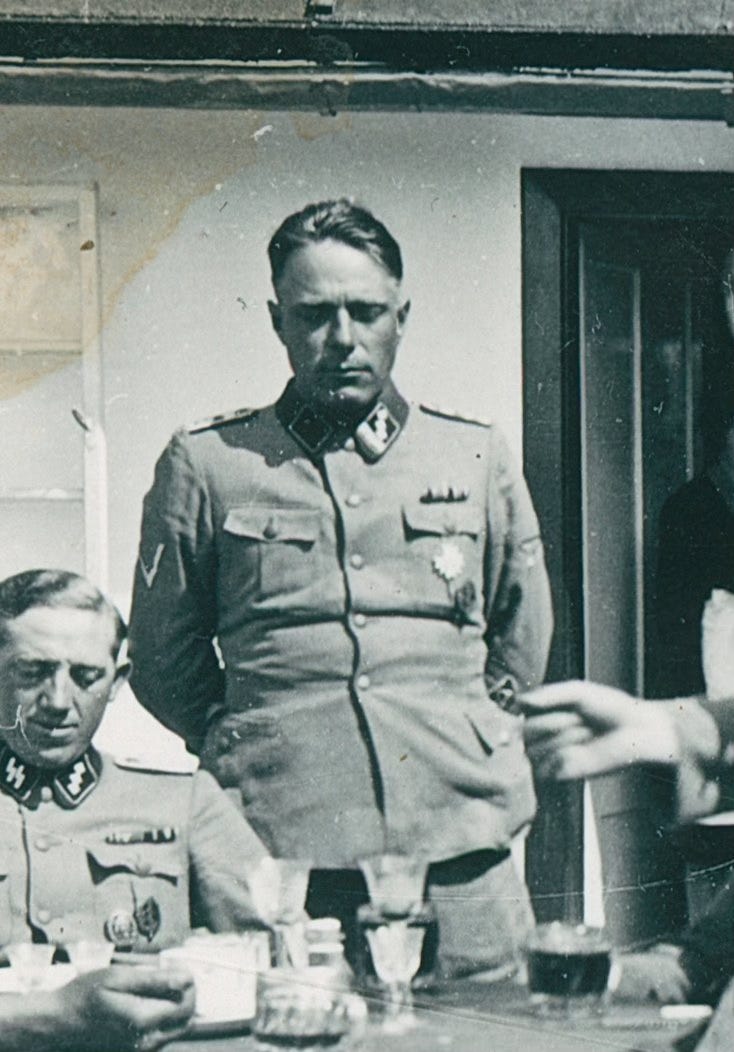
Franz Stangl was born in March 1908 in Altmünster, a small town in the beautiful mountains and lakes of northern Austria, half way between Salzburg and Linz. He had a sister who was ten years older but a still-young and pretty mother. His father, however, was a fair bit older, and a former dragoon in the army of Austro-Hungarian Army. His ornate uniform, always immaculately maintained, hung in a wardrobe; it was clear Herr Stangl missed those days and ruled the household regimental lines. The young Franz was terrified of his father. One particular spanking was vividly remembered. ‘He had cut his finger some days before,’ Stangl recalled, ‘and wore a bandage. He thrashed me so hard, his cut opened and blood poured out. I heard my mother screaming, “Stop it, you are splashing blood all over the clean walls.”’
Stangl’s father died when the young Franz was still only eight. A year later, his mother remarried a widower with two children; the boy was the same age as Franz and they soon became inseparable friends. At fourteen, the boys were expected to give up their school and start work at the nearby steel mill where Stangl’s step-father worked. Franz wanted more than that, though. He had ambition and wanted to work at the textile mill, seen as a more elevated job but for which he needed to be a year old. His mother supported him in this and at fifteen he duly became an apprentice weaver. Three years later, he finished his apprenticeship, then sat some exams and became the youngest-ever master weaver in Austria. It was quite the achievement. At eighteen he had fifteen workers under him and was earning 200 schillings a month, no small sum back then, and although he gave most of it to his parents, he still had enough to build a litlte boat, which he would sail on Traunsee. ‘It was,’ he said, ‘my happiest time.’
None the less, by the time he was twenty-three, he realized he had reached a dead-end; around him were men a dozen years older already ageing due to the dust and incessant noise of the looms. It was unhealthy work but without higher education there was nowhere for him to go. Stangl wasn’t riven with ambition but he did want more from his life, and understandably so. He’d noticed policemen in the street looked fit, healthy and somehow seemed secure; he reckoned the work would be varied and interesting too. Stangl was tall and strong and although he’d harboured a hatred of uniforms because of his father, he applied to join the police, had an interview and exam and was taken on.
This was the first major fork in the road that Stangl took. When he explained his decision, his boss at the mill said, “Why didn’t you come and talk to me about it rather than do it secretly? I intended to send you to school, in Vienna.” So, an opportunity for higher education and an entirely different course to his life passed him by.
The Vienna School of policing was tough, but Stangl passed all the various training and did well enough. In February 1934 there, during the political turmoil that followed the Great Depression and the collapse of the central bank, there were socialist uprisings. Stangl was based in Linz and won a Silver Medal for helping flush out Socialists during an armed siege of the Central Cinema. In August that year, the Chancellor, Engelbert Dollfuss, was assassinated. Stangl and his colleagues blamed the Nazis. Soon after, Stangl then found a Nazi arms cache in a forest, which earned him a medal: the Austrian Eagle and a promotion to the Criminal Investigation Department. Stangl was to become a plain clothes detective. He later claimed this was a major turning point in his life; that medal and the reason for it hung over him like a sword of Damocles. The CID school was incredibly intensive. ‘But for me,’ he said many years later, ‘it was the first step on the road to catastrophe.’
By the autumn of 1935, Stangl had become a detective and was posted to the political division of the CID in Wels, a town not far from Linz. He had got married to Theresa Eidenböck, a woman he loved deeply, was living in a decent house and doing well for a man not yet thirty. Despite the febrile political scene in Austria at the time, Stangl insisted he wasn’t political himself. ‘I know it sounds as if I should – or must – have been. But I wasn’t. I was just a police officer doing a job.’
Everything changed in the spring of 1937 when a new Director of Police, a man called Rubisch, took over. Unlike his predecessor, Rubisch was a Nazi. The medal Stangl had received now became an albatross around his neck. After the Anschluss in March 1938 in which the Nazis swept into power in Austria, a number of police were arrested, including three out of five who had received the Austrian Eagle. And Stangl had received his for revealing a Nazi arms cache. His card was marked. In Linz two police department heads had been shot. ‘People we’d seen just a few days before,’ said Stangl. ‘No trial, nothing – just shot them.’ Another, a friend, was sent to a concentration camp. Stangl and a friend of his, a policeman called Schlammer, decided to get rid of their service file cards and to persuade a lawyer they had once helped to claim the two men had been secret Nazis – before the Anschluss, when to be part of the party was illegal. This lawyer duly arranged for their names to appear on the illegal Party lists for the previous two years.
This unquestionably saved Stangl’s career – and possibly his neck – but his wife Theresa was appalled when he told her what he had done. She was a devout Catholic and hated the Nazis. “You betrayed me with these swine,” she told him. He realized she didn’t believe him. Rather, she thought he really had joined the Party in 1936. No matter how much he protested his innocence and explained he had only done it to save his career – and their life together – a devastating rift emerged between them, one that took many years to heal.
Whether Stangl had been lying to his wife or not was hardly the point. The Nazis were now in power and Stangl was in the police of the Nazi state. He was sucked into upholding their new laws, which meant collaborating with Section IIB of the Gestapo, specifically established to deal with the ‘Jewish Action.’ He could, of course, have walked away, but it didn’t seem that easy to him at the time. ‘It wasn’t a question of ‘getting out,’ he said. ‘If it had only been as simple as that! By this time we hard every day of this one and that one being arrested, sent to a KZ, shot. It wasn’t a matter of choosing to stay or not stay in our profession. What it had become, so quickly, was a question of survival.’
A new boss came in, this time from Berlin and Stangl was given a German rank and a promotion to Kriminal-oberassistent. The new head, Georg Prohaska, loathed him, had suspicions about him and insisted Stangl sign a document renouncing Catholicism. Stangl was Catholic but not devoutly so like his wife. Stangl viewed it as yet another compromise he had to make to save his job, and more likely even his life, but it was, of course, a fork in the road and yet another incremental step towards his corruption.
By this time, Stangl was working in Linz but his wife and daughter were still in their well-appointed home – and sanctity in Roseggerstrasse in Wels, complete with its neat little garden. Then, in November 1940 Stangl was promoted again and told to report to Berlin in instructions signed by Heinrich Himmler, the head of the SS. Stangl was to report to Kriminalrath Werner at the Reichskriminalpolizeiamt in Berlin. Having presented himself to Werner, Stangl was told he was to take on a very difficult and demanding job for a new Foundation based at Tiergarte 4 in Berlin. Stangl had no idea what went on their or what ‘T4’ as it was known, was. T4 had been established by the Führer Chancellory, effectively Hitler’s private office. This was run by a monstrous but somehow largely forgotten figure at the heart of the regime, Philip Bouhler.
And a key policy emerging from the Führer Chancellory was a policy for the ‘mercy killing’ of mentally ill and physically disabled civilians, individuals that marred the warped Nazi notions of an Aryan master race. T4 was dressed up as ‘assisted suicide’ and the ‘mercy killing of grievously suffering patients upon their ow or their relatives’ request or therapeutic grounds.’ It was, of course, no such thing. It was cold-blooded murder.
Kriminalrath Werner explained to Stangl that such mercy-killings really were a release for the patients and would only be undertaken on the very worst cases after very careful examination. It would be, he said, a release from an intolerable life. Werner wanted to place Stangl in charge of the security around T4. Stangl was shocked and told him he felt unsuited to such work but Werner reminded him that he was only being asked to take on the job because of the exceptional trust they now had in him. Werner also pointed out that there was a disciplinary action pending against him - brought by Prohaska. This would be dropped if Stangl took on the job. So Stangl accepted. He was posted back to Austria, to a new T4 clinic based at the Schloss Hartheim near Everding.
Stangl hated the job but it seems he became increasingly hardened to it, and persuaded himself that none of the patients would have had much of a life had they been spared. Even so, although he was not directly involved in the killing, he was part of the machine that allowed T4 to continue at various clinics throughout the Reich. Needless to say, he never discussed his work with his wife. He also convinced himself that if he refused to continue with the job, he would be posted back to Linz and from there sent to a concentration camp. These fears were not entirely unfounded. Nor was there any suggestion he was anything other than reluctantly in this post.
None the less, he did have a choice. Stangl remained part of the T4 programme until Hitler suddenly and unexpectedly ordered the euthanasia project to shut down on 24 August 1941. It took a while to wind it down and concentration camp victims, certified as ‘insane’ continued to be killed under another oblique project codenamed ‘14 f 13’. Stangl professed to know nothing of this, however. At any rate, in February 1942, he was again summoned to Berlin and told he could be posted back to Linz and be put at the disposal of the hated Georg Prohaska, or sent to Lublin, in the east. Stangl chose Lublin. He didn’t know what this would be. ‘Something was murmured about the difficult situation of the army in Russia, and anti-partisan action, but this was never elaborated on,’ he said. ‘Anyway, for me it wasn’t a difficult decision: I was prepared to fight partisans any day rather than Prohaska in Linz.’ He must have known his next posting was bad, however. When he said goodbye to his wife at the railway station in Wels, he hugged her especially tightly.
At Lublin, he reported to SS-Brigadeführer Odilo Globocnik, one of the more unsavoury and cruel of the SS stooges. Stangl was now enmeshed in the SS with the rank of Oberstürmführer – a mere first lieutenant, which made him only the second rung from the bottom in terms of officer ranking.
Stangl’s posting was to continue the construction of a new camp at Sobibor in what had been Poland. Even so, he was camp commandant despite his still lowly rank. He had no idea, however, that it was being built as an extermination camp. Actually, Stangl only discovered about the mass execution of Jews when he was ordered to visit a neighbouring camp, Belsec, and saw a huge pit where the murdered had been dumped. Those in charge had overfilled it, added too much lime and the bodies had swollen and burst the top with the top layers of putrefied corpses. Stangl had been horrified. Back at Sobibor, he had then been shown a gas chamber in the wood and had been witness to twenty-five Jewish labourers being thrust inside to test whether it worked. It did; all were gassed. Although now keenly aware a terrible crime was being committed he was uncertain how to escape. ‘At Sobibor,’ he said, ‘one could avoid seeing almost all of it – it all happened so far away from the camp buildings. All I could think of was that I wanted to get out. I schemed and schemed and planned and planned.’ He wrote letters and appealed to Globocnik, but all his requests for a transfer were ignored.
Nor was anyone going to transfer him out of the rapidly growing mass-murder because Stangl was proving a very efficient and competent administrator. He completed Sobibor swiftly, and some 100,000 Jews were murdered in the gas chamber there while he was in charge. He’d done such a good job he was then posted to Treblinka in September 1942, which at the time had only recently opened but was disorganized and chaotic. Globocnik had sold the posting to him by assuring him it was strictly a ‘police assignment.’
His wife and two girls visited him that summer. Over and over he insisted to his beloved Theresa that he had nothing to do with the killing – just the construction of the camp. He had no choice, he told her. He knew what was going on but was powerless to do anything about it. Stangl also persuaded himself that Globocnik and the Nazis had him over a barrel: that he had to do this work or else his life would be in danger. Worse, that his family’s life would be at threat. It was a line that many later charged with war crimes would claim: that they had no choice. That the alternative was disobeying orders and facing the KZ or being shot. ‘It was a matter of survival,’ he said, ‘always of survival. What I had to do, while I continued my efforts to get out, was to limit my actions to what I – in my own conscience – could answer for.’ He compartmentalized his thinking. He told himself he was merely running the camp, not gassing anyone. By focussing his mind on the administration and routine of the job he avoided thinking too much about the trainloads of people arriving to be gassed. He drank a fair amount too. But also, he did become inured to the killings. ‘Cargo,’ he said. ‘They were cargo…I rarely saw them as individuals. It was always a huge mass.’
And so, he performed another very effective job at Treblinka, overseeing the construction of new gas chambers and licking the place into a death processing plant of slick efficiency. His fall into darkness was almost complete.
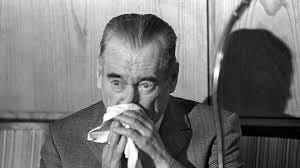
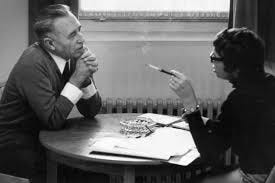
Stangl was finally posted out of death camp system in August 1943, sent, with Globocnik, to sort out the partisans – and local Jews - in Trieste. He became ill in early 1945 and was then sent home at long last. After the war, he was arrested, then escaped and with help from Bishop Alois Hudel in the Vatican and the Italian ratline system, he fled to Syria, where he was joined by Theresa and his children. After three years, in 1951, they fled again, this time to Brazil. Eventually, he was tracked down in 1967, extradited and tried in Berlin for the deaths of nearly a million people. Found guilty, he was sentenced to life imprisonment. It was while in prison that the journalist, historian and former UNHCR worker, Gitta Sereny, interviewed him at length. During these conversations, in which he repeatedly wept, he eventually admitted his guilt and explained that it was because of this that he had been finally willing to talk about his life and the terrible course he had taken. ‘My guilt,’ he told her at the end of their conversations, ‘is that I am still here. That is my guilt.’ He died, of heart failure, just nineteen hours after completing his interviews with Sereny. He was just sixty-three
.
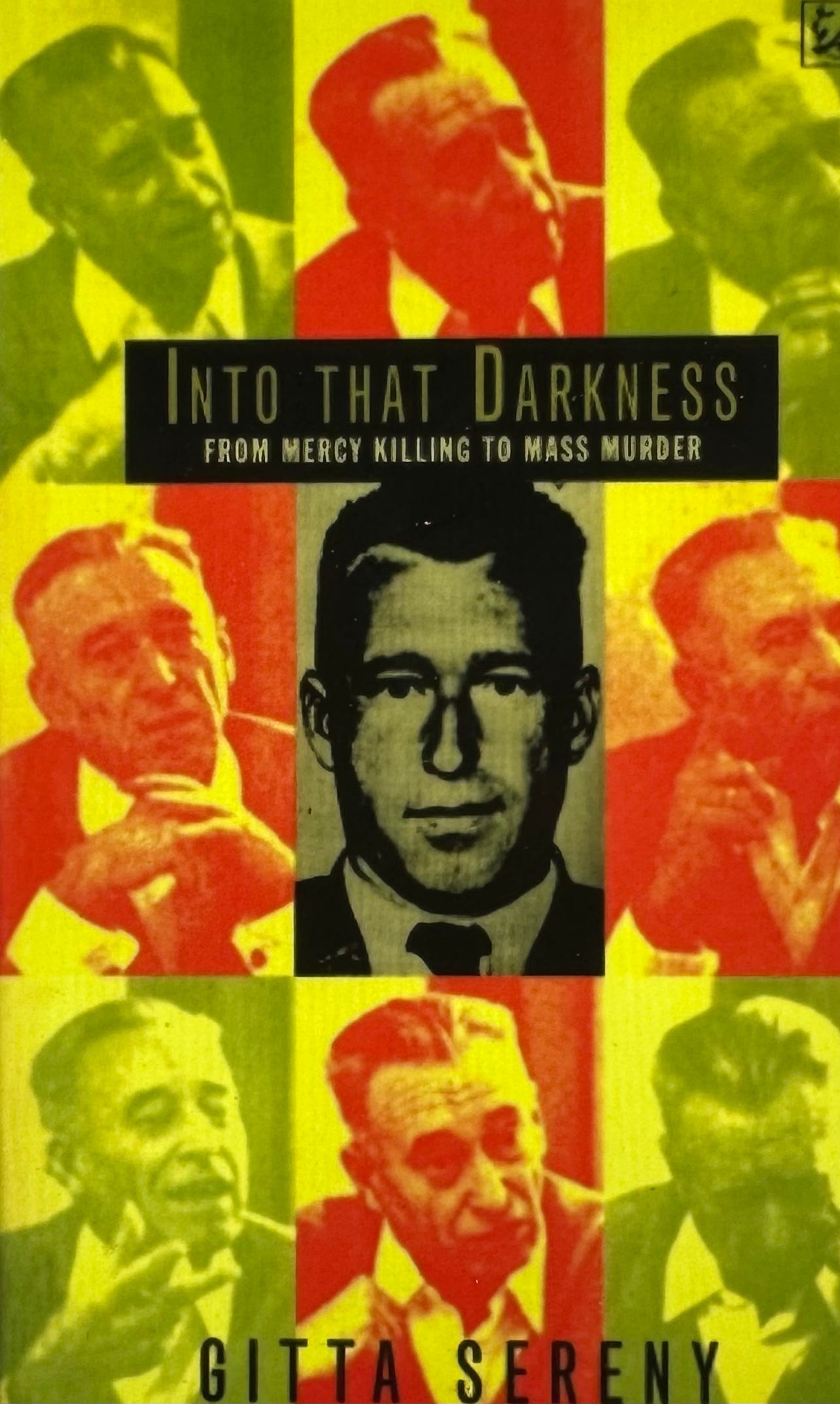
Her subsequent book, Into That Darkness, is a brilliant but profoundly disturbing read. Stangl was not born a monster. Even during his descent, he clung to threads of humanity. Fundamentally, though, he was weak, and morally corruptible - one of the many ‘ordinary men’ who enabled the Nazis to commit their monstrous crimes.
The point is that Stangl showed how easy it was. A poor decision here, a wrong turning there. President Trump is beyond redemption and so are his immediate acolytes. It’s hard to think of how a single person could abuse the Presidency more brazenly and more effectively than he is doing in this second term: the corruption, the greed, the narcissism, the racism, the carelessness, the cruelty, the lies and deceipt. Whispering in his ear, like a modern-day Martin Bormann, are men like Stephen Miller: warped by racism and consumed by a grotesque ideology shorn of any common notions of morality. These are despicable people.
But who is keeping them there, authorizing murder on the streets, wrecking the economy, plundering the misfortune and tragedy of Gaza and allowing this autocratic monster to cavort with mass murderers like Putin? It is the members of Congress not stopping him; it is the tech giants currying favour rather than using their wealth and reach for an altogether better purpose; it is the businessmen of Wall Street towing the line; it is the ICE agents willing to shoot an unarmed citizen in the face or back, or place a young child in a cell. It’s easier for them to keep their heads down – after all, they have families to look after, a pension to preserve. A lifestyle to maintain or more wealth to create. Easier not to rock the boat.
There’s no mass-murder, no death camps and no holocaust, but the story of Franz Stangl is that of a man who crept gradually into corruption, who demonstrated a similar lack of moral backbone. Who was a coward when courage was needed. Who became complicit when he knew what he was doing was wrong. Life can be unfair – very unfair. It’s never a straight line or an even path. None of us would wish to face the terrible choices Stangl had to make but he could and should have done the right thing. Instead, he repeatedly made the wrong choice. His day of reckoning came in the end as it will also come for these spineless and corrupted men and women now keeping Trump and his morally broken administration in power
.
Wow, James, this took me by surprise the way you segued to MAGA after recounting the cautionary tale of Stangl's moral corruption and his horrific war crimes. It needs to be said loud and clear that there will be consequences in the not too distant future when Trump dies and his followers are held to account for their choices. Very powerful writing with a clear moral impulse.
Thank you! This is a very powerful and terrifying story. It reminds me of a Polish book „conversations with an executioner” by Kazimierz Moczarski. Moczarski was a Polish patriot who was sentenced to death by Polish stalinists for being loyal to the Poland’s government in exile in London. They did not only sentenced him to death, but put him in a cell with another person sentenced to death - Juergen Stoop, an SS general responsible for the „liquidation” of Warsaw’ ghetto.
Both were waiting for the execution, and - having nothing else to do - started talking, to kill time, so to say.
Stroop told his story in much detail, and this is another terrifying journey into darkness of a human soul. The difference was that Stroop’s greatest regret was that he did not kill more Jews. He was executed, and Moczarski was pardoned after Stalin’ death.