Hubris & Myopia
Going to War Without Checks and Balances is So Very Dangerous

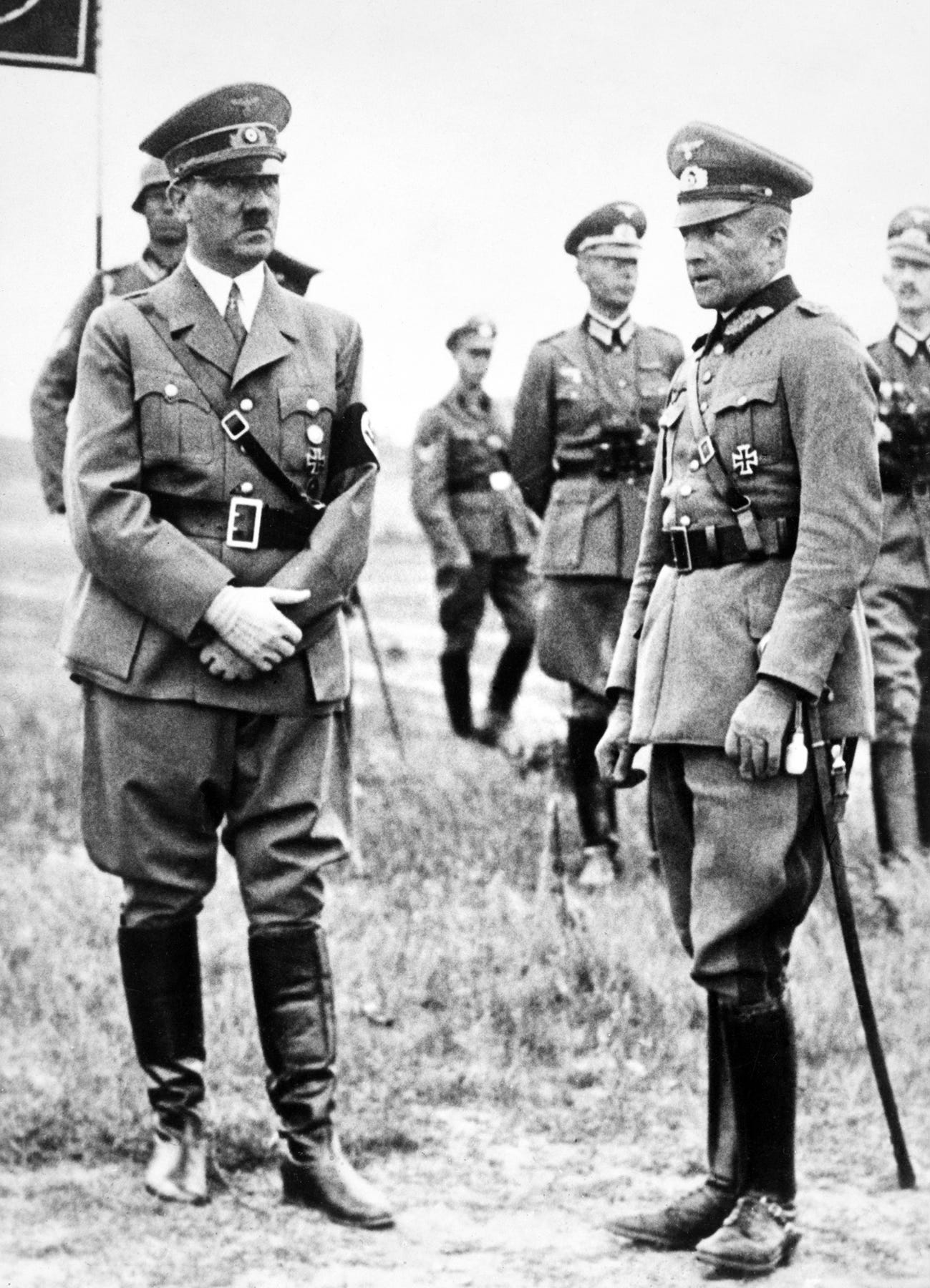
It was very fortunate for the Allies in the Second World War that Adolf Hitler wasn’t the military genius he thought he was, or which his sycophantic circle of leading party members and military commanders eagerly endorsed. There are those that still claim the strategic earthquake of defeating France and the Low Countries – and the British Expeditionary Force - in June 1940 was a masterstroke of military genius but in truth it had little to do with the Führer, although predictably for an autocrat, he took full credit.
The French and their Allies were duped into believing the Germans, as and when they attacked, would do so through the Low Countries, as it was considered the only feasible route for modern mechanized armies. Much of the eastern border of France was protected by an elaborate defensive chain, the Maginot Line, and the French rightly assessed the Germans wouldn’t try there. The idea was for French forces to line up along their northern border along with their British ally, then, as and when the Germans attacked, advance into Belgium to the River Dyle, a natural defensive line. It would have been preferable to have built strong defences along the Dyle ahead of any attack, but Belgium was neutral and wouldn’t countenance such a move unless attacked by Germany.
Having reached the Dyle, however, the French and their allies would then hold the German attack while they waited to massively reinforce the front wherever the enemy most heavily attacked. It was reckoned they’d have 10-14 days in which to bring up such reinforcements. Since the French alone had double the number of artillery pieces, compared with Germany, and substantially and heavier armoured and gunned tanks, and a parity of troops and air forces, this, they reckoned, would stop the Germans in their tracks. The war would bog down and the Allies would then win as their access to the world’s oceans and resources was greater, as was their wealth and industrial potential.
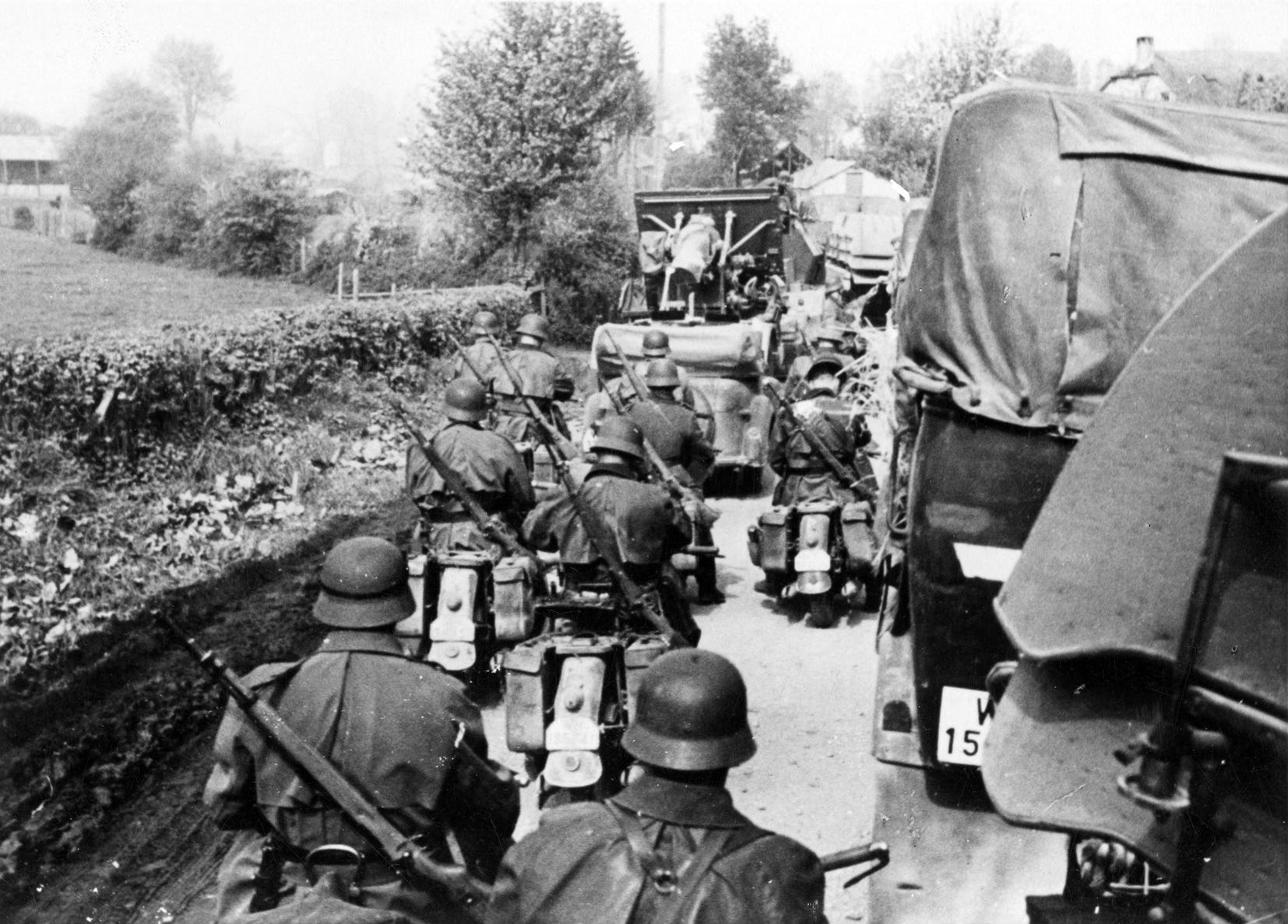
In fact, the Germans had discovered these plans early in 1940 – which was nothing to do with Hitler – while General Erich von Manstein suggested a tried and tested formula for German, and before them, Prussian, forces: to lure the enemy one way and then sneak round the back in a massive envelopment. It was known as the ‘kesselsschlacht’ or, ‘cauldron war.’ The back door, in this case, was the Ardennes region of Belgium, an area of hills, dense forest, rivers and narrow roads. The French consider this impassable for modern mechanised forces and so discounted it. In fact, the Germans managed to traverse it just fine and reached the all-important hinge of the entire French defensive position, the city of Sedan on the River Meuse, in just three days, not ten, let alone fourteen. After launching their attack on 10 May 1940, they had breached the mighty river at Sedan by the evening of the 13th. The entire front had been burst wide open, and German armoured spearheads thundered through.
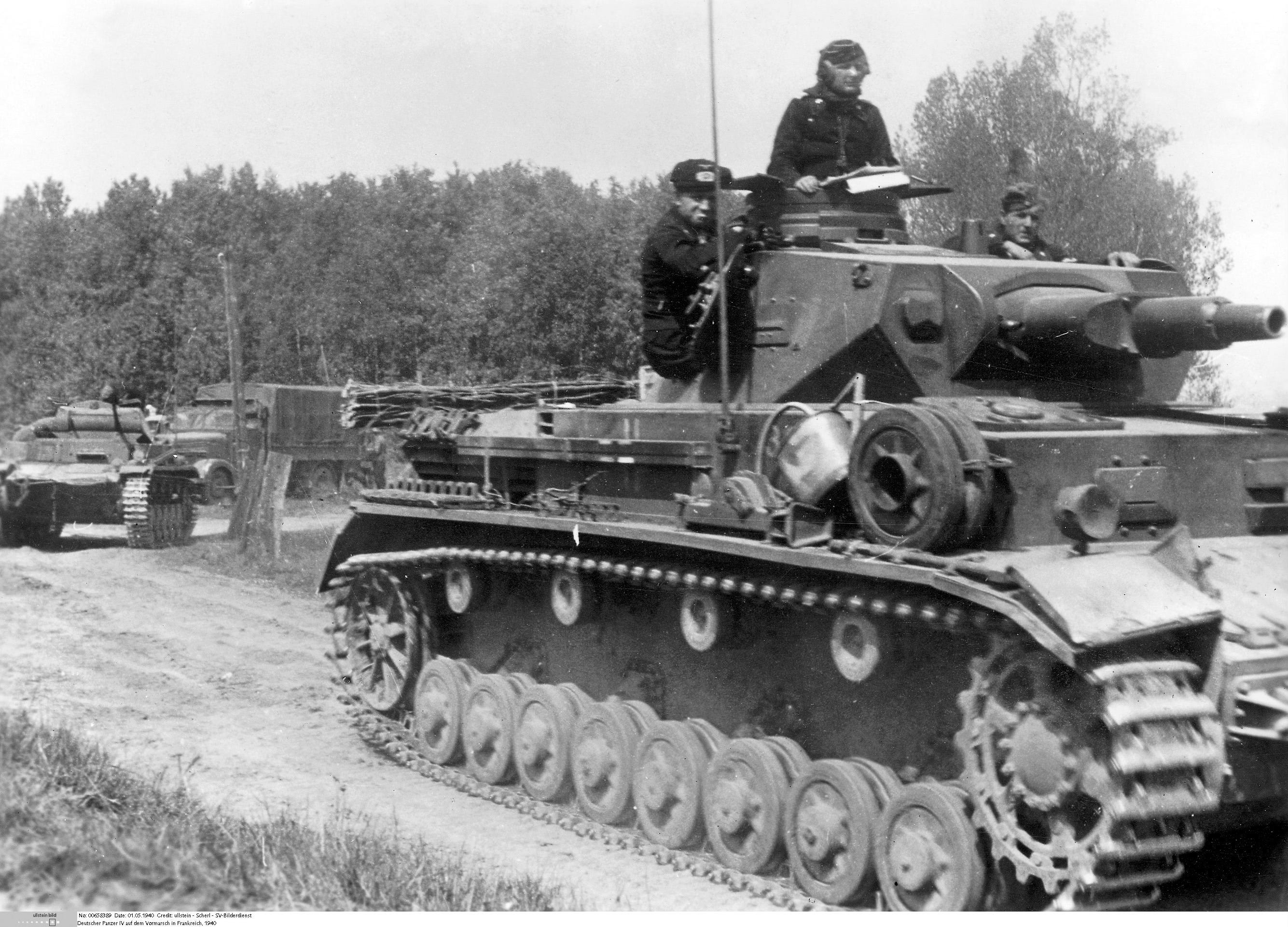
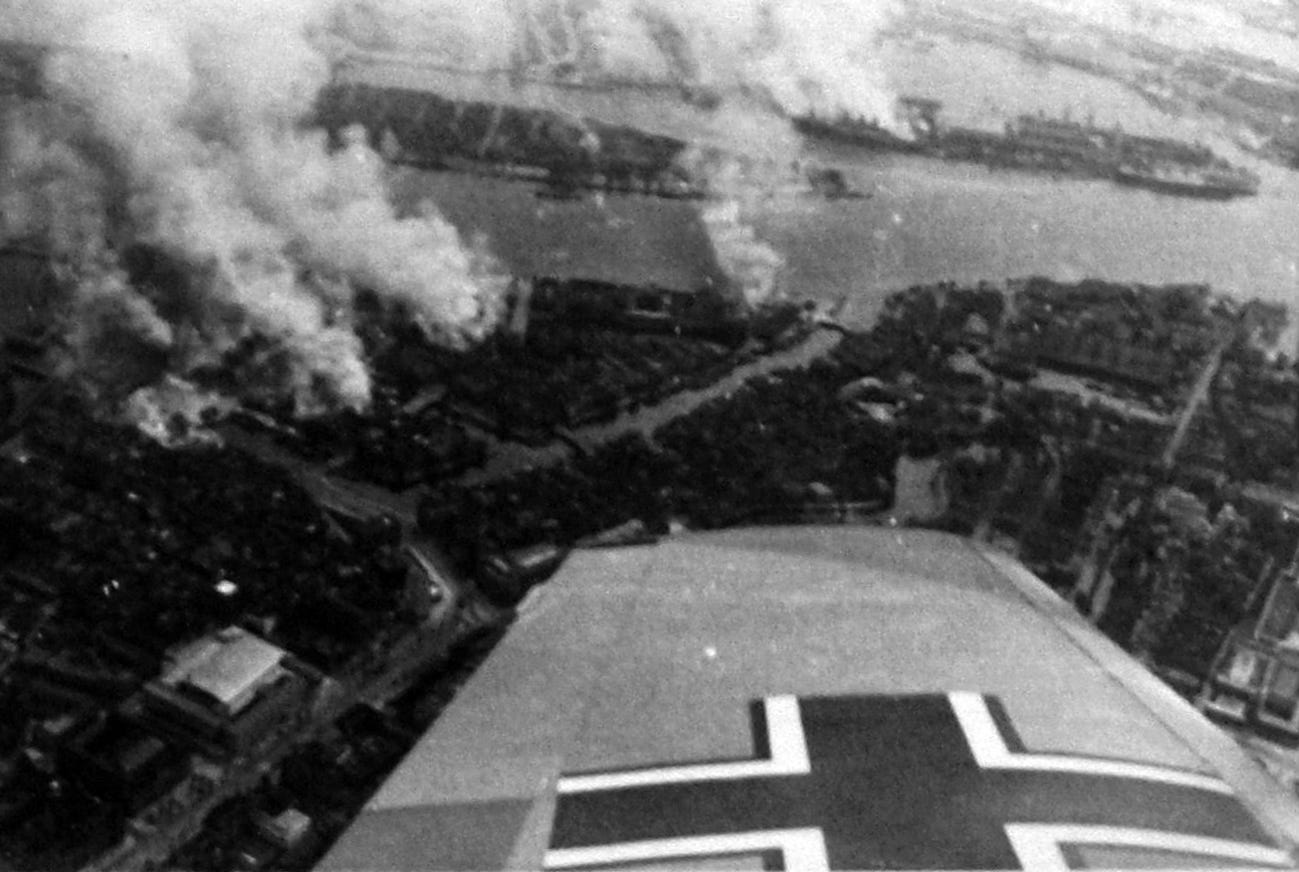
The French barley knew what had hit them and were unable to respond with either the required speed or concentration of force and so were chewed up in penny packets. The French way of war in 1940 was cumbersome to say the least, but their biggest failing lay in communications. They were dependent almost entirely on analogue telephone lines and dispatch riders. Nor did their very topp-heavy structure, which badly stifled initiative: there was overall army command, then army groups, then armies, then corps, then divisions, then regiments and battalions. Information simply took too long to pass on, which meant French units found themselves turning into rabbits caught in headlights. The German armoured spearheads were comparatively few in number – just sixteen of 135 divisions were mechanised; the rest used horses, wagons and the two feet of the infantry just as they’d always done. However, what was different in this war was that the Germans had realised the importance radio communications. Having developed small, cheap domestic radios, the military applied this technology to warfare with sensational results. Nor did France have anything resembling an air defence system, which meant that the Luftwaffe, the German air forces, held all the aces and could act as a further spearhead, bombing and shooting up the enemy ahead of the mechanised forces.
Hitler had gambled on Britain and France not going to war on behalf of Poland and had been proved catastrophically wrong. Having assured his commanders and acolytes that Britain and France would not go to war, he had then had to dial back and deal with the consequences. Manstein’s plan had only been possibly with General Heinz Guderian’s tactical and operational ideas for modern mechanized warfare and was the only conceivable means Hitler had of defeating France and Britain in 1940. That Germany pulled it off was as much to do with French incompetence and woeful decision making as it was any skill of the Germans. After all, when the mother of all traffic jams was reported in the Ardennes by French aerial reconnaissance, the leadership refused to believe it and so ignored the chance to bomb the German advance into oblivion.
The point of all this is that success in 1940 had very little to do with Hitler’s military aptitude. What’s more, his shortcomings soon became abundantly clear. Hitler was a master manipulator, had a nose for the weaknesses of others and could lie through his teeth repeatedly and the masses would believe him. Furthermore, he could be repeatedly proved wrong but somehow persuade people that he’d been right all along. He did not, however, have much geopolitical understanding, and certainly not when compared with Roosevelt and Churchill, for example, and thank goodness for that. Rather, he viewed the world, including his enemies, through the narrow prism of his own views. For him, as a former junior soldier and an avowed continentalist, a nation’s army was its most important military tool.
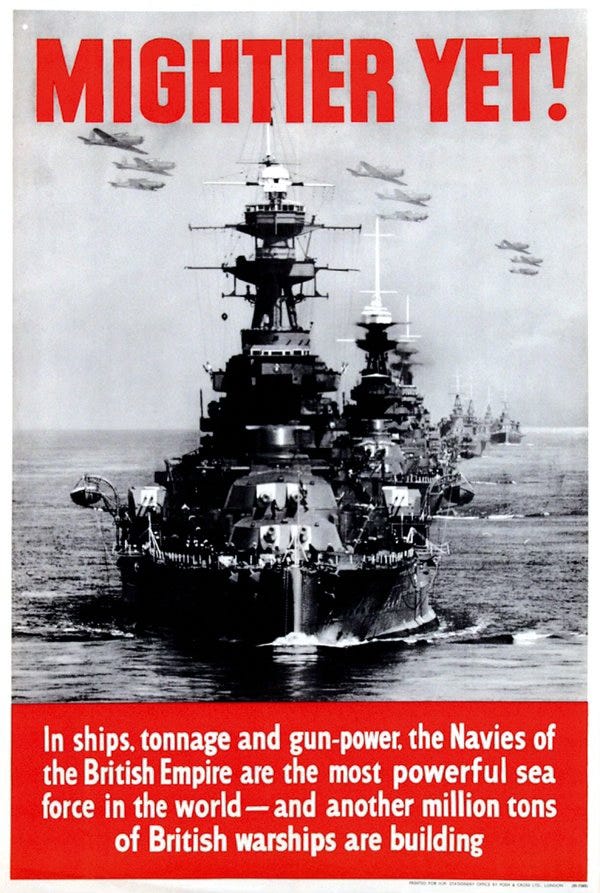
So, when the BEF was defeated, had to abandon its equipment in France and was forced to scuttle back across the English Channel, that meant Britain was effectively beaten. What he failed to appreciate was that Britain had a burgeoning air force, the world’s only co-ordinated air defence system and the world’s largest navy. It’s admittedly hard to appreciate that today, with the Royal Navy sunk so humiliatingly low, but back in 1940 Britain ruled the waves and also had comfortably the world’s largest merchant fleet too. Once much of Europe had been overrun, Britain could also call on the merchant fleets of many of those countries too, most of which had fled to British ports and beyond to escape the clutches of the Nazis. This, ironically, made Britain even stronger with access to around 80+ percent of the world’s merchant shipping. As an island nation and global maritime power, Britain’s approach to warfare was very different to that of Germany’s as a continental, land-based power. Hitler failed to understand that. He simply could not comprehend why Britain wasn’t suing for peace falling the fall of France. Nor could he understand why Britain wouldn’t contemplate negotiating with Nazi Germany. Hitler was transactional and viewed strategy in very black and white terms.
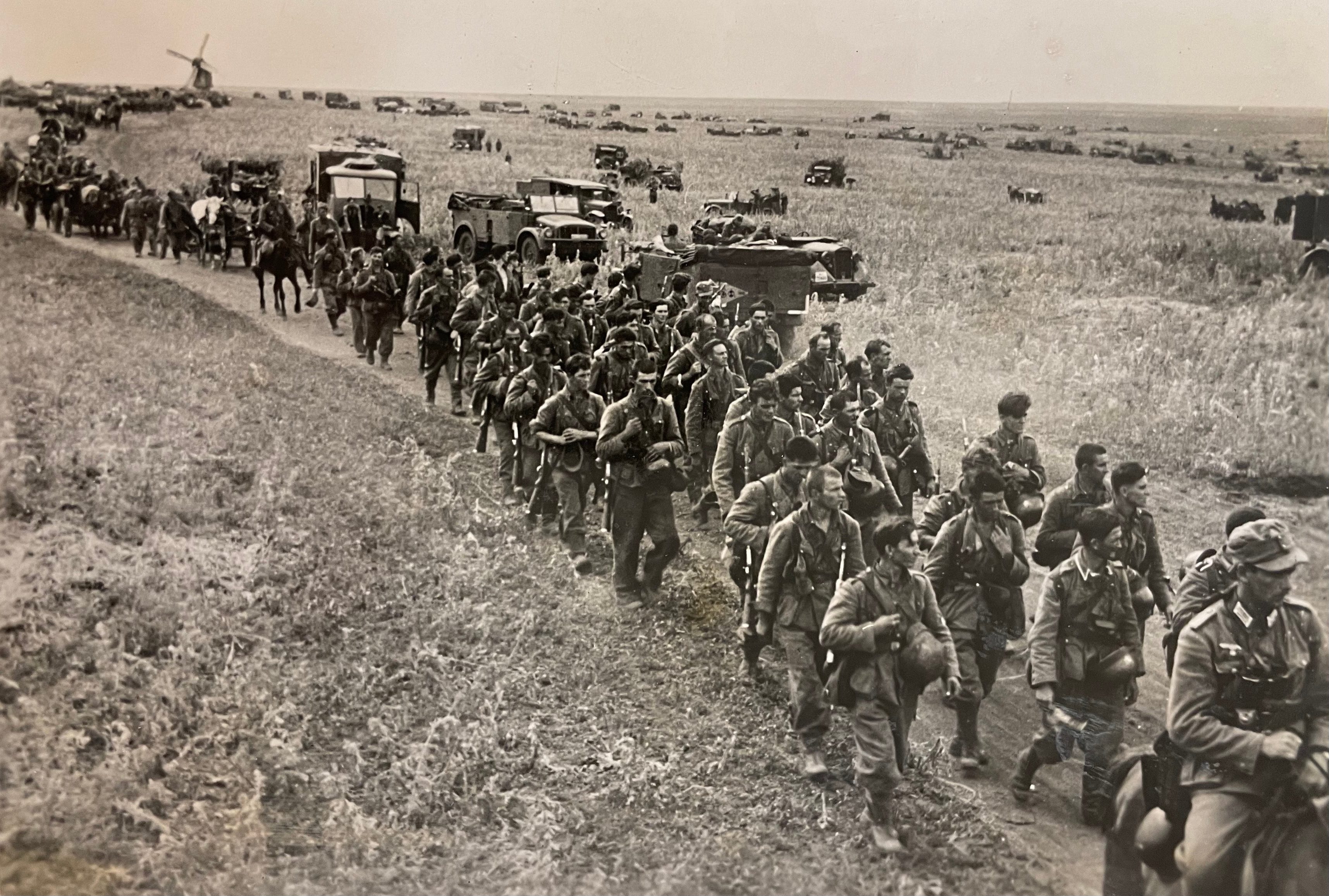
He then made a further catastrophic mistake invading the Soviet Union in June 1941. Having beaten France in six weeks he assumed that a backward country like Russia and its territories would be a cake walk. He failed entirely to appreciate that the advanced infrastructure of France – its road and rail network, fuel stations and so on – were what enabled his mechanized forces to make such rapid progress. The front in the Soviet Union was ten times the size, and more than 80% of its road network was just dirt tracks, while the railway loading gauge was wider than that of continental Europe. Wargaming in the early part of 1941 proved that Operation BARBAROSSA would fail, so planners were told to go away and re-work it until it succeeded. They had no more troops, resources and supplies with which to work this, however, so that the only people they were tricking was themselves. It was also accepted that complete victory had to be achieved within 500 miles of the start point and within three months. Neither happened. That they achieved what they did was as much down to the ineptitude of the Soviet and Red Army command as any military brilliance on their part. In the summer of 1941, the Germans were literally winning themselves to death.
And consider this: before BARBAROSSA, Germany had one enemy - Britain, albeit Britain plus dominions and empire. Six months on, they still faced Britain and her dominions and empire, but also the United States and the Soviet Union. The war still had a long way to go and how it would play out was far from certain, but by that date, December 1941, there was no chance that Nazi Germany could win. In a war of attrition, Germany neither had the resources nor global reach with which to secure victory. Hitler should never have crossed that Polish border back in September 1941.
I’ve been thinking of all this in the light of the current war against Iran. History is, as always, there to help. The past can inform the present and allow us to prepare for the future because for all the developments in weaponry and technology, the reason the United States and Israel are hammering Iran today is down to individuals and their decision-making processes.
Hitler forgot that golden rule of warfare: that the enemy has a vote and that history is always full of unintended consequences. It’s clear that President Trump, an uncontrolled narcissist addicted to power, likes being the Commander-in-Chief of the world’s strongest military. He has also developed a taste for flexing his military muscles. Last year he ‘obliterated’ Iran’s nuclear capability – which in the narrative of his administration has somehow since then become un-obliterated – while hijacking President Maduro of Venezuela seemed almost ridiculously easy.
Back in 2000, then UK Prime Minister, Tony Blair, involved Britain very successfully in the civil war in Sierra Leone, while he had also played a key part in the ending of the Yugoslavian War. Blair clearly got a taste for this; after all, once a prime minister sends his forces to war the first time, it becomes that much easier to do it again, especially when the results have been favourable. I suspect this influenced his decision to ally himself with George W. Bush in Iraq. It seems to me as though Trump has followed a not dissimilar path.
Clearly, Israel had some intelligence on the massed gathering of Iran’s leadership, needed to act swiftly, and Trump wanted a piece of the action. It would give him a military victory and at the same time, distract yet again from the domestic threats of the ongoing Epstein scandal. Trump clearly saw this as a quick win.
Rather like Hitler, however, the President was seeing this attack in black and white terms and through the narrow prism of his myopic world view. The USA is militarily stronger than Iran and he knew he could decapitate the leadership and flex his power and authority further. The problem is that in making that decision he has failed to sufficiently wargame and think through the consequences. There is a reason why in the past the United States has thought carefully about going to war, with the kinds of checks and balances that come from getting the support of Congress and allied partners first. What’s more, most presidents have had a plethora of highly experienced, intelligent and considered cabinet members and leading military commanders to advise them and ensure that whatever decision the president makes is made with the best possible available information.
Trump adheres to none of these vitally important precedents. Rather, he surrounds himself with a cabinet of limited talent, limited experience, and of limited moral probity – men and women who seem willing to do his bidding and are willing to lie for him. This is not a good basis from which to make decisions as critical as going to war. Of course, the intelligence on the gathering of the Iranian leadership required a swift response if it was to be acted upon, but no matter how brutal the regime in Iran was and is, there was little justification for America’s actions. There was no nuclear threat – Trump declared that had been obliterated last year; no evidence that Iran either had or was about to use ballistic missiles against America and nor any evidence that Iran was about to take a hostile act against the US. Few in the West will regret the Supreme Leader’s death, but that is not a justification for decapitating the regime in what was effectively an unprovoked attack. The legal justification for war is important because it is what gives countries the moral authority for their actions. Rogue states cannot be condemned or threatened if the leading nation in the free world is acting in a rogue manner itself. The Second World War began because Britain and France threatened Germany that it would do to protect Poland’s sovereignty. The USA went to war because Japan struck its Pacific Fleet in Pearl Harbor. In other words, in both instances, the case for war had been made clear and was wholly justified.
Instead, Trump went all in without a consensus. There was no consultation with Congress, as he’s legally obliged to do, nor with America’s allies, nor the United Nations, and nor did he consider how it might play beyond the quick win of killing Khameini and a number of the Iranian top brass.
That the Iranian leadership have nothing to lose and don’t care about the suffering of their people has clearly not been factored in at all. The stakes are also different for Israel and for America’s allies in the Gulf. The mixed messages about motives and goals are clear evidence that this is Trump operating unilaterally without any proper thought for the consequences.
And now he finds himself in a massive pickle, to say the very least. First, Epstein won’t go away. Second, he has now depleted America’s very expensive and actually not very extensive missile reserves, which in turn offers openings to enemies such as China and Russia. Third, he has given validation to Putin’s own aggressive territorial expansionism and has paved the way for a Chinese assault on Taiwan, should they go down that route. After all, if America can opt out of the rules-based world order and bomb Iran without legitimate provocation, then other countries can presumably do the same. Fourth, because the Iranian leadership doesn’t care about the suffering they might cause, they’re very happy to close the Straits of Hormuz and cause a global energy shortage, which will have terrible consequences for the world economy and not least in the USA.
Who knows how it will now play out – that’s the point with wars – but a fairly likely scenario goes something like this: Trump realises the effect this is all going to have on the US economy and so at some point this week declares victory. Talk of regime change and unconditional surrender will be quietly kicked into the long grass. After all, look what it took to get unconditional surrender against Nazi Germany and Imperial Japan in World War II. In the case of Japan, and even after two atomic bombs were dropped, there was still a condition for their unconditional surrender: that Emperor Hirohito remained on throne, which he did until 1989. So, that crass announcement is entirely unworkable. Iran is not Venezuela.
The damage, however, will be done. The Iranian leadership will double down on its people. The Stait of Hormuz could well stay closed and used as a bargaining chip by the Iranians and the already creaking global economy will take another, potentially devastating hit.
By contrast, the reason the coalition of Western Allies was so successful in the Second World War, and why D-Day, on 6 June 1944, for example, was such an amazing success, was because the western democracies worked hand-in-glove towards a single common goal with unprecedented unity of purpose and spirit of co-operation and co-ordination. There were checks and balances in the decision-making processes of the democratic governments and of the coalition of the Allies. Hitler, on the other hand, was surrounded by yes-men and sycophants who nurtured his belief in his own military genius. These were not the circumstances with which to make sound and well thought-through decisions, and so it proved. Trump is making the same mistake.
He remains president of a democracy, but it is one he is testing with an increasingly autocratic approach to decision-making. No-one is willing or able to stop him. He has entered America into a war, the consequences of which he cannot possibly comprehend, without the normal filters and checks any previous President has applied to a decision of such magnitude. This does not auger well. After all, the enemy has a vote, and the Iranian leadership will be viewing this conflict through an entirely different prism to that of Trump. His ignorance, hubris and his arrogant myopia are very, very dangerous indeed.
Well-written and well-reasoned piece, James, thank you. Even though I'm no longer a US citizen, I still feel shame, sorrow and disgust at what my former country is becoming. That a nation that helped defeat fascism is in the process of becoming the thing it helped defeat.
On another note, I was surprised to learn that the French had developed sentient grains in 1940 -
"The French barley knew what had hit them . . . " 😃
Thank you Jim. May I add that Heinz Guderian freely admitted the had in turn based his battlefield tactics on the writings of Basil Liddell-Hart, another military genius disregarded and dismissed in his own county.
May I also please refer you to my own column on Substack of last Friday that refers to Robert McNamara and his Eleven Lessons on War. Having been US Secretary of Defense from
1961 until 1968 he has a few highly pertinent things to say on the subject. I suspect that Pete Hegseth who is barely qualified to run a bath, let alone the Pentagon, is ignorant of McNamara, a man with two or maybe even three brains.