Get S**t Done
The Defence Investment Plan Is Not Good Enough


At the start of his 1938 novel, What Happened To The Corbetts, Neville Shute describes his protagonist, Mr Corbett, returning to his family house after the first bombing raid of a new and sudden war that has struck his home city. He pauses, exhausted, whisky and soda in hand, and looks down at the copy of the Evening News that he’d been reading the previous evening. ‘His eyes fell on the cartoon,’ wrote Shute. ‘It represented the Prime Minister, very jocular, dangling a carrot before two donkeys separated from him by a wire fence. One of the donkeys had the head of Hitler, and the other, Mussolini.’ Standing there, Corbett remembers laughing about it the night before but now it doesn’t seem so very funny. The entire previous day had been normal, mundane, and unremarkable, although there had been the news that leave had been cancelled for the Fleet because of tension on the Continent. That, though, hadn’t been particularly remarkable; there was often international tensions and leave was frequently being cancelled. The Corbetts had continued their evening just like everyone else: peaceably and assuming this normal state of affairs would continue forever. To imagine war was around the corner, that a catastrophe such as a devastating bombing raid would ever rain down on their city and home, was fantastical, incomprehensible, and so unlikely as to be barely worth consideration.
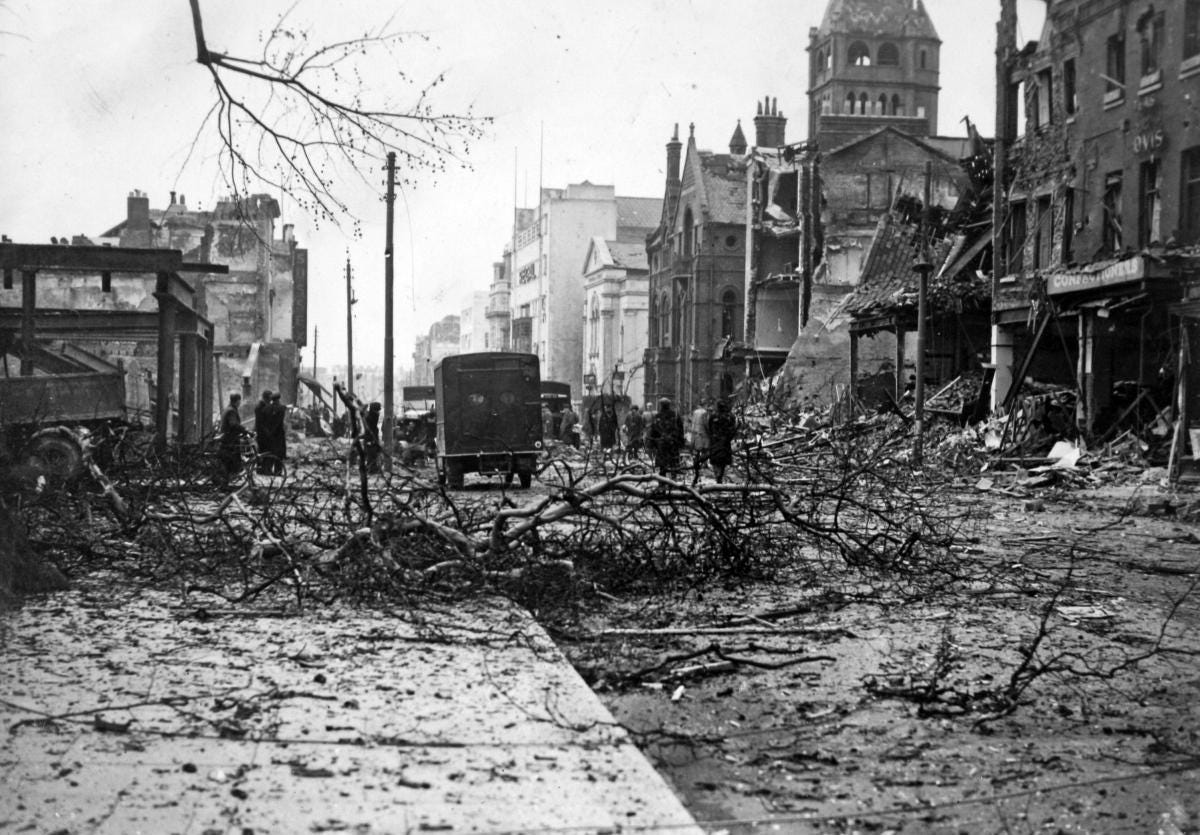
Britain and the western democracies have been living in the Corbetts’ world since 1945. Being a nation at war has almost slipped from living memory, and the long-term assurance of permanent peace has become so accepted we’ve reached a state of extreme complacency with regard to defence and security. Into the 1980s, the fear of nuclear war between the Soviet Union and the West kept defence spending high and the need for a comparatively large armed forces was understood to be necessary by the general public. The ongoing Troubles in Northern Ireland and the Falklands War of 1982 additionally ensured the wider population understood the need for defence spending and which kept it at more than 4% of GDP despite the economical decline of the 1970s and early eighties.

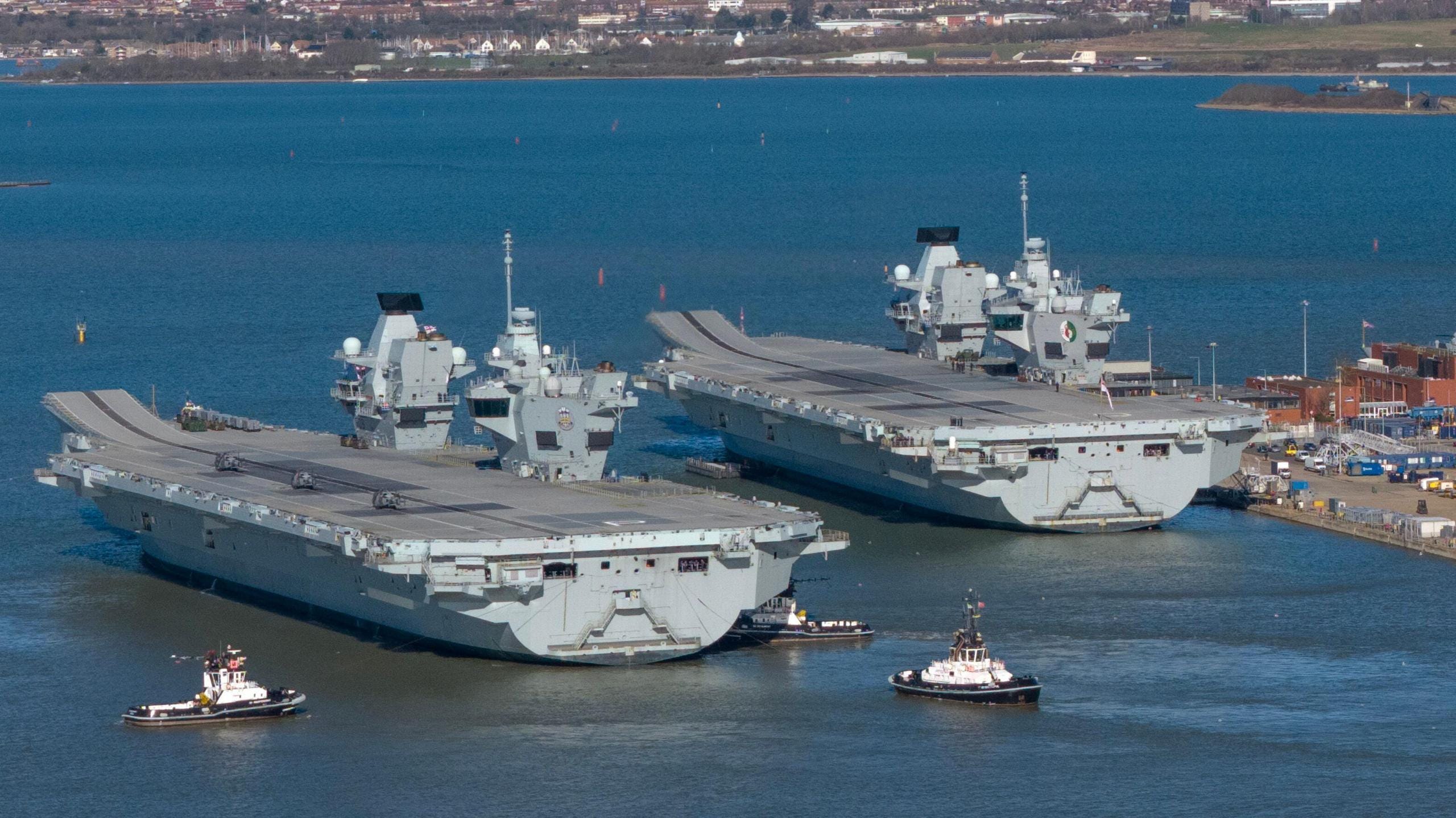
Since the end of the Cold War and the Good Friday Agreement, however, defence has been run down. Back in 1992, the Royal Navy stood at three carriers, 45 destroyers and frigates and 25 submarines. Today, its personnel is half the size at just 32,000, with just 6 destroyers - only one of which is operational, and barely so at that - and seven frigates, and ten submarines. Its current two giant carriers have no task force to escort them and no fast jets, making them militarily irrelevant. They have also been beset with mechanical problems and so are largely undeployable. Two beached whales achieving very little other than an alarming drain on precious defence coffers. The threats the country faces now are every bit as high as those we confronted during the height of the Cold War and possibly as worrying as they were in the late 1930s. At any rate, this is no time to be putting all our stakes on long-term peace. In any case, the best way to ensure we don’t end up at war is to have a sufficiently large armed forces and protection for our critical supplies so as to deter our enemies.
The dilemmas of how to square the need for strong defence and national resilience with those of domestic spending and welfare are nothing new. In the UK, the public of the 1930s maintained a preoccupation with peace and disarmament. There was a widespread belief that arms manufacturers and large militaries encouraged wars. A poll from 1937 showed that 62% of British men claimed they would not volunteer for any future conflict, and 78% of women stated they would encourage their husbands not to do so. Even after the Munich Crisis of the autumn of 1938, 75% of the population still approved of appeasement and during the crisis, 92% of the population thought the country should not go to war over Czechoslovakia. Neville Chamberlain, the Prime Minister, had a 60% approval rating and only 4% preferred Winston Churchill, who at the time was loudly banging the drum for urgent further rearmament and to stand up to Hitler.
Despite the public mood, however, Britain was rearming and with increasing urgency. Defence spending stood at 3% of GDP up to 1935 but with the Germans announcing the existence of the Luftwaffe and with very public displays of militarism, UK defence spending rose to 4% by 1936 and to a whopping 38% by 1940. What’s more, the British Government, first under Chamberlain when he was Chancellor in 1935 and then later as PM, backed the urgent increase in size of the RAF and an upgrading and new construction programme for the Royal Navy; although the navy was half the size of what it had been in 1918, it was still comfortably the world’s largest in 1939 when war broke out. By September 1939, Britain had the world’s only fully co-ordinated air defence system, which would help the RAF to defeat the Luftwaffe the following summer of 1940 and in so doing, throw Hitler’s grand war strategy into complete disarray.
Today in the UK, the national debt is nothing like as large as it was in the 1930s but our ability to rapidly ready ourselves for the threats facing us are far more challenging than they were in the years leading up to the Second World War, albeit largely because of our own strictures, laws and limitations to rapid progress. There are two big problems facing today’s crop of political leaders: first, societal indifference and the complacency of a public that has become obesessed with welfare and the entitlement of state intervention to serve every ill; and second, the moribund state of government processes, the threat of litigation, risk aversion and the protection of workers at the expense of speed. Time costs money. Excessive risk aversion costs money. Fear of litigation costs money. Everyone knows this but in our modern world it is socially impossible, it seems, to turn back the clock. Ours is a world of high-viz.
I was at an economic security conference last week and it was encouraging to see how many brilliant, dynamic and visionary people there are both in this country and amongst our friendly allied nations. People are bursting to be let loose whether it be to develop rare earth processing, the means of providing liquidity for projects, or how to harness private business into the defence world even if the government won’t act. I learned that here in the UK we have one of the world’s largest tungsten deposits, for example, vital for both armaments and tools, but none of it is mined because there is no means of processing it. China is responsible for 80% of the processing of the world’s tungsten because they can do it more effectively and cheaply than anyone else. But China is not our friend and a potentially malevolent power, and security in the west is worth more to our safety and long-term prosperity than current over-dependence on the Chinese.
Every vital supply source that reaches Britain from overseas is a potential point of future jeopardy. If Britain can establish a rare earths processing plant - as well as mines - this will bring employment, skills, wealth, and a vital national asset that will additionally improve the UK’s security. Such an enterprise, however, would be substantially easier with government backing, which is currently not forthcoming. It’s the same with energetics, for example, also vital for defence and for the manufacture of explosives. There is simply no energetics plant in the UK. Despite repeated lobbying for governmental support, the HMG computer says no.
At that same conference were a number of people currently at the Ministry of Defence, both civil servants and armed forces personnel on secondment. All spoke of morale being at rock bottom; one serving officer told me he was close to resigning his commission he was so frustrated. ‘There are plenty of really good people there,’ he told me, ‘but there’s a layer that is like a wall through which nothing can pass.’ He identified the Chancellor’s special advisors - SPADs - as being especially obstreperous. In the 1930s, each service had its own ministry for organisation and procurement but today this falls under this one behemoth, the MOD, and one of the frustrations is that a penchant for the very best of everything dictates policy and procuremen to the detriment of swift decision making and mass production. Funding, however, remains with the Treasury.
I have been having many discussions about funding recently, and in these pages have repeatedly pointed out that borrowing does not necessarily mean fiscal irresponsibility, despite this being a belief to which the current Chancellor is devoutly wedded. Rather, it depends on how borrowing is used. As the great economist, John Maynard Keynes proved, governments need to spend to get out of economic stagnation and to enable them to emerge from the doom loop of less enterprise, lowering investment and a lack of confidence, all of which stifle growth. Counter-cyclical economics, as Keynes termed it, are vital at such times, and there are means of borrowing right now sitting in the lap of the Chancellor. According to several sources who spoke to me, the number one reason the Treasury has not supported the emerging Defence, Resilience and Security Bank - DSRB, now championed by former Governor of the Bank of England and current Canadian PM, Mark Carney - is down to Rachel Reeves’s most influential SPAD. This is Neil Amin-Smith, thirty-six years old, born and bred in North London, and educated at Westminster School and Jesus College, Cambridge, where he read history not economics. He used to play in the pop group, Clean Bandit, before joining the Institute for Fiscal Studies as a research economist while still in his twenties, and then migrating seamlessly to being a SPAD to the Chancellor. He’s clearly super-bright and talented but his age, background and upbringing do not suggest he’s ideally placed to make judgements on issues as important as defence funding.

Nor were the members of the MOD I have spoken with at all impressed with the Defence Investment Plan, published on Wednesday 1 July, and nor are those I have talked to who have spent their careers serving and defending the nation. Although it has been talked about for a year, everything about its sudden publication smacked of being rushed into being over the past fortnight, since the advent of the new Defence Secretary and the resignation of Sir Keir Starmer. Reading the document, it feels like homework submitted just before deadline, with a glaring lack of oversight and scrutiny that might reasonably be expected from a plan as important as this.The first version published contained some embarrassing errors: BATUS distances (the Army training area in Canada) measured in metres rather than kilometres, recall liability apparently extending to cadets, and hidden watermarks such as “Not Government Policy” and “Official Sensitive” sitting beneath the design layers. Such a lack of careful proof reading suggests a document that was hurried, fragmented and driven by political necessity rather than readiness, and by people who did not really know what they were talking about. It’s inconceivable that anyone who has undergone training at BATUS would have made such a mistake on distances, for example, which in turn implies senior officers did not read it first. And if so, why on earth not? There are horribly loose parts too: ‘The figures presented are indicative rather than precise cost estimates,’ it is written on page 78, before a raft of figures. ‘Figures have been rounded, and, therefore, may not sum.’ What the heck? Why so woolly?
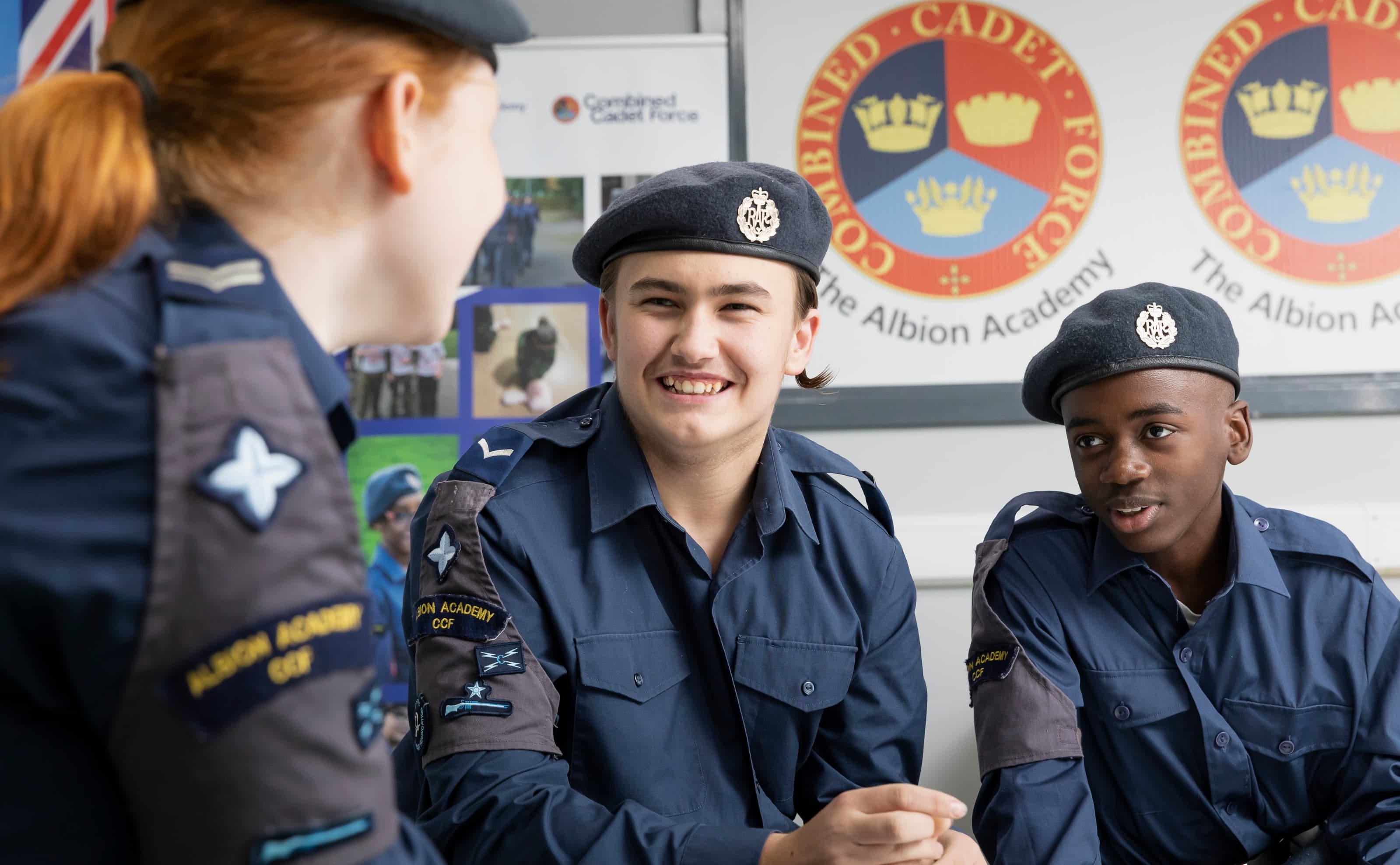
It’s hard not to be cynical and see the Defence Investment Plan as little more than a rush-job in response to the resignations of John Healey and Al Carns and because the Prime Minister is in his final days in office. It’s not what the nation needs or deserves. It is also shortsighted to be cutting back on the Cadet Force, as announced in the DIP, especially after the Government recently announced plans to significantly expand.
We desperately need to strengthen resilience, build the Reserve Forces and reconnect defence with wider society, so there is public support and approval for substantially increasing defence spending far beyond current rates. The Cadet Force is just one means of helping achieve this. It promotes citizenship, confidence, leadership, practical skills and social cohesion. The Combined Cadet Force has changed dramatically over the last decade and is no longer something associated primarily with independent schools. Increasingly it operates in schools serving disadvantaged communities, bringing together young people from different backgrounds, faiths and cultures. That is exactly the sort of long-term investment in society that defence should be championing. During the Cameron government, then chancellor, George Osborne, cut funding for a Youth Clubs, a comparatively insignificant cost but an easy one to slash, and with disastrous consequences. The rapid growth of youth knife crime has been directly linked to this short-sighted policy. Now the Government is making the same mistake again but with its plans to strip back the Cadet Force. It’s a truly terrible decision.
Not only do we need to dramatically move the dial on public perception to the threats we currently face, we need to ensure that public service in the Armed Forces, whether as a teenager in the Cadets or an adult in Army, Navy and Air Force, is seen as worthy, noble and warranting wider respect and admiration.
Nor is it good enough for the PM and Chancellor to offer so little to defence. Frankly, the amount of funding and the huge gap in the Defence Investment Plan’s figures is disgraceful. There’s an irony that as a nation we have become so risk averse, that the Health & Safety Executive dictates so much of what we can and can’t do in an attempt to keep us safe, that we now live in a world of risk assessments and instructions, that we are rightly x-rayed and scanned every time we board a flight, and yet our armed forces have become so denuded: the services responsible for keeping all of us and our country secure and safe. Last week, Andrea Egan, the head of Unison, Britain’s largest trade union, made a speech and claimed, ‘Every pound we spend on defence is a pound not spent on welfare.’ No, it isn’t, and if those cables get cut there won’t be any welfare at all, or functioning hospitals. That is the risk: 99% of our daily data - financial transactions and internet data - flows through cables in the North Sea while most of our gas also enters through pipelines on the seabed. How can they be so unprotected? What is to stop Russian ghost ships dragging their cables across them and ripping up a number of these precious lifelines to our daily existence? Yes, they have some protection but nothing like enough. Our navy has become something of a laughing stock internationally. Ask yourself this: do you think our NATO Allies are impressed with what the DIP offers? And do you think Putin would be fearful of Britain after this? Of course not.
The incoming Prime Minister now has a wonderful opportunity to draw a line in the sand and instill new dynamism, a sense of hope, and a clear vision for the immediate, medium- and long-term future. I left the conference last week convinced that Britain had no shortage of talent but that rather the biggest hindrance to progress was the government itself and supine governmental processes - which can and must be radically improved. Red tape has to be reduced. Processes have to be made slicker and smoother. Fear of litigation has to be reduced - and if that means new laws to limit the ability to threaten and carry out litigation, then so be it. While it is all well and good to protect the lowest common denominator, we have to make sure that in safeguarding the minority we do not jeopardise the totality. A balance is needed.
And we need to bring in more technocrats and experts to help and advise. It’s good to learn that Andy Haldane, former chief economist at the Bank of England and a grown-up of vast experience, is advising Andy Burnham. More people of his calibre are needed in preference to young, wet-behind-the-ears SPADs of limited wordliness. What’s more, the government needs to talk to the other parties and try and achieve a cross-party consensus over defence, while also work with the media to better explain to the wider public the importance of this urgent need for greater investment. Finally, it needs to be explained that greater spending on defence has the potential to boost the economy, provide jobs, wealth, greater national cohesion and a sense of purpose and, in the process, reduce the welfare bill. After all, there are currently nearly 10 million of 43 million working age people in Britain getting payment from the Department of Work & Pensions. This figure can be reduced by getting Britain working towards a common goal of greater security. That will save us all money.
Back in March 1933, Franklin D. Roosevelt was inaugurated as President of the United States at the height of the Great Depression. In his first hundred days, he borrowed money, initiated a vast ream of public works projects, instilled new confidence into America’s financial institutions, got consumers to put their money back into banks and instigated a new sense of purpose with more legislation in a shorter period of time than any of his predecessors. During his inauguration speech he told American that they had ‘nothing to fear but fear itself.’ It’s a line worth echoing here in Britain today. We just need a renewed sense of a purpose, a new vision, and the drive and dynamism to kick us all into action. If the new Prime Minister can give us the tools, we’re perfectly capable of fulfilling the task that urgently faces us today.
And there’s another episode from the Second World War worth retelling here. Before D-Day, an ambitious plan was hatched to build two giant harbours, both bigger than Dover, and then float and tow them across the Channel and plant them in place at two points on the Normandy coastline. Inevitably for such a gargantuan engineering project in the middle of a war, it soon ran into difficulties. When the Prime Minister, Winston Churchill, was told of these setbacks, he was dismissive. ‘Don’t argue the matter,’ he said. ‘The problems will answer for themselves.’ It’s the attitude we need now. In other words, we need to stop faffing, stop finding reasons why things cannot be done, pull our collective fingers out and allow the talent and enterprise in this country to breathe and thrive. As one general said to me last week, ‘We need to get s**t done.’
This is a very heartening essay. I'm glad to hear that there are voices in the UK clamoring for change much as we are in Canada. Defense and critical infrastructure are investments in the health, culture, and livelihood of nations and cannot be reduced to zero sum equations for social programs. The catalyst for Canada's new energy has come from an external threat. It it is hoped that the UK can harness the same energy without such an event with new political leadership that is authentic, charismatic, and true to the nation.
Absolutely spot on. I agree totally.