Air Power Alone
History Tells Us That Air Power Is Vital But Cannot Win Wars On Its Own

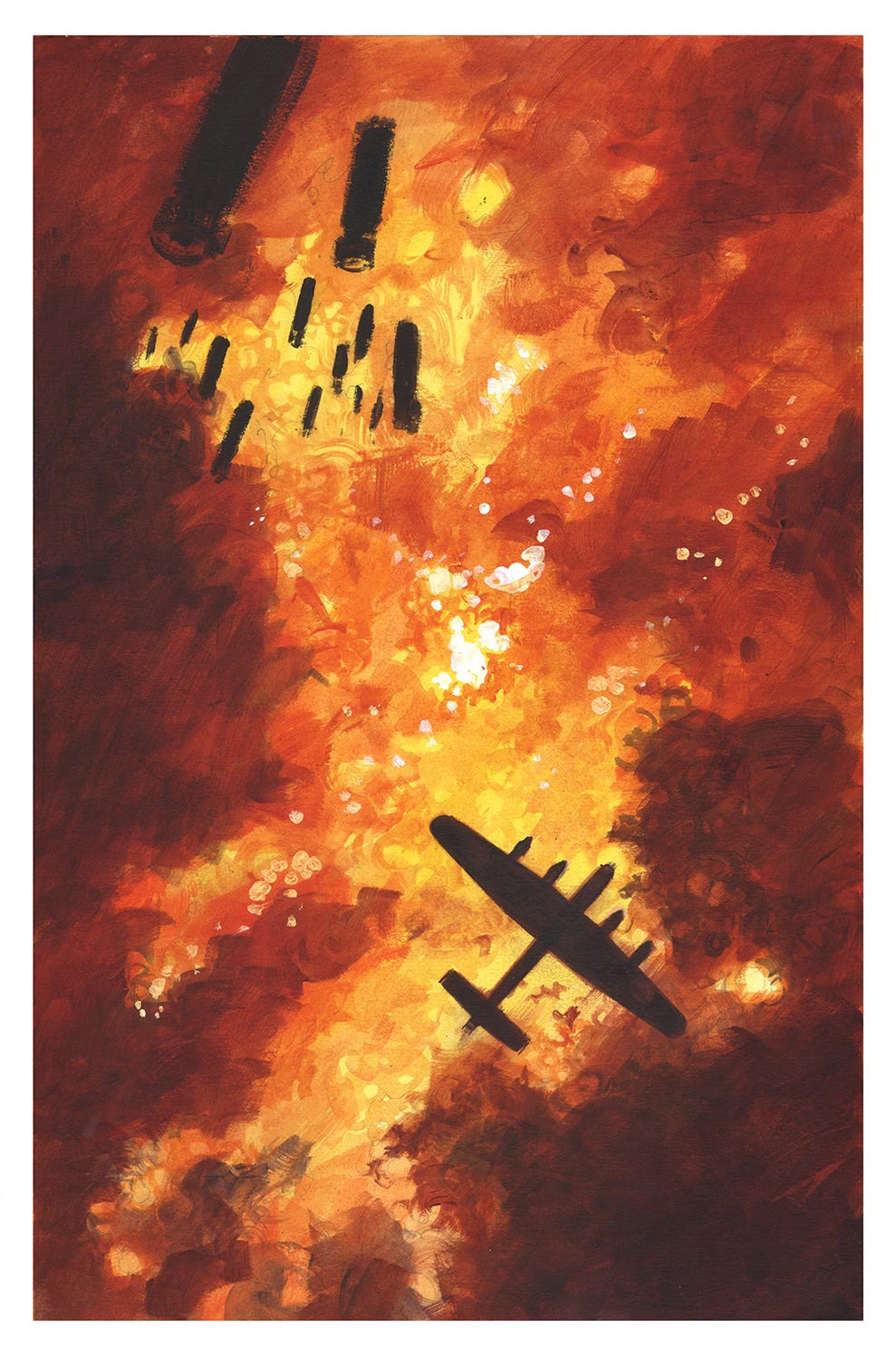
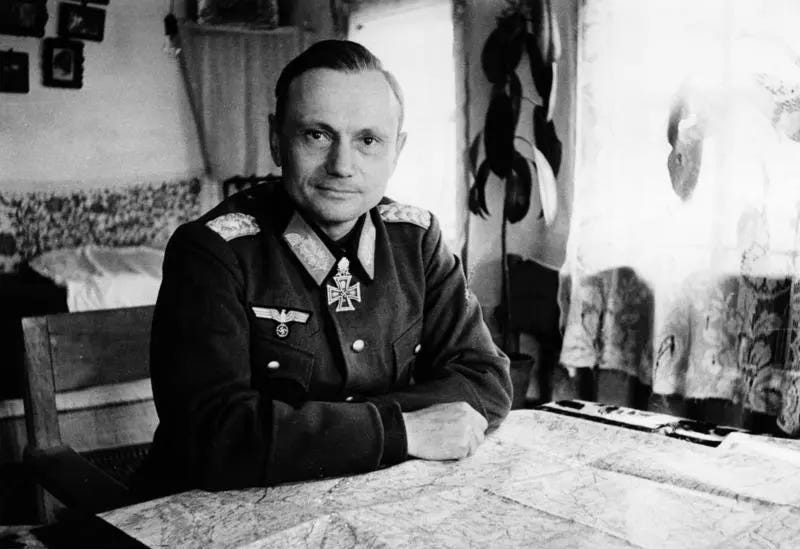
Back in 1940, Hermann Balck was a colonel and commander of the 1st Rifle Regiment, the infantry element of the spearheading 1st Panzer Division that had broken the French front on the River Meuse at Sedan and which had then driven on all the way to the Channel coast. On 24 May 1940, Balck and his men were expecting to drive on to Dunkirk, swiftly capture the port and link up with German troops driving down through Belgium to the north-east. At the time, Dunkirk was only a dozen miles away. Then came the order for them to halt and wait for the rest of the infantry to catch up with the armoured and motorized spearheads. Instead, the British and French trapped in this giant pocket around the port were to be destroyed by the Luftwaffe, the German air force, which, up until that point in the war, had reigned supreme.
The Luftwaffe failed, however, and some 338,000 Allied troops escaped back across the English Channel to fight another day. More importantly, the war was now not going to be over in six weeks as Hitler and his commanders had planned, but would drag on for nearly five more years, at the end of which, Nazi Germany lay absolutely devastated. Göring, the commander-in-chief of the Luftwaffe, had badly overplayed his hand. He hadn’t properly thought through his boast to Hitler that his air forces could finish off the British; he’d underestimated his enemy’s strength and closer proximity to the battle zone – airfields in south-east England full of Spitfires were far closer to Dunkirk than Luftwaffe airfields still in Germany; and had been guilty of over-confidence. Had the bulk of the British Army in Flanders been taken prisoner in the last week of May 1940, there is a high probability Britain would have been forced to sue for peace. Instead, they fought on, decisively won the air battle that followed and went on to play a vital role in the eventual Allied victory and Germany’s defeat.
Balck later became a full general and was not only one of the best German commanders of the war but was also a great student of warfare. Furthermore, he kept a detailed journal and shortly after the Dunkirk evacuation, put pen to paper with his thoughts on what had happened. ‘Of course,’ he noted, ‘we should have advanced to Dunkirk on the ground. Nobody could have stopped us.’ That was probably true. ‘The great lesson of Dunkirk,’ he added, ‘was that a victory on the ground can only be won by ground troops, as valuable and indispensable as the air force might be.’
Quite. In fact, in the 123 years since the first manned flight, Balck’s 1940 axiom has remained the same: air power alone has never forced an outright surrender. The only outlier was the Italian-held island of Pantelleria, the only defended place to be reduced to surrender in the Second World War as a result of air and naval bombardment alone. It’s a status that remains the case to this day, and while no ground troops were involved before the Italians raised the white flag, naval forces had also played their part.
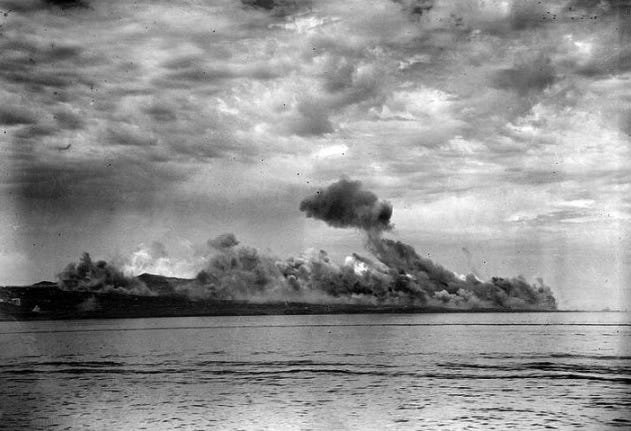
Pantelleria was also a very small target, a tiny island in the Mediterranean; Operation CORKSCREW, mounted in early June 1943, was seen as a vital step by the Allies before the main event in the Mediterranean that summer: Operation HUSKY, the Allied amphibious invasion of Sicily. In other words, the collapse of any regime or nation as a consequence of air - and naval - power alone has virtually no historical precedent. That doesn’t mean it can’t be done, but the odds are stacked against it.
Air power was, of course, still in its infancy in 1943 although military and political leaders, thinkers, and planners had all accepted in the two decades following the First World War that it would play a vital part in any future conflict. One of the most influential prophets had been the Italian, Giulio Douhet, a former artillery officer, who in 1921 wrote Command of the Air. Douhet’s book, which was revised and reissued six years later, was widely read, and argued that in future warfare would be dominated by air power. Large numbers of bombers were the key, he claimed; they would operated independently, striking at the heart of an enemy power’s industrial base, centres of communication and even cities. Winning control of the skies was obviously central to this vision and although Douhet predicted some air defence, he argued that the side with the biggest, most powerful air force would prevail. In Douhet’s vision, the bomber, not the fighter plane, would be king.
The idea that vast bomber fleets would dominate not only the skies but the battle space was eagerly adopted by others too. It was widely accepted in the RAF, and not least by Marshal of the Air Force Sir Hugh ‘Boom’ Trenchard, a messianic bomber man. In the United States, the supremacy of bombing an enemy into submission had also taken root. Arguably most influential of pre-war theorists was William ‘Billy’ Mitchell, who had finished the First World War as commander of US Army air operations in France and then, post-war, had become assistant chief of the Air Service. So outspoken was he about the need to build up a strong air force and the importance of the bomber, he was even court-martialled in 1925 for accusing the War and Navy Departments of treason for their neglect. Resigning from the air service, and now unshackled from military rules and decorum, he spent the next decade writing and continuing to push his theories. The key, he argued, was to build up an air force that was superior to that of any potential enemy and then unleash it aggressively and swiftly, so ensuring an end to any further hostilities before land or naval forces even came into the fight. This way, future wars would be over quickly without the wholesale slaughter of America’s young men.
At the time, the USA was isolationist and had deliberately run down its military and especially its air arm. None the less, Mitchell’s preachings had not entirely fallen on deaf ears. It was true that in September 1939, when Germany invaded Poland, the US Army Air Corps had just seventy-odd fighter planes and even fewer bombers; even so, not only did the Air Corps exist, but air doctrine had also been developing alongside some very important technological advances and despite some fairly heated debate through the 1930s, by the outbreak of World War II, air power, and especially the role of independently operating strategic bombing was central to future US and British future war plans. It would also remain that way until victory was achieved in 1945, albeit with a number of knocks along the road and with the air war playing out differently to how the Bomber Men of the 1930s had anticipated.
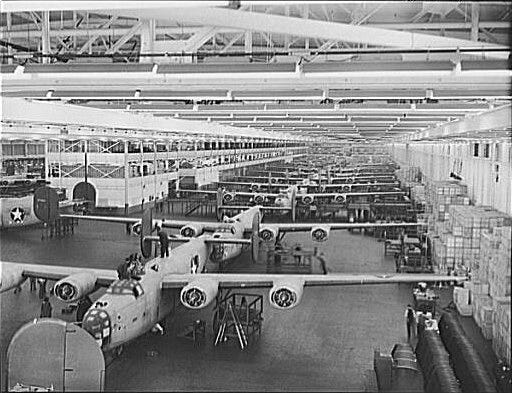
Air power was also seen by President Franklin D. Roosevelt as central to the United States’ dramatic rearmament plans following the strategic earthquake of the collapse of France in June 1940. One of his first announcements was his intention to build 50,000 aircraft - at the time an outlandishly huge number and which would lead to an air force far larger in size than any other nation. Roosevelt had been very struck by Charles Lindbergh’s solo flight across the Atlantic back in 1927, and at the heart of the president’s strategy was his profound belief that the world was shrinking and largely as a result of rapidly developing air power. The Atlantic might separate America from Nazi-dominated Europe but Roosevelt no longer believed the ocean was the great barrier it had once been. Harnessing American big business - and specifically its world-leading automobile industry - was key to this. Ford, General Motors, Packard and others became central to the United States’ massive aircraft production during the war. Ford even built Willow Run, the largest single room in the world at one-and-a-half miles in length.The plant would go on to employ 42,500 workers and produce B-24 Liberator four-engine heavy bombers at a rate of one every 90 minutes. In 1943 alone, US factories produced more than 83,000 aircraft, more than the capacity of Twickenham Rugby Stadium. It was an astonishing achievement. By the war’s end, the USA had built a staggering 315,000 aircraft – just think about that – but Britain had also produced an extraordinary 132,500 planes, roughly 50,000 more than Germany.
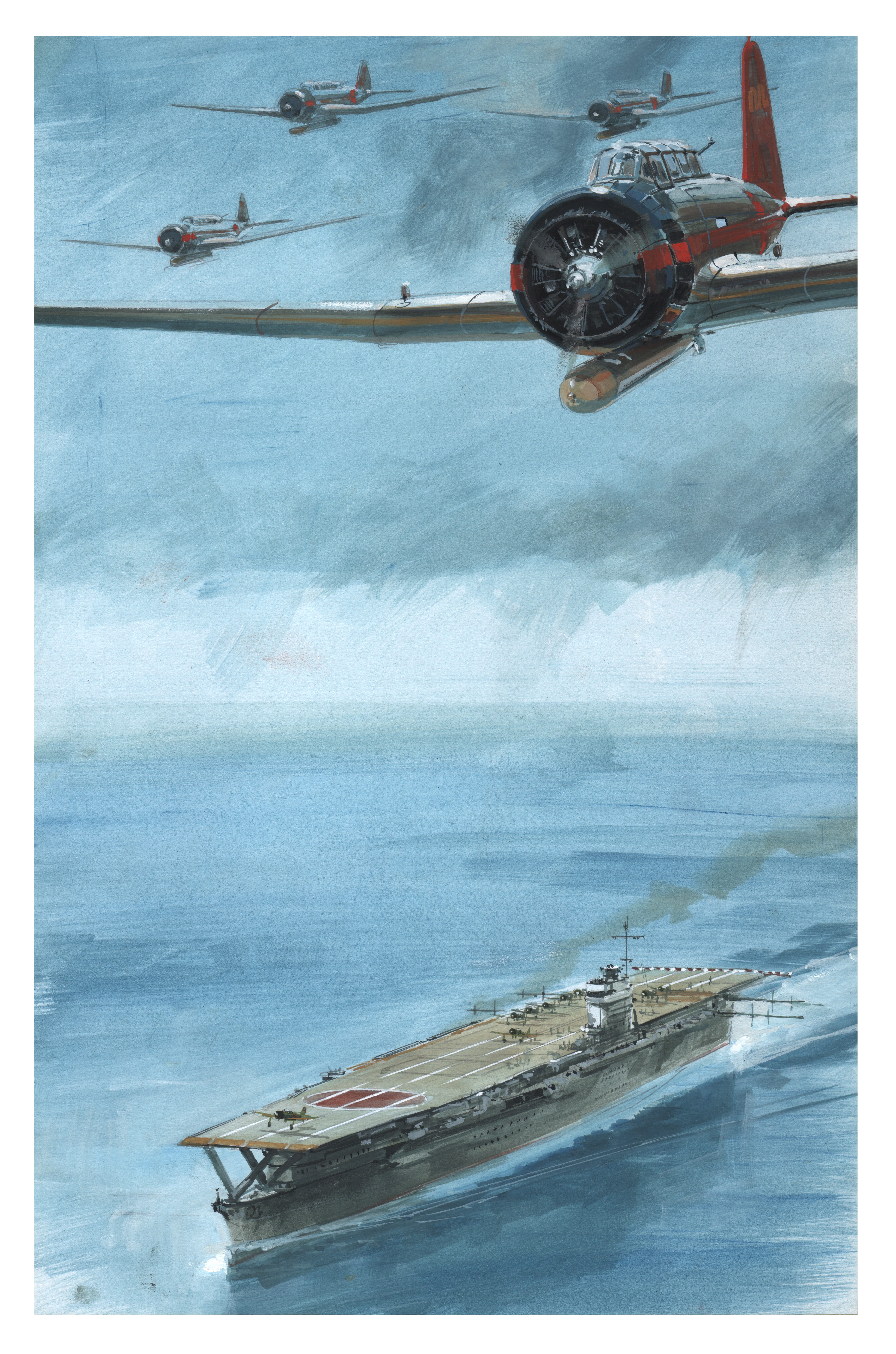
In fact, air power lay at the very heart of wartime strategy for all the major combatant nations, as such a rapidly developing weapon was bound to do. Not only did aviation suck up a large amount of technological and scientific research and development, it also consumed a significant amount of defence spending too. For the Japanese, fighting across the Pacific Ocean, seaborne air power lay central to its naval and land-based approach to war. For Germany, fighting a mostly continental, land-based war, its air force had been developed specifically to support land operations. This made it primarily what is known as a tactical air force, providing close air support for the army. This focus ensured that when the Luftwaffe was suddenly expected to operate independently, as a strategic strike bomber force to subdue the RAF and Britain in the summer of 1940, it found itself woefully underprepared for the role. Nor did it achieve its aim as a bombing force striking at Britain’s cities during the Blitz. Despite causing considerable damage, war production in Britain rose considerably during the Blitz and British society showed no sign at all of collapse. And the Luftwaffe had also failed at Dunkirk. Its aircraft, structure, training and tactics were designed to operate in conjunction with the army on the ground below, not separately and independently in a strategic role.
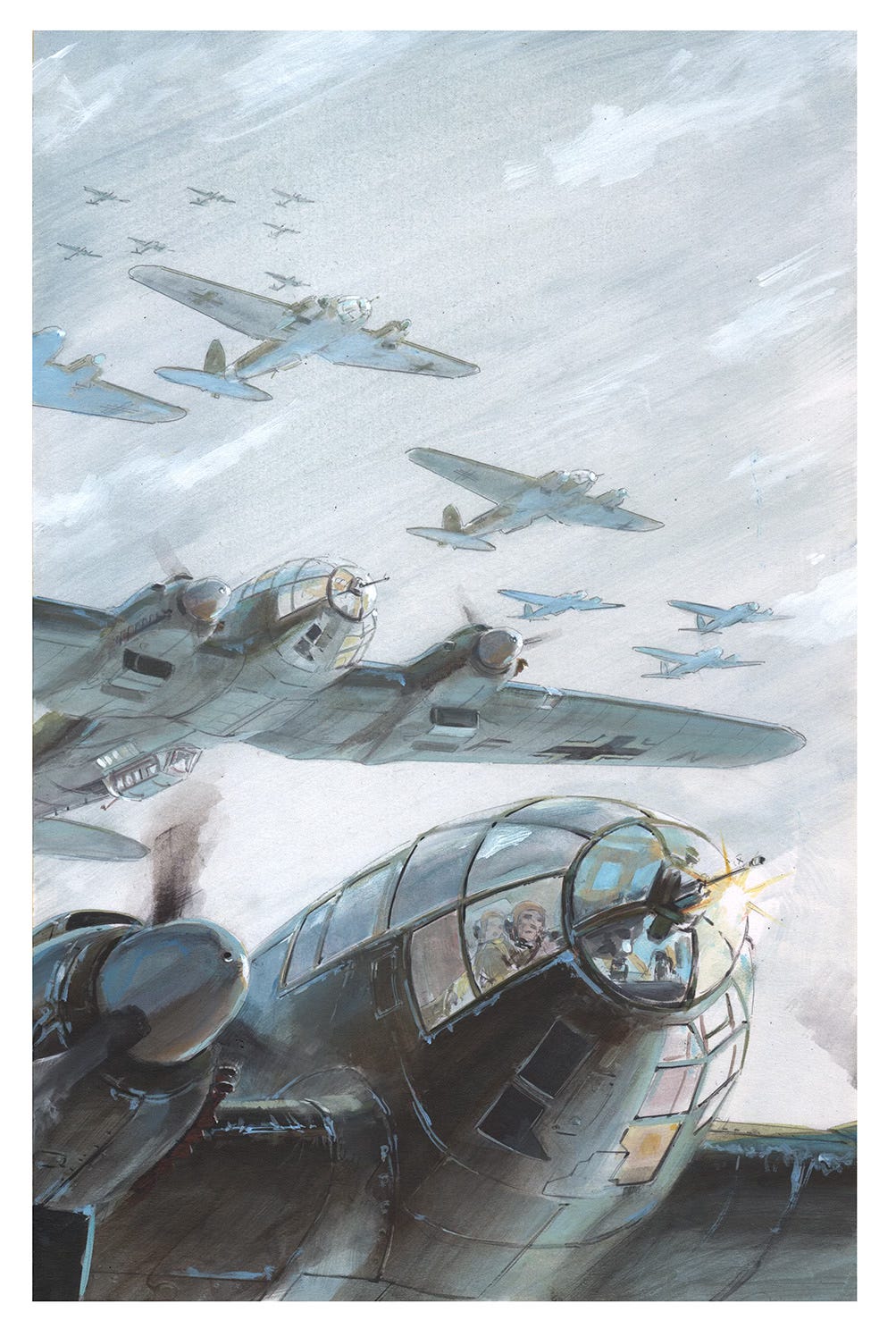
The Luftwaffe never managed to sufficiently adjust. One of its more successful strategic campaigns had been against the British island fortress of Malta in the Mediterranean in the first few months of 1942. The island was almost pounded into the dust but was not backed up by an invasion of ground troops. Malta managed to cling on, built up its strength once more, and within a matter of months had become a base from which German and Italian shipping to North Africa could once again be decisively ravaged. The theatre-changing British success at Alamein in October 1942 was in a large part down to Germany’s failure to subdue Malta.
By the end of 1943, Germany was being pounded by Allied bombers day and night. Much is made of the amount of blood spilled on the Eastern Front where undeniably large numbers of German and Soviet troops lost their lives, but the Luftwaffe sucked up almost 50% of the Nazi war expenditure by mid-1943 and most of that was fighting on the Western Front where cities, as well as factories and communications networks were being hammered around the clock. American, British and Commonwealth air power ensured the Allies could massively hamper Germany’s ability to produce weapons and war materiel. Hamburg, Germany’s second city, was largely destroyed in late July and early August of 1943, for example, with as much as 80% of the city smashed or severely damaged.
Factories were repeatedly struck throughout the Reich, which forced the Germans to disperse their industrial effort, take increasingly long-winded and time-consuming supply routes, build new factories underground or in the side of mountains, and make the protraction of their war effort increasingly difficult. By February 1945, the Reichsbahn, the German railway and effectively lifeline, was so badly mauled it ceased to function. Historians and popular perception have concluded that the war in the Soviet Union is what really broke Germany, yet for all the horrific bloodshed along the Eastern Front, it was the Western Allies who smashed the the Germany navy, brutally dismembered the Luftwaffe, and who reclaimed North Africa, Sicily, Italy and Western Europe. Allied air power – both strategic and tactical – played a decisive and invaluable role in this eventual victory.
But it did not win the Allies the war on its own, something the pre-war planners believed was possible and which was even still considered feasible once the war was underway. In this they were much mistaken. Boots on the ground were needed – as Hermann Balck had rightly written back in 1940 - and it gradually became clear that the key to victory was, in fact, a tight marriage of air, sea and land power, operating together.
None the less, the principles behind placing so much emphasis on air power were entirely sound. Rather in the way that unmanned aircraft aim to limit the need for manpower today, the same was true of air power in World War II. The Western Allies, especially, hoped to use technology, global reach, modern science and industrial might to do a lot of the hard yards at the coal face of the fighting. The principle was one of ‘steel not our flesh’ and to limit as far as was possible the number of young men having to put their lives on the line. Air power was vital to this the number of air crew needed to deliver immense levels of destruction was comparatively small to the vast numbers of troops battling it out on the Eastern Front, for example. An American heavy bomber had a crew of ten, a British equivalent only seven. Around four-five times that number supported them back on the ground and these were, for the most part, pretty safe. Fighting with large armies was – and is – inherently inefficient and a terrible waste of that most precious of commodities, human lives, as the Allies well understood.
Even so, despite Britain creating the world’s first fully coordinated air defence system and despite the huge emphasis placed by the British and the Americans on prioritizing the development of air power, both warring nations suffered grievous set-backs along the way. The RAF might have conclusively won the Battle of Britain, but its bombing arm, Bomber Command, showed in the first three years of war that it was simply not capable of delivering a war-changing air campaign against Germany: there were not enough bombers, navigational aids were insufficient, the payloads delivered too small, and nor was their bombing anything like accurate enough. Casualties amongst bomber crews were also heinous. Not until March 1943 did Bomber Command launch its all-out strategic bomber offensive against Germany and even then it was still very much a work in progress. A little over a year later, it could bomb as accurately by night as by day and began to pulverize the Reich to a degree that might well have brought other nations to its knees.
Meanwhile, the Americans had arrived in Britain in 1942 to launch their own daylight bombing campaign having trained in the azure-blue clear skies of the southern United States. Key to their bombing strategy was operating increasingly large fleets of bombers, each heavily defended by aircraft defended by thirteen .50 calibre heavy machine-guns. This meant that in a formation of, say, 350 bombers, the aircrews could bring to bear 4,550 machine-guns against would-be attackers.
Like the British, the Americans had a fairly long gestation period and a steep learning curve, however, in which the shortcomings of pre-war assumptions were laid painfully bare. Most of the bombers earmarked for operations over Germany were diverted to the Mediterranean in 1942 so it wasn’t until the summer of 1943 that the US Eighth Air Force, its prime offensive hammer, and which was operating from eastern England, really began undertaking meaningful operations in any kind of scale.
The Americans were also wedded to prioritizing the destruction of the Luftwaffe rather than laying waste to cities. This became an agreed Allied strategy, codenamed Operation POINTBLANK and implemented in June 1943. Behind this was the cross-Channel invasion, planned at the time for May 1944 – and which became better known simply as ‘D-Day’ and took place on 6 June 1944. The cross-Channel invasion and the land-campaign that would follow was the number one strategic priority for the Allies but key to its success was winning air superiority over a large swathe of northwest Europe ahead of the landings. This was because the moment Allied troops landed in Normandy, the cat would be out of the bag and the race would be on as to which side could build up a decisive amount of men and materiel first. Would it be the Germans, who were already in situ on the continent, or would it be the Allies who had to cross between 80-140 sea miles in slow vessels?
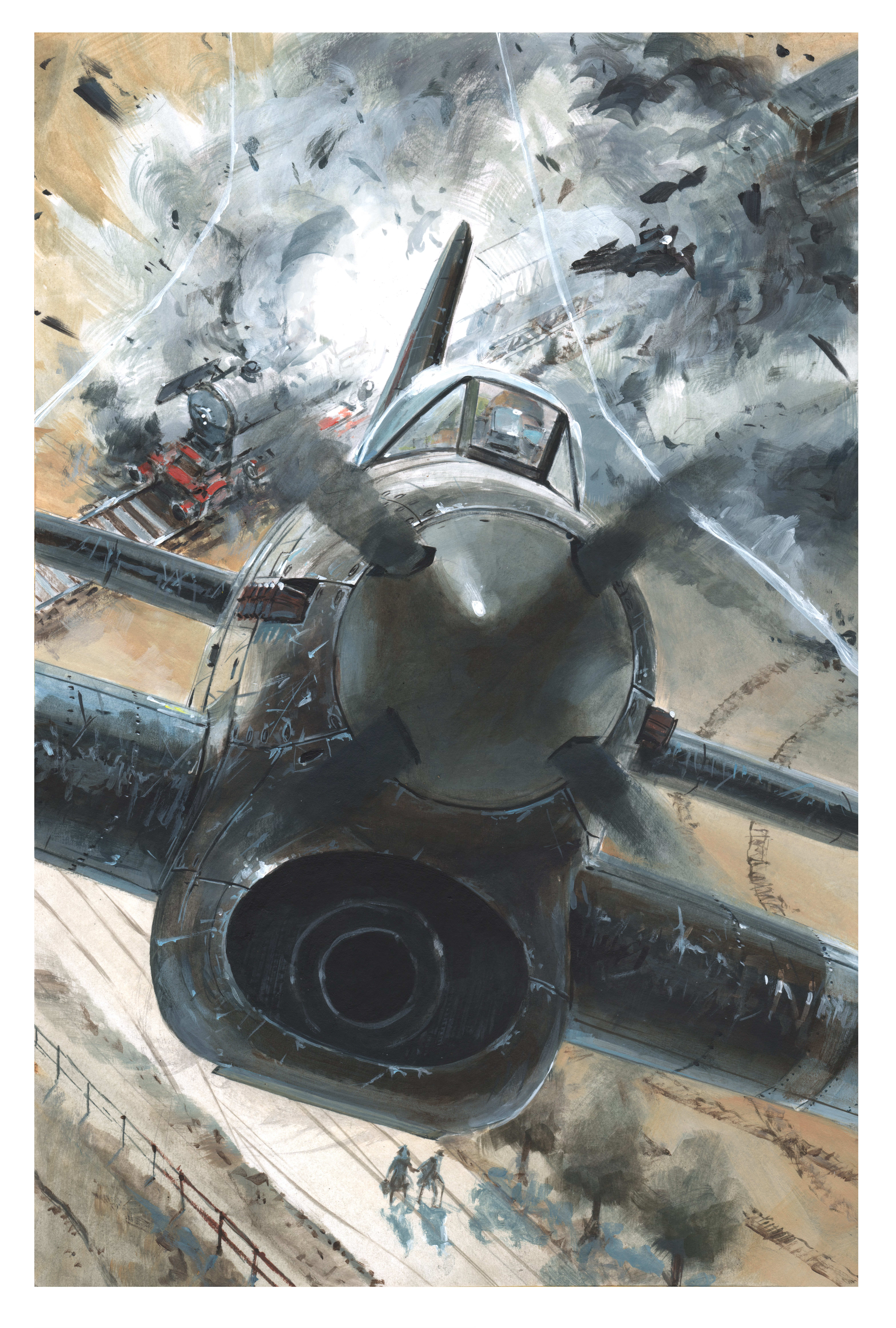
It was therefore vital for the Allies to dramatically slow down the Germans’ ability to rapidly respond and that could only be achieved by wrecking their transportation network and ability to move swiftly. That meant targeting their fuel supplies – synthetic fuel plants and Europe’s only oilfield in Romania – but more specifically hammering rail marshalling yards, rolling stock and locomotives, as well as bridges, roads, and their radar early warning network. This, however, could only be achieved by very accurate bombing, which required operating at very low-level. This, though, meant the bombers were especially vulnerable. Enemy fighters, not anti-aircraft fire, were the Allied air forces’ greatest enemy, and by operating at low-level, they were particularly exposed to any Messerschmitt or Focke-Wulf fighter plane waiting, hawk-like, above. So, the solution was to destroy the Luftwaffe, then the Allies could bomb more-or-less at will and at lower altitudes and with greater accuracy - and so achieve the all-important goal of smashing German lines of communication ahead of D-Day.
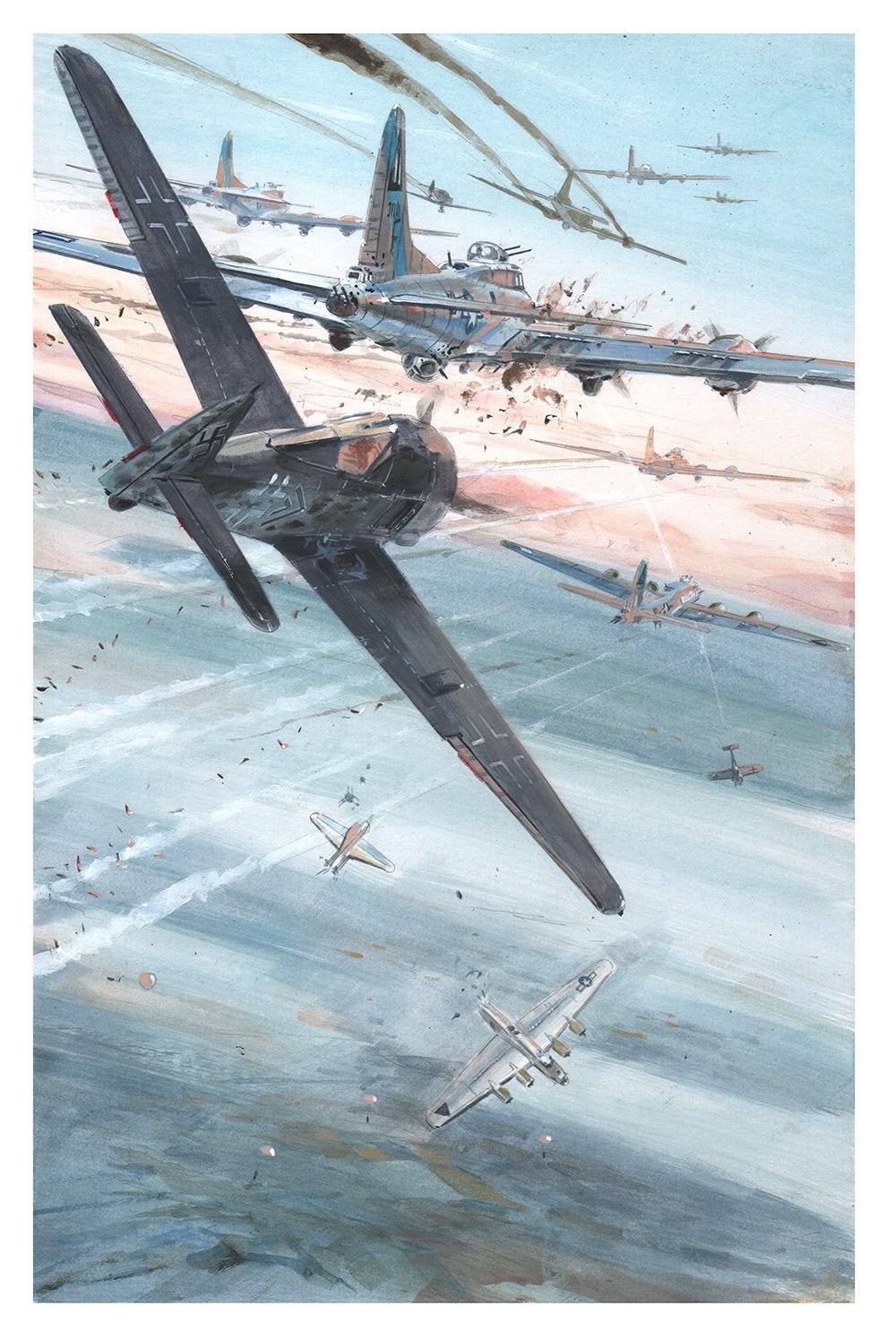
The trouble was, while the enemy’s industrial heartland was conveniently placed in the west of Germany and so close to Allied airfields in eastern England, the Nazi aircraft industry was deep inside the Reich and beyond the range of Allied fighter aircraft range. Whenever the Eighth Air Force attempted to send its bombers without these escorts, they were given a shellacking. On 17 August 1943, for example, of 376 bombers sent to attack Schweinfurt and Regensburg, 60 were shot down – 19% of the attacking force – while a further 164 were damaged, many irreparably so. When they tried similar missions again that October, they were mauled again. The pre-war ‘Bomber Men’ had to urgently re-think their strategy; such losses were totally unsustainable.
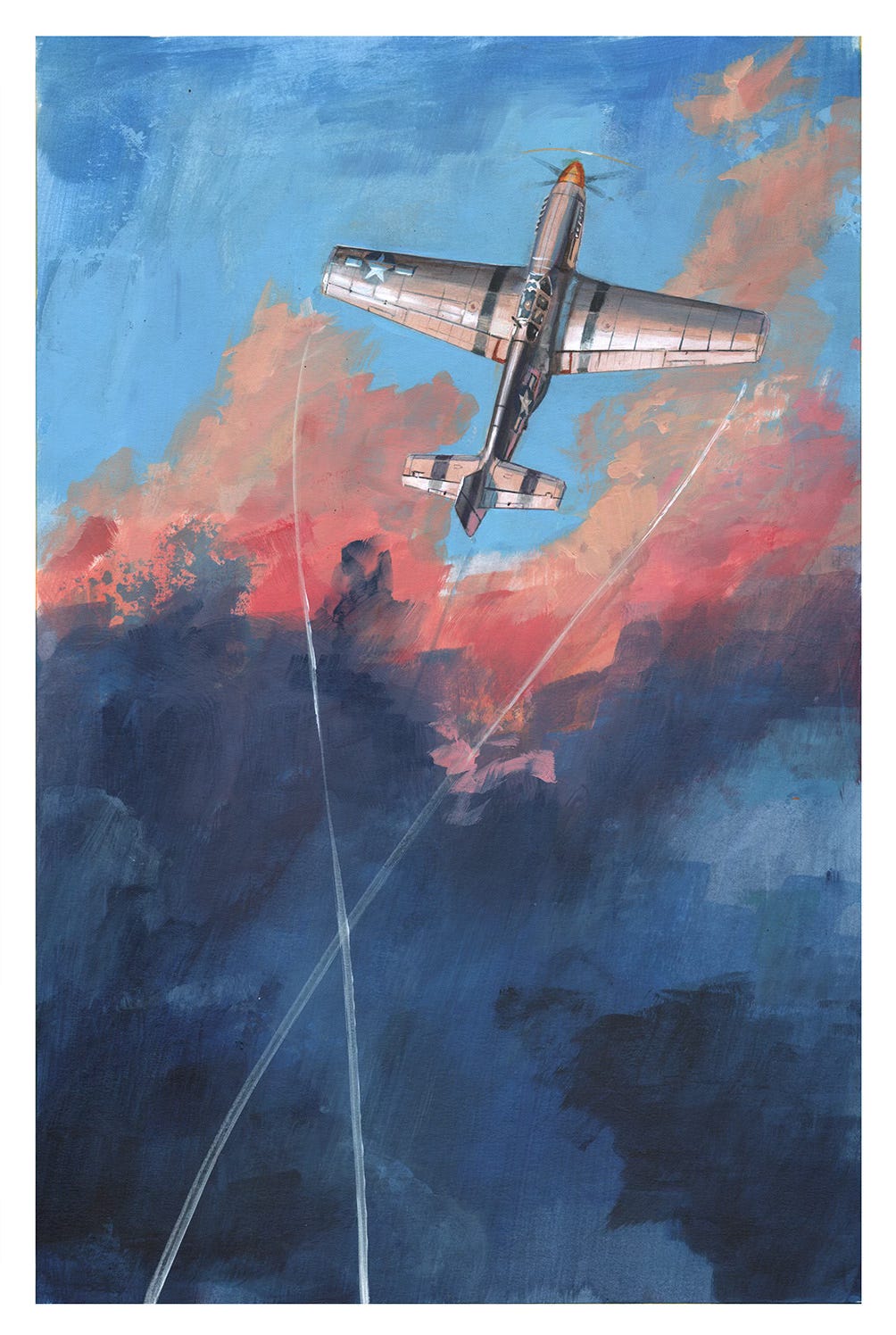
Fortunately, the answer came in the British-commissioned and powered but American designed and built P-51 Mustang, which proved that with extra disposable ‘drop’ fuel tanks could fly as far as Warsaw and back and still operate at greater speeds at height than any of its German counterparts. The skies of northwest Europe were successfully cleared by mid-April 1944; by the final days of May 1944, the closest enemy aircraft were more than 500 miles from the planned invasion beaches of Normandy and D-Day was subsequently an enormous success.
While it was the dropping of two atomic bombs dropped by single aircraft that finally brought World War II to an end, these had followed long years of air, sea and land campaigns, and no nuclear weapon has been dropped in anger since. Air power has continued to play a vital role in all conflicts but since Pantelleria in June 1943 it has not proved a panacea on its own. Not in Korea, not in Vietnam – where helicopters did not prove the game-changer expected and nor did fast jets – not in Granada, the Gulf, or Iraq or the Balkans or Afghanistan.
So, why did the President Trump and his administration believe it would be any different in Iran? The President entered the war intending to swiftly achieve his war aims with air power alone. As he stated at the start, this was to decapitate the regime, prevent it from ever being able to make a nuclear weapon, and to install a new leader approved by him. The narrative has shifted repeatedly since, but Trump had begun operations confident of an easy win; under no circumstances would he have wanted or expected the mess in which the United States – and the world – now founds itself.
Anyone who has read other pieces I have published here will sense the mounting frustration I have about those who so recklessly eschew the lessons of history. It’s there to help us. And what history tells us is this: air power is vital for the military of any nation, both in defence and attack, but it cannot provide decisive victory on its own. Why did Trump, Hesgeth et al not know this? Frankly, it beggars belief.
TAKE NOTE OF HISTORY!
This is the second article I have read this morning about US officials failing to learn the lessons of history. You’re spot on Jim as was the other writer to be fair. Of course to learn the lesson one needs to read a book or two and l am fairly sure that’s beyond Trump and his familiars. My OG military history love is the Vietnam War (sorry Jim) and I have a decent grasp of what happened and why. It appears that US political figures seem to think ROLLING THUNDER, LINEBACKER I, and LINEBACKER II were successful, that the US was successful in Vietnam; perhaps someone should show them a photograph of the Air America Slick on the roof of CIA Station Chief’s home in April ‘75. I imagine the flag rank senior military have explained the problems to Trump and his court jester Hegseth, it’s clear that nobody listened. I wonder if the recent flurry of dismissals of senior officers is related to their refusal to carry out illegal orders? And if I may the USG has gone to war with a poor understanding of the enemy and their motivation. As you and Al often say the enemy gets a vote; Trump forgot that.
Excellent article James. At times like these we often reach for a Churchill quotation. His famous 1948 House of Commons speech paraphrasing Santayana comes to mind “Those that fail to learn from history are condemned to repeat it".